Why November belongs to Dead Poets Society
Why November belongs to Dead Poets Society
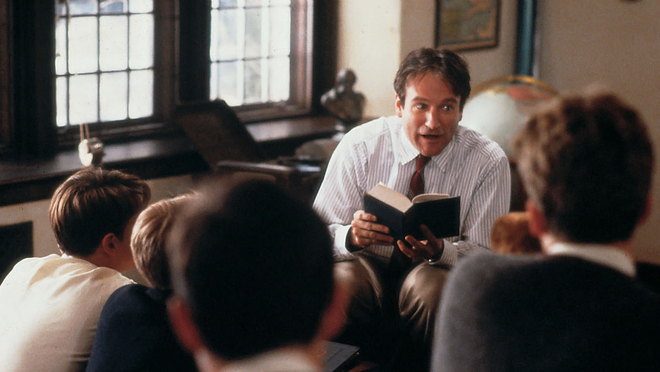
Fall has a way of quieting the world. Nights grow colder and quieter, final exams begin to knock at the door, and the strongest desire is often not productivity but comfort: a cosy blanket, a mug of hot chocolate or coffee, and a familiar book or film waiting nearby. For November, I have a name for that comfort: Dead Poets Society.
In Bangladesh, we cannot have that dark academia vibe properly. Ours is a tropical country, where the seasons arrive differently, and the heat rarely disappears completely. Yet perhaps that is why the old-school, dark academia atmosphere attracts me so deeply. I imagine a quiet room, a vintage notebook, a scented candle beside the table, a cup of tea or coffee, and I am totally immersed in a book. In that imagined space, reading literature, studying a new subject, or writing a few honest thoughts feels like belonging to a secret society.
But how did studying become so romantic in this weather when sleeping under a blanket often feels more appealing? I think the answer lies in Dead Poets Society. John Keating, played by Robin Williams, taught me that learning is not only about survival. It is also about becoming fully alive.
There is that famous scene: Keating tells his students:
“We don’t read and write poetry because it’s cute. We read and write poetry because we are members of the human race. And the human race is filled with passion. Medicine, law, business, engineering – these are noble pursuits and necessary to sustain life. But poetry, beauty, romance, love – these are what we stay alive for”.
These words changed the way I think about education. Personally, I love studying. I love discovering something new, understanding an unfamiliar idea, or seeing the world from another perspective. Feeding the mind feels deeply satisfying. Over time, Dead Poets Society turned that curiosity into a habit and, eventually, into a personal culture.
A Refuge from Scrolling
Most students in our country do not always enjoy studying, especially in an age of endless scrolling, notifications, short videos, and constant comparison. Yet I believe almost everyone enjoys learning something they truly love. A person may lose interest in a forced syllabus but spend hours learning music, coding, photography, history, a language, or anything that fascinates them. Passion changes everything. When learning becomes personal, it no longer feels like an obligation. It becomes a form of freedom. That is what Keating’s message means to me. He does not ask students to abandon responsibility or reject practical ambitions. Instead, he reminds them to find their own little time, their own voice, and their own reason to keep learning.
Now, if I talk about the movie:
Directed by Peter Weir and released in 1989, the film is set at Welton Academy, a conservative preparatory school defined by tradition, discipline, and excellence. Into this rigid world comes John Keating, an unconventional English teacher, who urges his students to think independently and pursue their passions. At its heart, Dead Poets Society is a story about education. But it is not simply about grades, careers, or obedience. It asks a more difficult question: what does it mean to live deliberately?
Welton Academy is the perfect setting for dark academia. Its corridors, uniforms, Latin mottos, and strict hierarchy create an atmosphere of old-world seriousness. The students are expected to follow a clear path: study hard, succeed, and fulfil the ambitions their families have chosen for them.
This pressure is especially visible in Neil Perry, a talented student whose father wants him to pursue medicine, and Todd Anderson, a quiet boy struggling to find his own voice. Their lives appear orderly from the outside, but inside they are constrained by expectations. The film understands something important about student life: institutions can provide structure, but they can also silence individuality. Welton teaches its boys how to succeed within a system. Keating, however, encourages them to ask whether that system truly belongs to them.
Keating and the power of poetry
John Keating does not teach poetry as a subject to memorise. He teaches it as a way of seeing. Through literature, he asks his students to notice beauty, question authority, and recognise that their lives are their own. His famous instructions – “Carpe Diem” or “Seize the Day” – become the emotional centre of the film. It is not a call to recklessness, but a reminder that time is limited and that a meaningful life requires intention.
Keating’s classroom scenes remain powerful because they make learning feel alive. He invites students to stand on desks, look at the world differently, and treat poetry as something urgent rather than decorative. In doing so, he turns education into an act of awakening.
The students revive the Dead Poets Society, a hidden group where they meet away from the school to read poetry and share their thoughts. These meetings give them a rare space of freedom. Away from teachers, parents, and expectations, they can speak honestly about love, fear, ambition, and identity. This is where the film’s dark academia appeal becomes strongest. There is secrecy, candlelight poetry, friendship, and the thrill of belonging to something private. Yet, the society is not merely an aesthetic escape. It represents the students’ desire to create a life beyond the roles assigned to them.
Why it suits November?
November arrives with a particular kind of quiet. The air cools, evenings lengthen, and there is a natural temptation to return to old books, warm drinks, and films that make solitude feel meaningful. Dead Poets Society belongs to November because it is both melancholy and hopeful. Its world of grey skies, wooden classrooms, old books, and quiet rebellion matches the season’s reflective mood. But its message is not despair. It is a call to pay attention – to literature, to friendship, to desire, and to the briefness of life.
For students, the film remains deeply relevant. Many still feel pressure to choose practical paths, meet family expectations, and measure success through conventional achievements. Keating’s lesson is not to abandon responsibility, but to refuse a life lived entirely on other people’s terms.
As the month grows colder, Dead Poets Society offers the perfect dark-academia experience: a film about youth, learning, loss, and the courage to ask what kind of life is truly worth living. Its final message endures because it is simple, yet difficult: seize the day, and make your life extraordinary.