Antarctic ice cliffs collapse faster than expected, but may avoid runaway retreat
Antarctic ice cliffs collapse faster than expected, but may avoid runaway retreat
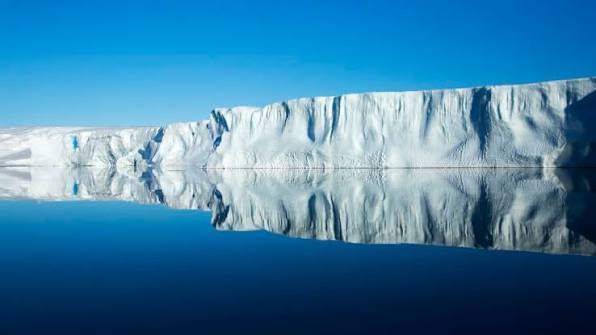
Antarctica’s towering ice cliffs are collapsing faster than scientists previously predicted, but new research suggests the process may not trigger the catastrophic chain reaction once feared.
A study by researchers from the Massachusetts Institute of Technology (MIT) and the Woods Hole Oceanographic Institution (WHOI) found that even some of the continent’s tallest ice cliffs can stabilise after periods of rapid retreat.
Published in the journal Science, the study analysed satellite observations of more than 15,000 Antarctic ice cliffs between 2019 and 2023.
For years, scientists have warned that ice cliffs exceeding 100 metres in height could become structurally unstable under their own weight, potentially triggering repeated collapses and accelerating the retreat of Antarctica’s ice sheet.
The theory, known as marine ice cliff instability (MICI), suggests that the collapse of one ice wall could expose an even taller wall behind it, setting off a chain reaction of retreat and contributing to rising sea levels.
However, the new findings challenge the assumption that cliff height alone determines the risk of collapse.
The researchers found that while some cliffs retreated considerably faster than existing models predicted, the retreat was often short-lived. Instead of continuing inland, the glaciers eventually stabilised and, in some cases, advanced towards the ocean again.
The study found that most of the cliffs examined were considerably shorter than the 100-metre threshold, with an average height of around 30 metres. However, some exceeded the threshold.
Researchers also identified several factors that could help explain why certain cliffs remain stable.
Thick accumulations of broken ice, known as mélange, in front of the cliffs appeared to provide structural support. The pressure exerted by surrounding seawater could also help counteract the forces driving collapse.
The shape of the land beneath the ice sheet, known as bed topography, was another important factor. Underwater ridges and elevated terrain can reduce the thickness of the ice above them, creating shorter cliffs that are less vulnerable to further collapse.
The researchers also found that taller cliffs tend to thin more rapidly as they retreat, reducing their height and potentially limiting further instability.
The findings suggest that the interaction between ice thickness, underlying terrain, seawater pressure and accumulated ice debris plays a crucial role in determining whether a cliff continues to collapse or stabilises.
Lead study author Caroline Needell, a graduate student in the MIT-WHOI Joint Program, said the findings indicate that rapid retreat does not necessarily lead to an unstoppable collapse.
The research could help improve predictions of Antarctica’s future contribution to global sea-level rise by encouraging scientists to incorporate factors beyond cliff height into ice-sheet models.
The findings do not suggest that Antarctica’s ice sheet is safe from further losses. Rather, they indicate that the processes governing its retreat may be more complex than previously understood.