The loneliness of a dreamer
The loneliness of a dreamer
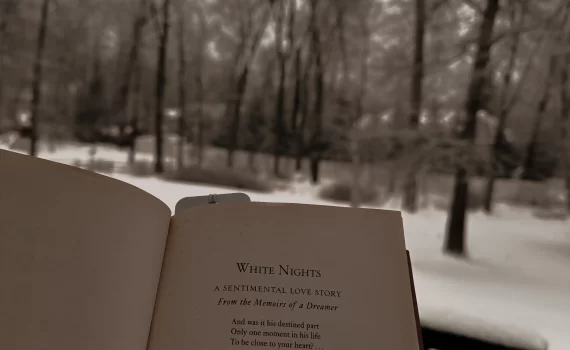
I had expected Fyodor Dostoyevsky’s White Nights to be a love story when I initially started reading it. It is the easiest mistake one could make upon looking at this book.
There is a lonely young man, a girl named Nastenka, four nights of conversation, a past lover, a confession, hope, disappointment and finally separation. On paper, it sounds almost painfully romantic. Dostoyevsky himself subtitled it: A Sentimental Story from the Diary of a Dreamer.
But White Nights is not really about falling in love. It is about what happens when a person who has been starving for connection finally receives a little of it and immediately begins imagining that the little might become everything.
That distinction changed the way I think about life. The narrator is never given a proper name. He is simply a Dreamer. He has lived in St Petersburg for years, yet he seems to exist almost outside the city he inhabits. He walks through it, he observes people, he imagines conversations, he constructs entire emotional worlds in his head, but he rarely participates in ordinary life. His real existence seems to happen inside his imagination.
The Dreamer does not merely suffer from loneliness. He has learned to live with it. That’s where the frightening condition starts.
There is a difference between being alone and becoming comfortable with the identity of a lonely person. The first is a circumstance. The second can become a personality. The Dreamer has spent so much time observing life that observation has replaced his participation. He imagines friendships instead of building them. He imagines love instead of experiencing the risks of it. He turns ordinary streets, buildings and people into material for his private imagination. In Bangla, there’s a beautiful word for such a person: “vabuk”.
In other words, he has created a life in which he cannot be rejected because he rarely allows himself to be fully present. Then Nastenka appears. Their meeting is almost absurdly simple. He encounters her crying near a canal, intervenes when a man bothers her, and the two begin talking. Yet for the Dreamer, this ordinary encounter becomes extraordinary because someone has finally entered the world he has been occupying alone for all these years.
I do not think he falls in love with Nastenka alone. He falls in love with being needed. He falls in love with having someone waiting for him tomorrow. He falls in love with the possibility that, for once, his existence matters to another person.
I find his character more psychologically interesting than conventionally romantic. Nastenka herself is not simply the cruel girl who breaks his heart. That interpretation would make the story far too easy. She is also lonely. She is trapped in her own circumstances, living under the strict control of her grandmother, and emotionally attached to a man who has promised to return. She is desperate for certainty just as the Dreamer is desperate for connection.
Their relationship therefore becomes less a romance than a temporary alliance between two lonely people. They need each other but not in the same way.
That is the tragedy. The Dreamer needs Nastenka herself. Nastenka needs the Dreamer’s companionship while she waits for someone else. And that difference is precisely what makes it devastating.
This is one of the things I appreciated most about White Nights. Dostoyevsky refuses to manufacture a villain simply to make heartbreak emotionally satisfying. That is an uncomfortable idea because we tend to romanticise sincerity. We often assume that if someone feels something deeply enough, the feeling deserves an equally deep response. But human relationships do not work according to that corollary of mathematics.
How much of our unhappiness comes from what actually happens to us, and how much comes from the life we construct in our heads? How often do we love people, or merely the possibilities they represent? Dostoyevsky does not answer these questions neatly.
For four nights, the Dreamer is no longer merely watching life from the outside. Someone talks to him. Someone trusts him. Someone needs him. He becomes visible. Then morning comes. And perhaps that is the cruelest thing about the title. White nights are beautiful because darkness is delayed. But morning comes anyway.
What matters is not whether we can avoid that morning. What matters is what we do after it arrives. That is why, despite all its melancholy, I do not read White Nights as a hopeless book. Because sometimes, four nights are enough to change the way we understand an entire lifetime.