
Why should I not steal GTA VI?
I would like to begin by saying that I am not a criminal. I am, however, unemployed in spirit, financially disadvantaged in practice, and increasingly convinced that the moral foundations of capitalism were written by people who have never had to convert dollars into Bangladeshi taka.
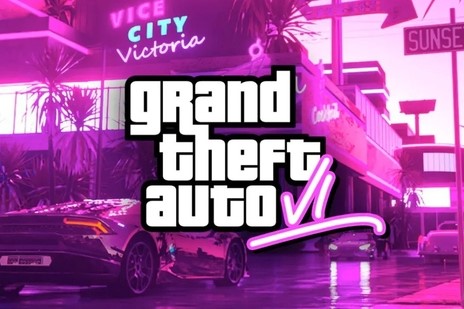
I have never been particularly interested in gaming, but I waited for GTA VI for years, and now that it is finally here, I find myself facing a rather uncomfortable question: should I steal it? Not because I believe in theft, necessarily, but because I believe in consistency, and if we are going to spend our lives stealing from one another, I would at least like something entertaining out of the arrangement.
Consider the price of the game. Somewhere in a comfortable office, a corporation has decided what your entertainment is worth, and somewhere in Bangladesh, a graduate is converting that price into taka while calculating whether they can afford both the game and the lifestyle.
The defence of theft, therefore, is simple: why should I respect the sanctity of private property in a world where private property has developed a rather selective understanding of sanctity?
When a teenager downloads a game, we call it piracy. When a businessman disappears with millions in public money, we call it a financial irregularity. When workers are underpaid, it is market reality. When someone occupies public land, it is a complicated legal matter. When a corporation charges you for a subscription to software you previously owned, it is innovation. The only time everyone suddenly develops an uncompromising commitment to ethics is when the thief is poor enough to be prosecuted.
And then CyberLeek happened. For anyone who missed the spectacle, CyberLeek claimed to release a roughly 209 GB November 2026 Xbox development build of GTA VI, initially withholding the main executable. The group eventually released the missing file on 23 November, after previously tying its release to the market capitalisation of its cryptocurrency token. The files were not independently verified in the initial reporting, and the subsequent attempts to get the build running on PC were far from straightforward. Project Leonida, an unofficial recompilation effort, was subsequently hit by copyright enforcement from Take-Two, resulting in the removal of thousands of GitHub repositories.
There is something almost Shakespearean about this entire affair. A group of alleged digital thieves releases a game allegedly obtained without permission, wraps the operation in the language of consumer freedom, and then introduces a cryptocurrency incentive because apparently even rebellion needs venture capital.
The revolution has been postponed until the token reaches its market cap. Somewhere, Karl Marx is rolling in his grave, although he would probably be more concerned about the gas fees.
CyberLeek’s slogan, “No game ownership, no peace”, is particularly entertaining when considered alongside the modern gaming industry’s relationship with ownership. We have reached a point where buying digital entertainment increasingly means purchasing permission to access it, rather than owning something outright.
Games can be removed, accounts can be suspended, servers can disappear, and your carefully assembled digital library can become a collection of expensive memories. You do not own the game; you own the privilege of being allowed to enjoy it until further notice. It is basically feudalism with better graphics. The landlord has simply moved into your console.
Of course, the most fascinating part of GTA VI is not its alleged 209 GB build, its graphics or its increasingly elaborate attempts to reach a PC screen. It is the way the game has exposed the internet’s relationship with work, leisure and the monetisation of human suffering.
Take IShowSpeed. The man reportedly completed GTA VI after approximately 52 hours of continuous streaming without sleep, eventually breaking down in tears when the credits rolled. An entire human being spent two days negotiating with a fictional criminal universe while millions watched.
Now imagine a Bangladeshi university student doing exactly the same thing. They would be declared mentally unstable, academically irresponsible and a disappointment to three generations of relatives. Their mother would probably enter the room halfway through a mission and ask whether the government job examination had been postponed because of their gaming addiction.
But Speed does it, and suddenly it is content. It is a business. It is a cultural phenomenon. His sleep deprivation becomes a promotional strategy, his exhaustion becomes entertainment, and his emotional breakdown becomes a thumbnail. The same behaviour that would earn an ordinary person a lecture on wasted potential becomes an entrepreneurial success when it generates enough views. Apparently, the difference between being a failure and being an influencer is whether your breakdown has a monetisation tab.
I would also like to know why my leisure requires a justification. A young man playing games for eight hours is wasting his life, but a man spending twelve hours in an office earning just enough to maintain his biological functions is disciplined. A woman watching a series is neglecting her responsibilities, but a woman working herself into exhaustion to maintain a household is an example of admirable character. We have built an economy in which being tired is respectable, being unemployed is shameful, and being happy without producing something is practically antisocial.
Perhaps this is why Lucia Caminos has become such an interesting character even before people finish discussing her storyline. A woman in a criminal video game is apparently enough to trigger an international philosophical crisis. She is ambitious, complicated and capable of participating in violence, and suddenly the internet is concerned about what this means for the representation of women. Male protagonists have been murdering, robbing, exploiting and terrorising fictional cities for decades, but the moment a woman gets a seat at the criminal table, somebody’s traditional values need emergency medical attention.
There is the matter of Vice City itself. Rockstar has built a fictional world out of organised crime, consumerism, celebrity culture, political corruption and the absurdity of modern American life. It is a satire of a society in which everyone is selling something, everyone is being watched, and everyone is trying to become famous before dying of something preventable. The uncomfortable part is how little imagination is required to recognise the real world behind the parody. We have influencers selling their breakfast, politicians selling promises, corporations selling privacy, and ordinary people selling their remaining years to afford rent. At least the criminals in GTA have the courtesy of admitting what they are doing.
I should also point out that I have waited for this game for years despite not being particularly interested in gaming. This is no longer a question of entertainment. It is a matter of emotional compensation. I have survived academic deadlines, economic uncertainty, unsolicited career advice, and relatives who consider unemployment a communicable disease. I have earned this. If the global economy insists on making me a spectator in my own life, the least I can do is become the protagonist of a fictional one.
So yes, I should steal GTA VI. I have considered the moral implications, examined the socioeconomic circumstances, reviewed the available evidence and consulted absolutely no lawyers. The developers deserve to be paid, of course, but I would also like the global entertainment industry to consider that its audience exists outside the demographic of people who can casually spend hundreds of dollars on recreation.
My inability to afford something does not erase the labour behind it, but neither does the labour behind it erase the economic absurdity of expecting everyone to afford it.
I do not want a Ferrari. I do not want an offshore account. I do not want to become an influencer who cries after 52 hours of playing a video game. I just want to drive around Vice City without having to submit a productivity report to my family, explain my career trajectory to an aunt, or defend my existence to an economy that considers me an expense.
And if this makes me a thief, I would like to remind everyone that I am operating on a relatively modest scale. I am not stealing a bank, a country or an entire generation’s future. I am stealing a video game. There is a difference in magnitude, if not in principle.
Besides, I have already paid for it in anticipation, emotional investment and several years of watching trailers at an economically unproductive hour. If anything, Rockstar owes me compensation for the amount of time I have spent waiting.
I rest my case. Now, if you’ll excuse me, let me dream of having a fictional criminal empire to build and a real one to continue being exploited by.