
The promise the world has yet to keep
Almost eight decades after the UN proposed partition, Palestinians remain stateless, displaced and under occupation, while the world’s attention moves on.
The promise the world has yet to keep
Almost eight decades after the UN proposed partition, Palestinians remain stateless, displaced and under occupation, while the world’s attention moves on.
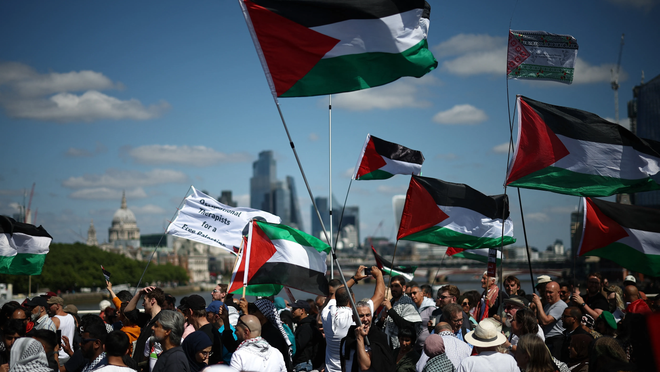
Every year on 29 November, the world observes the International Day of Solidarity with the Palestinian People, a day the United Nations General Assembly established in 1977 to mark the date in 1947 when it adopted Resolution 181, the plan to divide British-ruled Palestine into an Arab state and a Jewish state with Jerusalem under a special international regime.
The day exists to reaffirm the Palestinian people’s inalienable rights to self-determination, independence and statehood, yet after almost eight decades of resolutions, summits and statements, those rights remain unrealised, and the observance has come to measure how long a people can be asked to wait. For Palestinians, solidarity has never been a ceremonial gesture. It is the knowledge that people whose homes have been demolished, whose families are scattered across borders and camps, and whose children have learned the sound of bombs before they learned to read, have not been forgotten.
The roots of the present lie in a history that is too often compressed into a few lines. In 1917 Britain issued the Balfour Declaration, promising a national home for the Jewish people in Palestine without granting the Arab majority who lived there any equivalent recognition of their political rights. After the First World War Britain governed Palestine under a League of Nations mandate, Jewish immigration grew as persecution in Europe deepened, and Palestinian Arabs, fearing the loss of their homeland, demanded independence. In 1947 the UN recommended partition, which Jewish leaders accepted and Palestinian Arab leaders and Arab states rejected, arguing that it was unjust to divide a land where Arabs were the majority. Violence spread, Britain withdrew in May 1948, and Israel declared independence, after which war followed.
What Palestinians remember from that year is the Nakba, the catastrophe. Some 750,000 of them were expelled from or fled their homes, hundreds of villages were emptied or destroyed, and the refugees were never allowed to return, so that their descendants today number in the millions and many still keep the keys and deeds of houses they have never been permitted to see again. In June 1967, during the Six-Day War, Israel occupied the West Bank including East Jerusalem, as well as Gaza, and settlements began to spread across the occupied land.
The First Intifada erupted in 1987 as a mass uprising against the occupation, the Oslo Accords of 1993 raised hopes of peace without delivering a Palestinian state, and the Second Intifada began in 2000 as the talks collapsed. In 2005 Israel withdrew its settlers and permanent ground forces from Gaza while keeping control of its borders, airspace and coastline. After Hamas won the 2006 legislative election and took over Gaza in 2007 following violent clashes with Fatah, Israel imposed a blockade, with Egypt also restricting its crossing, and Gaza became a place where two million people lived behind walls they could not pass.
Wars followed in Gaza in 2008–09, 2012, 2014 and 2021, each leaving families in mourning and neighbourhoods in ruins, while Palestinians in the West Bank lived under military rule, with checkpoints, land confiscation, home demolitions and settler violence shaping daily life. In July 2024 the International Court of Justice, the principal judicial organ of the United Nations, found in an advisory opinion that Israel’s continued presence in the occupied Palestinian territory is unlawful and that its settlements violate international law. That history is the reason the suffering of Palestinians cannot be traced to a single date. The events of 7 October 2023 were an escalation of an old conflict, not the start of it.
On that day Hamas-led fighters attacked southern Israel, killing about 1,200 people and taking 251 hostages, and the killing of civilians and the seizing of hostages were grave crimes that no grievance can justify. What followed in Gaza has been devastation on a scale that has few modern parallels. By September 2026 Gaza’s health ministry, whose records UN agencies regard as reliable, had counted nearly 74,000 Palestinians killed and almost 175,000 wounded, and the real toll may be higher because many bodies still lie beneath the rubble. Homes, hospitals, schools and water systems were destroyed, and most of the population was displaced, many of them repeatedly. A ceasefire took hold on 10 October 2025 and the surviving hostages were released, yet the calm proved fragile. By mid-June 2026 the ministry counted more than 1,000 Palestinians killed since the truce began, as near-daily strikes continued, while Israel says it is targeting militants and responding to violations. Families still shelter in tents and ruins, and another winter is approaching.
Behind these figures are people whose lives are measured in small and unbearable things: a parent who cannot promise a child that tomorrow will be safer than today, a patient searching for medicine in a place where the hospitals have been destroyed, a family returning home to find only rubble