BMU seeks to establish specialised cancer research institute
BMU seeks to establish specialised cancer research institute
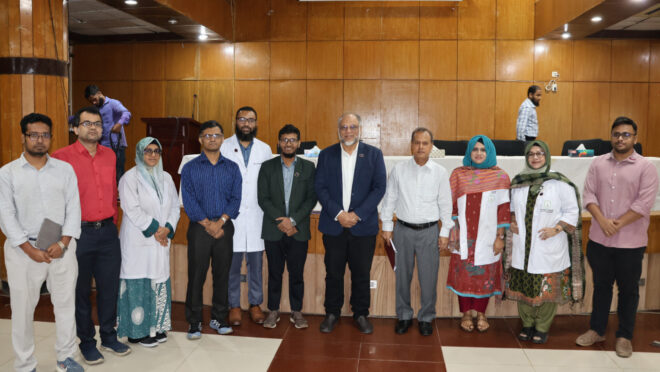
Bangladesh Medical University (BMU) wants to establish a specialised cancer research institute to expand postgraduate education, clinical trials and multidisciplinary care, Pro-Vice-Chancellor (Research and Development) Professor Dr Md Mujibur Rahman Hawlader said today.
Hawlader spoke as chief guest at a seminar on head and neck cancer organised by the university’s Central Seminar Subcommittee at the BMU auditorium in Dhaka at 8:30am on 16 November, 2026, according to the press release. The seminar examined the growing burden of head and neck cancer, changing disease trends and advances in treatment beyond surgery.
Proposed cancer research institute
Hawlader highlighted a recent joint imPACT Review Mission to Bangladesh by the International Atomic Energy Agency, the World Health Organisation and the International Agency for Research on Cancer. He said the mission sought to assess the country’s capacity and identify gaps in cancer prevention, screening, diagnosis, treatment, education and research, as well as in infrastructure and staffing. He said the assessment could help Bangladesh set priorities for improving cancer care.
He said BMU already had specialised cancer departments, experienced teachers, clinicians and researchers, and postgraduate medical training programmes. The proposed institute would bring these resources together.
“We want to establish a specialised cancer research institute under BMU. I hope that, with everyone’s support and a co-ordinated effort, we will be able to make it happen, God willing,” he said.
The university expects the proposed institute to expand postgraduate cancer education, research, clinical trials, multidisciplinary care and international collaboration. The press release said the institute could also strengthen BMU’s contribution to cancer research and care nationwide, expand access to internationally comparable care in Bangladesh and reduce the need for patients to travel abroad for advanced treatment.
Advances in head and neck cancer care
In the first scientific session, Professor Dr Md Abdus Sattar, head of the Head and Neck Surgery Division in BMU’s Department of Otolaryngology – Head and Neck Surgery, presented a paper titled “Head and Neck Cancer Today: Burden, Trends, and Modern Treatment Strategies”. He discussed the growing burden of these cancers and stressed the importance of timely diagnosis, accurate staging and appropriate treatment selection.
In the second session, Professor Dr Syed Md Akram Hossain, chair of BMU’s Department of Clinical Oncology, presented “Head and Neck Cancer Update: Advances Beyond Surgery”.
He said advances in radiotherapy, chemotherapy, immunotherapy and targeted therapy had made it possible to tailor treatment to the cancer type and stage, its biomarkers, the patient’s overall health and the goals of treatment.
Hossain said intensity-modulated radiotherapy, image-guided radiotherapy and other advanced techniques allow clinicians to target tumours more precisely and limit damage to nearby healthy tissues.
He cited findings from the KEYNOTE-689 clinical trial in discussing the use of immunotherapy before and after surgery for selected patients with head and neck cancer. He also highlighted the role of immunotherapy and other systemic treatments in recurrent or metastatic disease.
Multidisciplinary care and research
Hossain said preserving patients’ quality of life, including their ability to speak, eat, swallow and carry out everyday activities, should be a treatment goal alongside controlling the disease and extending survival.
He called for multidisciplinary tumour boards in which surgeons, clinical oncologists, radiologists, pathologists and other specialists develop treatment plans for individual patients.
To widen access to advanced cancer care in Bangladesh, he called for investment in radiotherapy technology, a skilled workforce, regular training for doctors, clinical research and the adoption of evidence-based national treatment guidelines. He said closer collaboration between BMU’s cancer and supporting departments could help the university serve as a national centre of excellence in cancer care, education and research.
Dr Khaled Mahbub Morshed (Mamun), an assistant professor in the Department of Internal Medicine and member secretary of the Central Seminar Subcommittee, moderated the event. The organisers said such seminars could help clinicians share new research, collaborate across specialities, and expand evidence-based cancer care.