Butex student Annay Debnath receives 2026 Diana Award for science education
Butex student Annay Debnath receives 2026 Diana Award for science education
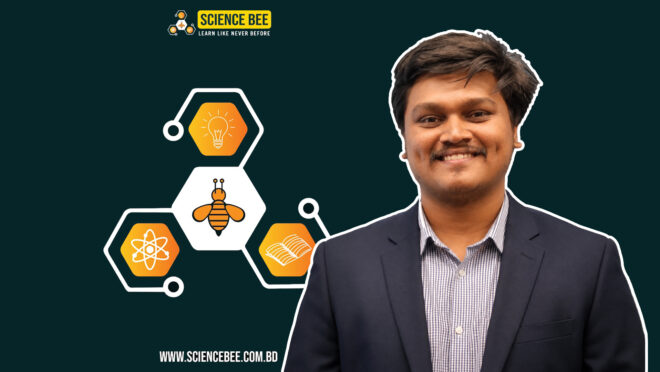
Growing up in rural Bangladesh, Annay Debnath was interested in science but had limited opportunities to explore it through practical learning. His village school lacked adequate laboratory facilities, leaving him largely dependent on textbooks. That changed when he moved to Dhaka and enrolled at Dhaka Residential Model College, where regular laboratory classes and access to scientific equipment gave him a different understanding of science education.
The contrast between the two experiences made him realise that practical science education should not be a privilege reserved for students in urban institutions. Today, as co-founder and Head of Operations at Science Bee, a science-based educational platform, he is working to make scientific learning more accessible and engaging. In 2026, he received the Diana Award for his contributions to science education, becoming the first student of Bangladesh University of Textiles (Butex) to receive the honour.
Annay’s father worked for Grameen Bank, which meant his childhood was spent in different parts of the country, including Kushtia, Meherpur and Jhenaidah. Living in these areas exposed him to the limitations of science education in rural schools. His experience at Dhaka Residential Model College later showed him how laboratory work and experimentation could make scientific concepts easier to understand.
He came to believe that science education should go beyond textbooks and allow students to learn through hands-on activities, regardless of where they live.
Finding his way to Science Bee
During the Covid-19 pandemic, while preparing for his Higher Secondary Certificate (HSC) examinations, Annay came across Science Bee on social media. He was drawn to the platform’s approach to presenting scientific topics in an accessible and engaging way.
He applied through its website and joined the team, working alongside founder Mobin Shikder. Their shared interest in making science education accessible to a wider audience gradually led to Annay taking on greater responsibilities. He was eventually included as a co-founder.
Science Bee currently has three co-founders: Mobin Shikder, Annay Debnath and Sadia Binte Chowdhury.
The organisation operates through both online and offline initiatives. Its digital activities include science-focused Facebook communities, a dedicated website, training courses, educational sessions and e-books.
According to Annay, its Facebook group ‘Biggan’ has around one million members, while ‘Biggan O Gobeshona’ has approximately 550,000. Another group, ‘Ei Post-e Biggan koi?’, has nearly 700,000 members. The platform’s website has around 800,000 registered learners. Taking overlapping audiences into account, he estimates that Science Bee has connected with approximately two million learners across its digital platforms. Its social media content has reached more than 50 million people so far.
Beyond sharing scientific information, Science Bee encourages students to develop an interest in research. It organises sessions on reading research papers, understanding research methodologies, exploring higher education and research opportunities abroad, and communicating with university faculty members.
The organisation also conducts science workshops at schools and colleges. Its activities have reached institutions and communities in Munshiganj, Manikganj, Dhaka Residential Model College and Bangladesh University of Engineering and Technology (Buet). Through these in-person initiatives, Science Bee has reached approximately 15,000 people, according to Annay.
Challenges beyond the classroom
Making science engaging and accessible has not been without challenges. One of the biggest obstacles to organising offline activities has been securing permission from educational institutions. Even when the team offers workshops free of charge, it often has to explain the purpose and value of its initiatives before receiving approval.
Recalling an experience at a school in Manikganj, Annay said the team had planned hands-on activities and intended to distribute Rubik’s Cubes, microscopes and books among students. However, some science teachers viewed Science Bee as a competitor, mistakenly assuming that the organisation was working against private tutoring or coaching services.
Annay said the team’s objective was simply to create more opportunities for students to learn science through practical and engaging activities.
Online initiatives have brought a different set of difficulties. Scientific explanations that challenge conventional beliefs sometimes attract negative comments and personal attacks on social media. Managing such reactions while keeping team members motivated has also been a significant challenge, he added.
Alongside his work with Science Bee, Annay has had to balance academic responsibilities with extracurricular activities at Butex. He was involved with the Butex Business Club and later served as Vice-President of its Creative Activities and Administration division. He credited his teachers and fellow students for supporting him throughout his journey.
He also worked on a Butex project involving the production of footwear using water hyacinth and denim. The initiative, which focused on sustainability and innovation, was mentioned in his Diana Award nomination.
Recognition and the road ahead
Annay’s Diana Award nomination was submitted by Marzia Binte Dulal, a faculty member of the Department of Textile Engineering Management at Butex. Md Golam Sarwar Raihan, a faculty member of the same department, and Mobin Shikder, co-founder of Science Bee, served as referees. His contributions to science education through Science Bee formed the primary basis of the nomination.
The nomination deadline was 31 October 2025. In July 2026, Annay received an email from the Diana Award authorities informing him of his selection. Initially, he thought the message might contain a rejection notice. After reading it, he realised he had been selected and shared the news with his parents.
According to Annay, 200 individuals from 44 countries received the award in 2026.
For him, the recognition represents encouragement to continue his work, but he believes awards cannot fully measure the value of an individual’s contribution. What matters more, he said, is how much one can do for others.
The award has also strengthened his sense of responsibility. He hopes to develop higher-quality educational content through Science Bee, encourage more students to pursue research and make learning resources accessible to a wider audience.
The organisation is currently redesigning its website, with plans to introduce separate sections for training courses and educational sessions, alongside new features to make learning more engaging.
Annay’s ambition, however, extends beyond expanding Science Bee’s reach. He wants students in remote parts of Bangladesh to have the same opportunities to explore and learn science as those in urban areas. The lack of practical learning opportunities that shaped his own childhood continues to inspire his work. He now hopes to create for others the opportunities he once lacked.