Experts call for better jobs and skills at BRAC University book launch
Experts call for better jobs and skills at BRAC University book launch
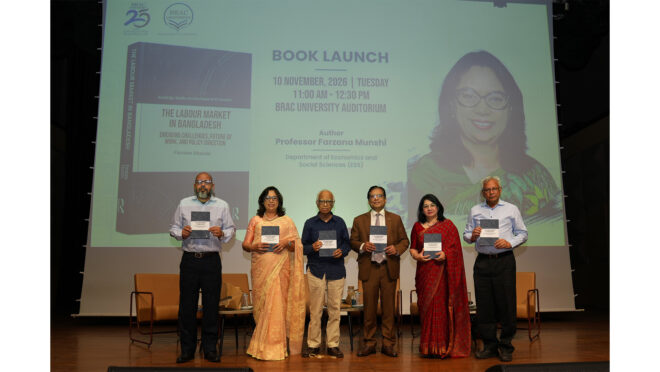
Bangladesh needs to create more productive, formal jobs and equip workers for technological change as employment fails to keep pace with shifts in the economy, experts said at a book launch at BRAC University on Tuesday.
The university’s Department of Economics and Social Sciences hosted the launch of The Labour Market in Bangladesh: Emerging Challenges, Future of Work, and Policy Direction, written by Professor Farzana Munshi of the department, according to the press release.
The book examines persistent challenges such as widespread informal employment, unemployment among young people and graduates, skills mismatches and gender disparities. It also looks at how technological change, automation and artificial intelligence are reshaping work.
Munshi argues that skills training must be matched by investment and the creation of productive jobs. The book calls for a shift towards better-quality formal employment to sustain economic growth and further reduce poverty.
Professor Wahiduddin Mahmud, former adviser to the ministries of planning and education, attended as a chief guest. He warned that Bangladesh risked getting stuck at middle-income status and pointed to gaps between infrastructure and the skilled workers needed to use it, and between the skills taught in education and those employers need.
He said low-wage labour and the export of workers could not sustain long-term growth. He called for more productive jobs and skills training that responds to changes in the economy.
Professor Mustafizur Rahman, distinguished fellow at the Centre for Policy Dialogue, said economic output was shifting towards higher-value sectors while employment was failing to keep pace, making it harder to spread the benefits of growth.
Dr Fahmida Khatun, also a distinguished fellow at the centre, said barriers to economic participation limited people’s prospects and weakened national productivity. She urged policymakers to consider the quality of jobs alongside the number created.
Bangladesh Institute of Development Studies Director General Professor AK Enamul Haque said artificial intelligence and automation were taking over repetitive tasks, while creativity, observation and original thinking remained essential. He called for education reforms to prepare workers for those changes.
Professor Wasiqur Rahman Khan, chairperson of the Department of Economics and Social Sciences, moderated the discussion. University trustees, faculty members and students attended.
The discussion also addressed three United Nations Sustainable Development Goals covering quality education, gender equality, and decent work and economic growth.