Govt targets Nov 30 to deliver textbooks for 2027 academic year
Govt targets Nov 30 to deliver textbooks for 2027 academic year
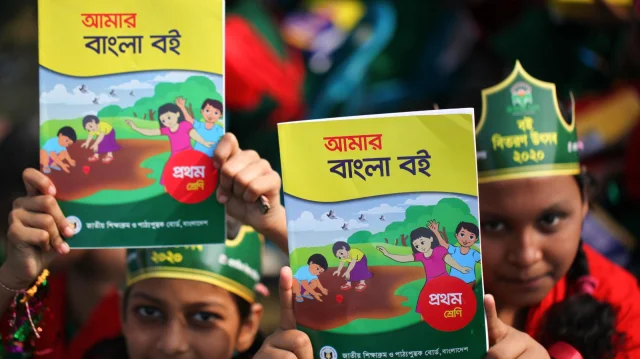
The government aims to deliver revised textbooks to nearly four crore students before the start of the 2027 academic year, with the National Curriculum and Textbook Board (NCTB) setting November 30 as the deadline to reach upazila-level distribution points.
According to the NCTB’s production report as of October 28, printing has been completed for 98.21% of pre-primary and primary textbooks combined, while progress for Ebtedayee and secondary-level books stands at 57.66%.
A total of 30.72 crore textbooks are scheduled to be printed for pre-primary, primary and secondary education, including Ebtedayee, Dakhil, vocational and technical streams. The books also include materials for students from small ethnic communities and those with visual impairments.
This year, printing began a month earlier than last year, with 113 printing companies awarded contracts across 623 lots.
NCTB Chairman Professor Mohammed Fakhrul Mawla told BSS that printing at the pre-primary and primary levels had progressed beyond 90%, while work on Ebtedayee and Classes VI and VII had also advanced beyond the halfway mark.
However, printing for Classes VIII and IX-X has slowed, partly because fresh tenders were invited for several lots, he said.
The chairman said 32 printing presses had been served show-cause notices over slow progress. Contracts with underperforming presses could be cancelled and their work reassigned if necessary.
The NCTB has deployed multiple monitoring teams to supervise printing and quality control, while 53 teams formed jointly by the board and the Ministry of Education are monitoring operations across the country.
According to the NCTB, printed sheets and books from 36 printing companies have been rejected for failing to meet quality standards. Around 9.5 lakh substandard printed sheets and 12,000 printed books have been rejected so far, the chairman said.
NCTB Member (Textbooks) Professor Mohammad Abu Naser Tuku told BSS that distribution was progressing according to the established roadmap.
He expressed hope that primary-level textbook printing would reach 98-99% by the end of October. More than 95% of secondary-level textbooks would be delivered by November 30, he added.
District and upazila education officers, along with heads of educational institutions, have been assigned responsibility for checking textbook quality upon delivery. Officials could face disciplinary action if quality deficiencies are found after receiving the books.
Education and Primary and Mass Education Minister Dr A N M Ehsanul Hoque Milon said the government would not tolerate the delivery of textbooks printed on substandard paper.
He said reasonable prices had been set after reviewing market rates to prevent printing companies from using low prices as an excuse for producing inferior-quality books.
No one would be spared if they failed to deliver quality textbooks within the stipulated deadline, he added.