Half-empty classrooms, 54% teacher vacancies plague technical education
Half-empty classrooms, 54% teacher vacancies plague technical education
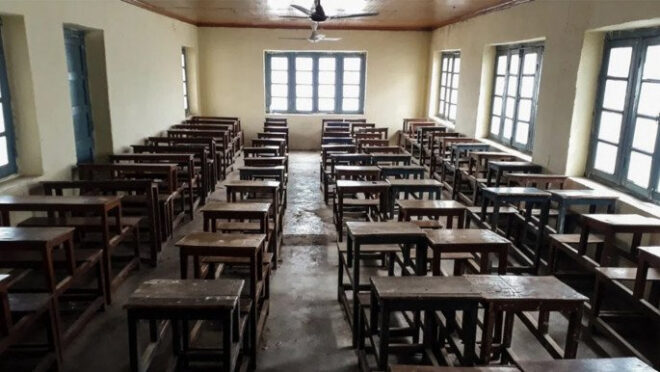
Despite institutional growth in technical education, Bangladesh’s efforts to build a skilled workforce are faltering, with more than half of available seats remaining vacant, teacher shortages exceeding 53%, and hundreds of institutions struggling to attract students.
The crisis has become so acute that the authorities have suspended admissions at 246 institutions and initiated action against another 112, raising questions about the quality, relevance and future of technical education.
Shortages of training equipment, inadequate infrastructure, outdated curricula, and uncertainty over employment prospects after graduation are also discouraging students from enrolling.
According to Bangladesh Technical Education Board (BTEB) data for the 2024-25 academic year, the country had 12,932 technical education institutions with a combined capacity of 1,974,465 seats. However, only 974,718 students enrolled, leaving more than half the seats vacant.
The shortage is particularly acute in four-year Diploma-in-Engineering programmes. Although private polytechnic institutes have more than 160,000 seats, only 30,614 students enrolled in 2024-25.

Infograph: TBS
Admissions suspended at many institutions
The BTEB has suspended admissions at 246 institutions for the 2026-27 academic year after they failed to enrol students for three consecutive years.
The institutions include 137 diploma-level institutes and 109 offering Higher Secondary Certificate (Business Management and Technology) programmes.
The board has also initiated steps to suspend admissions and revoke teaching approvals at another 112 institutions for the same reason.
Meanwhile, it has issued show-cause notices to 621 of the 3,440 institutions authorised to offer vocational education for failing to enrol students for five consecutive years between 2021 and 2025.
Of these, 443 offer SSC (Vocational) programmes and 178 offer Dakhil (Vocational) programmes.
More than half of teacher posts vacant
Alongside low enrolment, a severe teacher shortage is another major obstacle to technical education. On 28 June, Education Minister ANM Ehsanul Haque Milon told parliament that 8,486 of the 15,844 approved teacher posts in technical educational institutions were vacant, accounting for 53.6% of the total.
He said requisitions had been sent to the Public Service Commission (PSC) for recommendations to fill 2,204 vacancies. Recommendations had also been made to recruit 97 cadre and 349 non-cadre teachers through the 45th Bangladesh Civil Service (BCS) examination.
The Directorate of Technical Education’s 2024 TVET Annual Sector Performance Report painted a similar picture, showing that 53.62% of teacher posts in institutions under its jurisdiction were vacant.
Institutions lack essential facilities
Despite the increase in the number of institutions, many still lack adequate classrooms, laboratories, modern equipment and qualified trainers.
Dhaka Technical College in Swamibagh, Old Dhaka, operates from a rented house in a narrow alley and has only four classrooms. Without its own land or a permanent building, it cannot provide adequate classrooms, staff rooms or practical training facilities.
Its principal, Habibur Rahman, said the institution urgently needed additional space for classrooms, teachers and laboratories but was severely constrained by inadequate infrastructure.
He said the lack of space and equipment prevented the college from introducing new trades, such as refrigerator and air-conditioner repair and ceramics, limiting its ability to expand training programmes.
Cumilla Agriculture and Technical College is also struggling with low enrolment. The MPO-listed institution has 147 students across all semesters and 13 teachers, including three part-time staff.
Instructor Md Shah Alam said the same syllabus and course content had been taught for 22-23 years and needed updating to reflect changing demands.
Meanwhile, Bogura Polytechnic Institute, a government institution, faces teacher and accommodation shortages despite its large student population. Established in 1962, it has around 4,300 students enrolled in nine technologies under its four-year Diploma-in-Engineering programme.
Principal Md Shafiqul Islam said 146 teachers were working against 210 approved posts, leaving 64 vacancies. The shortage is putting pressure on regular classes and examinations, forcing existing teachers to take additional classes.
Employment gap after training
Technical education aims to develop a skilled workforce and expand employment opportunities. However, a mismatch between training programmes and labour market demand is undermining this goal.
SM Ariful Amin, a diploma holder with experience at the Institute of Glass and Ceramics, said limited private-sector job opportunities and career progression, coupled with ineligibility for many government jobs, were discouraging students from pursuing vocational and diploma courses. Even specialised institutions such as the Institute of Glass and Ceramics have vacant seats, he added.
Another diploma graduate from a private institution in Dhaka said many graduates had to pursue a BSc to secure good jobs after completing their four-year diplomas, increasing the time and cost of their education.
Habibur Rahman, principal of Dhaka Technical College in Swamibagh, pointed to wage disparities. While some diploma engineers in the public sector start with salaries of around Tk70,000, many earn only Tk12,000 a month at entry level in the private sector.
“Building institutions alone is not enough. We must ensure where graduates will find jobs and how their skills and qualifications will be valued,” he said.
Social attitudes remain a major barrier
Educationist Manzoor Ahmed says technical education faces more complex challenges than general education. Despite the government’s prioritisation of the sector, it continues to lack adequate teachers, laboratories and equipment. He stressed the need to change the perception of technical education as inferior and ensure graduates find jobs relevant to their training.
Educationist Dr Mohammad Kaykobad says technical education enables students to apply their skills directly in professional life and contribute significantly to the national economy. However, graduates must be assured of job satisfaction and suitable employment opportunities.
How effective will the reform plans be?
Rezwanul Haque, assistant director of the Directorate of Technical Education, says authorities previously failed to ensure the quality of skills acquired by technical education graduates. However, several initiatives are now being implemented under the TVET (2025–2030) programme to improve the sector.
He says low enrolment reflects not only shortcomings in education quality and institutional expansion but also negative social perceptions of technical education. An industry attachment programme has been introduced to give students practical exposure, while plans are under way to incorporate workplace challenges into the curriculum.
However, addressing the crisis requires coordinated reforms covering teacher recruitment, practical training, industry links, recognition of qualifications and employment after graduation. The government aims to increase enrolment in technical and vocational education to 30% by 2030.
TBS Cumilla correspondent Taiyebur Rahman and Bogura correspondent Khorshed Alam contributed to this report.