Ever heard of poo donation?
Ever heard of poo donation?
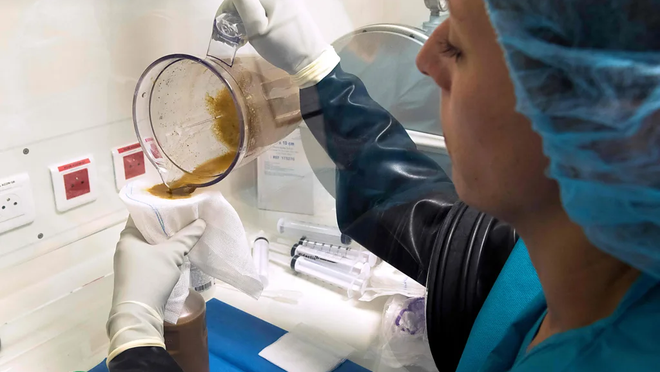
Most people would probably hesitate if someone asked them to donate their poo. Blood, perhaps. Hair, certainly. Even a kidney, under the right circumstances. But poo? That is where the generosity of many potential donors might suddenly reach its limits.
Yet, around the world, people are voluntarily donating their faeces for scientific research and medical treatment. And surprisingly, there are clinics that actively recruit people willing to do it.
The reason is that human poo contains something far more valuable than most of us would imagine: billions of microorganisms living in our gut, collectively known as the gut microbiome.
Scientists can extract and process these microorganisms to produce what is known as a faecal microbiota transplant (FMT). The procedure involves transferring processed material from a healthy donor’s stool into another person’s digestive system to restore or improve their gut microbiome.
Researchers rely on these donations to conduct clinical trials, while specialised medical centres use carefully screened donor material to treat certain illnesses.
In other words, somewhere in the world, someone is sitting on a toilet and making a contribution to medical science. And they might even be getting paid for it.
If you have ever wondered whether your daily bathroom routine could be put to better use, here is what you should know about becoming a poo donor.
Why would anyone donate their poo?
Think of it as donating a tiny ecosystem rather than simply giving away waste.
Your gut microbiome is a community of bacteria, viruses, fungi and other microorganisms that plays an important role in maintaining your health. It helps regulate the immune system, break down food and influence how your body processes nutrients.
Scientists are still discovering just how much these microorganisms can do. Research has linked the gut microbiome to several important bodily functions, while studies are also exploring the possibility of developing new antimicrobial treatments from substances found in human faeces.
Donating poo allows researchers to study these microorganisms and understand how they influence human health. Depending on the study, donors may be asked to provide a single sample or make regular donations over a specified period.
For example, research using donated stool has helped scientists understand how gut microbes spread between people through everyday social interactions. Apparently, your microbiome can have something in common with your social circle.
But the applications go beyond research.
Faecal microbiota transplantation is now an established treatment option for certain cases of recurrent Clostridioides difficile infection, a potentially serious bacterial infection that can cause severe diarrhoea and inflammation of the colon, particularly when conventional treatments fail.
Researchers are also investigating its potential applications in treating inflammatory bowel disease, irritable bowel syndrome, liver disease, persistent urinary tract infections and certain mental health conditions. Other studies are examining whether it could improve patients’ responses to cancer immunotherapy.
So, while donating poo might not sound like the most glamorous contribution to healthcare, it could help researchers develop treatments for conditions that affect millions of people.
Not everyone’s poo makes the cut
Unfortunately, you cannot simply walk into a hospital, hand over a container and expect to become a medical hero.
There is a surprisingly competitive selection process, and your digestive system has to pass some rather serious examinations.
Poo intended for medical treatment must meet exceptionally strict safety and quality standards. Potential donors undergo extensive medical assessments and laboratory screening to ensure their samples do not contain harmful microorganisms or other infectious agents.
This includes screening for blood-borne viruses such as HIV and hepatitis, intestinal parasites, disease-causing bacteria and viruses, including C. difficile, and antibiotic-resistant bacteria.
Medical centres also assess donors’ medical histories and lifestyle choices. Certain behaviours, including injecting drugs and having unprotected sex, may disqualify potential donors because of the risk of acquiring infections.
Travel history matters, too. Visiting countries where travellers’ diarrhoea is common may temporarily make someone ineligible to donate.
And passing the initial screening is only the beginning. Regular donors must undergo repeated health assessments and remain available to provide samples according to the medical centre’s requirements.
There is also the rather inconvenient issue of geography. Fresh stool does not remain suitable indefinitely without appropriate storage and processing. Donors generally need to live or work close enough to a collection facility to provide samples within the required timeframe.
All these requirements make finding suitable donors surprisingly difficult.
In one clinical trial conducted by researchers around a decade ago, 116 potential donors were screened. Only 12 passed the selection process, meaning approximately 10% qualified.
Some candidates withdrew because they could not commit to the required donation schedule. Others were rejected because of medical conditions, intestinal parasites or detectable blood in their stool. A few had risk factors associated with variant Creutzfeldt-Jakob disease, a rare brain disorder linked to bovine spongiform encephalopathy, commonly known as mad cow disease.
It turns out that having regular bowel movements is not quite enough to qualify for the job.
Your toilet visits could actually help someone
For those who make it through the screening process, donating poo can offer some rather meaningful benefits.
The most important one is the possibility of helping someone recover from a debilitating or potentially life-threatening illness. Your donation could be used to treat a patient suffering from recurrent C. difficile infection or support research into treatments for other medical conditions.
There are personal benefits, too. Donors may receive extensive and repeated health screenings, giving them an opportunity to learn more about their own health. Depending on the clinic and its donation programme, some may also receive financial compensation.
However, there is a small catch. Extensive screening can sometimes uncover previously undetected medical conditions, known as incidental findings. These discoveries may require further investigation and additional medical tests, so a free health check does not necessarily mean a completely hassle-free experience.
Ultimately, poo donation is not for everyone. It requires commitment, regular screening and a willingness to participate in a process that most people would probably prefer not to discuss over dinner.
But the next time someone tells you that you are full of shit, you might have a rather unexpected response: at least yours could be medically useful.