Children face highest risk as unsafe food kills 1.5 million globally each year: WHO
Food is meant to nourish, to sustain life. Yet for millions of people around the world, a single unsafe meal can be the difference between health and illness, even life and death. Behind everyday routines of cooking and eating lies a largely invisible crisis that claims 1.5 million lives every year, many of them children.
Children face highest risk as unsafe food kills 1.5 million globally each year: WHO
Food is meant to nourish, to sustain life. Yet for millions of people around the world, a single unsafe meal can be the difference between health and illness, even life and death. Behind everyday routines of cooking and eating lies a largely invisible crisis that claims 1.5 million lives every year, many of them children.
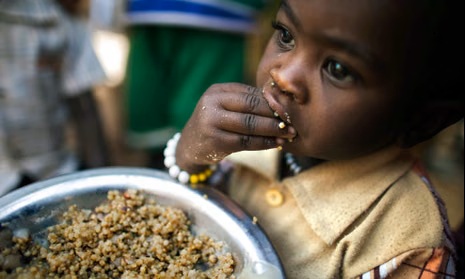
New global estimates reveal that contaminated food causes hundreds of millions of illnesses annually, placing a quiet but devastating burden on families, healthcare systems and fragile economies. While foodborne disease is often associated with short-term stomach upsets, the reality is far more severe,particularly for young children whose developing bodies are least able to withstand infection or toxic exposure.
Children under five make up a small fraction of the world’s population, yet they bear a disproportionately heavy share of foodborne disease. Severe diarrhoeal illnesses remain among the leading threats, but they are only part of the story. Long-term exposure to toxic substances such as lead, arsenic and methylmercury, often ingested unknowingly through everyday foods, can permanently damage developing brains, affecting cognition, growth and future productivity.
Midway through the findings, a report highlighted by UN News draws attention to just how widespread the problem has become. Data compiled by the World Health Organization, the UN’s health agency, show that bacteria, viruses and parasites are responsible for most foodborne illnesses globally, while chemical contamination accounts for the majority of deaths. Once these toxins enter the food chain — through polluted water, industrial waste or unsafe agricultural practices — they are often impossible to remove.
The consequences stretch far beyond hospitals and clinics. Entire regions feel the strain. Africa and Southeast Asia together account for nearly three-quarters of all foodborne illnesses worldwide, reflecting deep inequalities in sanitation, food regulation and access to healthcare. For low-income communities, unsafe food is not a rare accident but a daily risk shaped by poverty and weak infrastructure.
Economically, the toll is staggering. Lost productivity due to foodborne disease runs into hundreds of billions of dollars each year, as workers fall ill, parents miss work to care for children, and long-term disabilities reduce earning potential. When adjusted for cost-of-living differences, the losses rise even higher — a reminder that unsafe food is as much an economic issue as it is a public health one.
Experts warn that emerging pressures are likely to worsen the situation. Climate change is altering rainfall patterns and temperatures, increasing contamination risks, while antimicrobial resistance is making infections harder to treat. Together, these forces threaten to turn an already serious problem into a deeper global emergency.
The message from health officials is clear: food safety cannot be treated as an abstract or secondary concern. It is a daily reality that touches every household, every market and every meal. Strengthening surveillance, enforcing food standards and improving cooperation between health, agricultural and environmental sectors are no longer optional — they are urgent.
Because when food is unsafe, the cost is measured not only in statistics, but in lives quietly lost at the table.