How Imran's Kaktaruaa earned a Diana Award
Every year, the Diana Award is given to youth from all over the world who demonstrate exceptional dedication to social action and humanitarian work.
How Imran's Kaktaruaa earned a Diana Award
Every year, the Diana Award is given to youth from all over the world who demonstrate exceptional dedication to social action and humanitarian work.
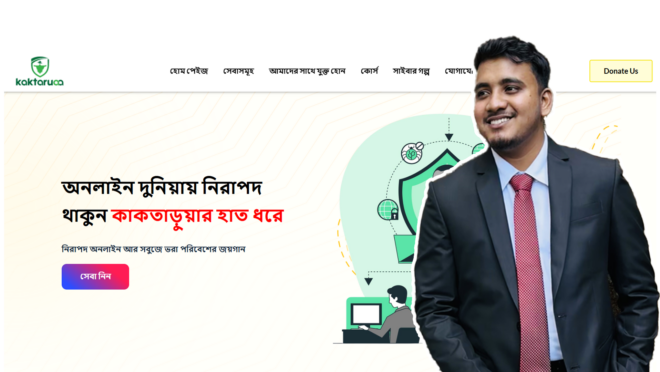
This year, Abdullah Al Imran was one of the recipients from Bangladesh. He got this award as recognition of his work with Kaktaruaa, which works in digital safety in Bangladesh.
Imran was a boy who wanted to follow his father’s path to work in the Bangladesh military, but that did not work out for him. He completed his graduation in Bengali literature, but his passion and interest in technical skills led him to Kaktaruaa, which, by his estimate, has reached millions online. To learn more about the journey behind the recognition, I reached out to him.
Imran first heard about the Diana Award around two years ago but did not know how the nomination worked. When he learned that Mobin Sikder of Science Bee had received it, he asked him about the process. Sikder encouraged him and offered to nominate him for his work with Kaktaruaa.
After several months without an update, Imran assumed he had not been selected. Then the confirmation email arrived while he was at his office. He thought it was a phishing email, but it was the one confirming he was a Diana Award recipient of 2026.
Behind this award stands a boy who had a deep desire to work for others. He claims to be an introvert who found it hard to speak to people, but he didn’t let that stand between his vision and dream.
He found a way forward online. He realised social media was becoming a popular way of socialising. He saw people using social media groups to find blood donors and organise social initiatives. Then he came to realise that he could help people through the internet too.
As he was already interested in technology, he often helped people he knew fix their social media problems. Gradually, he saw that the problems were bigger than he had thought.
People were being harassed through fake accounts and facing other forms of online abuse. He felt helping them digitally could be his way of doing social work. That led him to build Kaktaruaa.
It is a nonprofit digital safety initiative that helps people recognise online threats, protect themselves and get practical support when they face abuse. It first focused on students facing cyberbullying through fake accounts, “expose” posts and “crush and confession” pages.
As blackmail, scams, hacked accounts and AI-generated harassment began reaching the team, its work grew to include awareness content, workshops, free courses, one-to-one guidance and tools on Kaktaruaa.org for checking suspicious links, data breaches and AI-generated content.
According to Imran, around 1,200 women have taken Kaktaruaa’s free online course and 4,000 to 5,000 people have used its tools. Its posts have reached an estimated 5 to 6 million people, mainly on Facebook. This was the digital engagement.
Apart from that, Kaktaruaa was active in the field too; seminars were arranged in schools that reached 2,000 to 3,000 students.
While talking about Kaktaruaa, he mentioned one particular case, and it is quite a common case in our country as well. A woman’s former partner had shared private videos of her online without her consent. Her sister spoke out, people tagged Kaktaruaa, and the team removed the content within a few hours. The family later went ahead with legal action, and the person responsible was arrested. “Experiences like this remind me that our work is about more than removing content; it is about helping someone regain a sense of safety and control,” Imran says.
He is overwhelmed by the Diana Award, and he explains that even though the award carries his name, he entirely dedicates it to Kaktaruaa and its team.
For Imran, the recognition of the Diana Award is encouragement to keep going forward. He hopes it will open doors to educational institutions, technology platforms and public agencies. In future, he plans to add AI-assisted tools to give guidance faster while keeping human support for sensitive cases as well.
For young people who want to make a difference but do not know where to start, his advice is simple. “Do not feel discouraged because only a few people notice your work or benefit from it. Helping even one person matters. If you have a meaningful idea and a sincere intention to help, take that first step. Do not wait for everything to be perfect.”