The Difficult Bride and Rubaiyat Hossain’s Venice Film Festival breakthrough
The first Bangladeshi feature ever selected for the Venice Film Festival, Rubaiyat Hossain’s The Difficult Bride is a feminist supernatural story rooted in a Dhaka urban myth — a film almost 20 years in the making, and one she says only arrived when she was finally ready to tell it.
The Difficult Bride and Rubaiyat Hossain’s Venice Film Festival breakthrough
The first Bangladeshi feature ever selected for the Venice Film Festival, Rubaiyat Hossain’s The Difficult Bride is a feminist supernatural story rooted in a Dhaka urban myth — a film almost 20 years in the making, and one she says only arrived when she was finally ready to tell it.
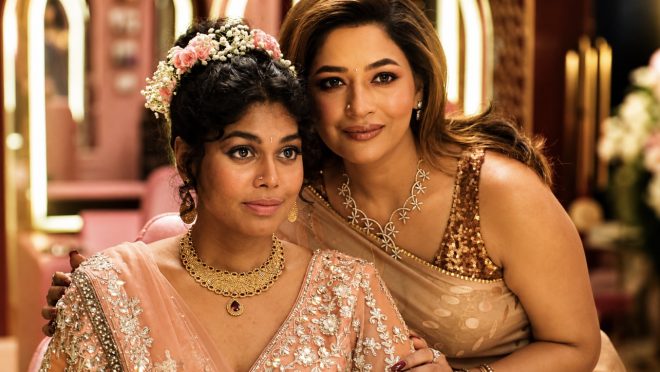
For decades, Bangladeshi cinema has struggled to find a permanent place on the global festival map. While the country has produced filmmakers whose works have travelled beyond national borders, the selection of a Bangladeshi feature film for the prestigious Venice Film Festival marks a historic moment of its own.
Against this backdrop, Rubaiyat Hossain’s upcoming feature, The Difficult Bride, emerges at Venice not merely as another film, but as a significant cultural milestone: the first Bangladeshi feature to be selected for the event. It represents a moment when a Bangladeshi story, created through a distinctly local cultural lens, is poised to enter a global conversation. To learn more, I spoke with Rubaiyat Hossain, who shared her overwhelming experience of making it.
The story
The Difficult Bride has been with Rubaiyat for almost 20 years. It began as a short film in 2006 and evolved alongside her own life through many rewrites, coming into being only when the financing, collaborators and cast naturally aligned.
Rubaiyat believes that “Freedom is the Emotional Core”. All her life, she has been moving towards freedom. Growing up in Bangladesh, she became deeply aware that women’s bodies, desires and movements are constantly observed and regulated. That lifelong tension became the emotional foundation of this film.
The inspiration came from an urban myth she heard years ago about a bride who mysteriously died inside a beauty parlour in Dhaka.
“Rather than retelling the legend, I imagined another bride entering that same space, where everyday reality slowly gives way to the supernatural,” she said.
As she developed the story, realism gradually opened itself to dreams, ghosts, memory and intuition.
“The supernatural became a cinematic language that allowed me to express emotional truths that realism alone could not fully capture,” Rubaiyat said.
The film explores how women move through homes, beauty salons, rooftops, gardens and cities while negotiating visible and invisible boundaries. Beauty and privilege do not necessarily mean freedom; space itself can become both sanctuary and prison. Alongside this, South Asian femininity is extraordinarily ornate, built upon generations of craftsmanship through Jamdani weaving, jewellery and beauty rituals. Yet behind this beauty often lies an equally elaborate prescription of femininity, and Rubaiyat wanted to explore that contradiction.
There is a bridal scene in which the bride represents the “ideal” performance of femininity — adorned, celebrated, disciplined and constantly watched. The film immediately asks what happens when that carefully constructed identity begins to fracture. Throughout, the protagonist’s body is disciplined by beauty rituals and social expectations, yet it ultimately finds freedom not through perfection, but through its most primal instincts: fear, survival and intuition.
“When I begin writing, I don’t start with a message or an ideology. I begin with a woman’s experience of the world and ask what emotional truths emerge from it.”
The more specific and deeply observed those lives become, the more universal they feel. Rubaiyat’s hope has never been to speak for all women, but to create characters whose inner lives feel complex, contradictory and profoundly human.
A women-led collaboration
When Rubaiyat made her first feature, almost every head of department in the industry was a man. Fifteen years later, nearly every department head on The Difficult Bride was a woman, and that collaborative environment fundamentally shaped both the process and the film itself.
Working with women artists from Bangladesh, Portugal, France and India brought extraordinary generosity, rigour and emotional intelligence to the project. Together with cinematographer Leonor Teles, they explored how cinema might inhabit female subjectivity instead of simply observing women from the outside.
“We wanted the audience to experience the protagonist’s inner world rather than merely watch it.”
Rather than rejecting mirrors, reflections and fragmented bodies, she sought to transform them into expressions of memory, trauma and interior experience rather than objectification. The film engages with ideas developed by feminist thinkers such as Laura Mulvey, Nina Menkes, bell hooks and Luce Irigaray — not to illustrate theory, but to embody these questions through cinematic form and emotion.
“My parents gave me the confidence to imagine a life as an artist. Their belief in me, particularly my father’s unwavering encouragement, continues to shape everything I create.”
Bangladeshis help build the modern world, yet their stories remain largely absent from world cinema. Increasingly, Rubaiyat’s work seeks to follow Bangladeshi lives across borders and explore migration, labour, belonging and home. The Difficult Bride is one chapter in a broader body of work.
“My future projects continue expanding these questions beyond Bangladesh while remaining rooted in Bangladeshi experience.”
When asked why this story had stayed with her for so long, she said:
“I have never believed that films arrive simply because we decide to make them. They come when they are ready.”
During those 20 years, Rubaiyat made other films, travelled, experienced love and grief, and changed herself. All of those experiences quietly found their way into this film.
“Looking back, I think the story was patiently waiting for everything to align: the collaborators, the actors, the financing and my own artistic confidence.”
In South Asia, urban myths and ghost stories are woven into everyday life, often carrying emotional truths that realism alone cannot express. The ghosts in The Difficult Bride are not simply frightening figures but manifestations of memory, trauma, longing and survival.
“Rather than asking audiences to solve a mystery, I wanted to invite them into an emotional experience where instinct becomes more important than explanation.”
Beauty is central to the film. Rubaiyat has always been fascinated by textiles, jewellery, architecture, gardens and the extraordinary craftsmanship of South Asia, but she was equally interested in what happens when beauty fractures.
“I was reading about the idea of the feminine grotesque, the moment when what appears exquisite, controlled and desirable slowly gives way to something unsettling, instinctive or even terrifying.”
For her, beauty is never simply decorative — it can seduce, protect, imprison or deceive. In The Difficult Bride, the beauty salon becomes a perfect metaphor for that contradiction: a place of transformation and celebration that also becomes a space where hidden anxieties, desires and ghosts begin to surface.
Rubaiyat’s films begin in Bangladesh, but they are never only about Bangladesh. They use local histories, cultures and lives to ask universal questions about freedom, belonging, labour, gender and human dignity.
“I believe deeply local stories can resonate globally when they are told with honesty and specificity.”