Indian scientists develop AI framework to identify hidden cancer stem cells
Indian scientists develop AI framework to identify hidden cancer stem cells
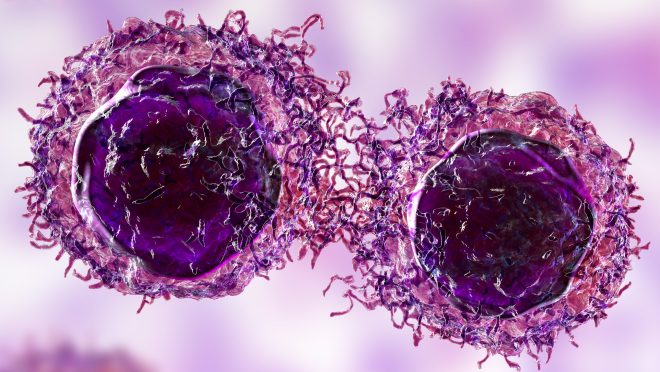
Indian scientists have developed an artificial intelligence (AI) framework that can identify three distinct developmental states of cancer stem-like cells, potentially helping researchers detect hidden cells linked to tumour recurrence, metastasis and treatment resistance.
The framework, developed by researchers at the S N Bose National Centre for Basic Sciences (SNBNCBS) in collaboration with Ashoka University, can identify hidden cancer stem-like cell states using tumour gene-expression data, India’s Ministry of Science and Technology said in a statement today (12 August).
Led by Dr Shubhasis Haldar, the research builds on the team’s earlier AI platform, OncoMark, which decoded biological features associated with cancer progression across millions of cells with more than 99% predictive accuracy.
The new framework, called ACSCeND (AI-based Cancer Stem-like Cell Profiler and Neoplasm Deconvoluter), goes beyond conventional methods that assign tumours a single “stemness” score.
Instead, it identifies three developmental states of cancer stem-like cells: pluripotent-like, multipotent-like and unipotent-like.
Cancer stem-like cells are rare cells believed to contribute to tumour growth, recurrence, metastasis and resistance to treatment. Their ability to change their identity has made them difficult to detect accurately.
ACSCeND combines information from high-resolution single-cell sequencing with deep learning to analyse conventional bulk tumour RNA sequencing.
This could allow researchers to study hidden cell populations across thousands of patient samples where single-cell sequencing is not available, according to the ministry.
The researchers tested the framework against existing computational methods and found that it consistently performed better across independent datasets and sequencing platforms.
They then used ACSCeND to analyse more than 25,000 tumour samples from major international cancer databases.
The analysis found that tumours with higher levels of highly potent, pluripotent-like cancer stem cells were associated with poorer survival, a higher likelihood of recurrence and weaker responses to modern immunotherapies.
The framework also identified molecular programmes that help these cells survive, adapt and evade the immune system.
According to the ministry, the findings could support the discovery of new drug targets, help identify patients at greater risk of relapse and contribute to the development of more effective precision cancer treatments.
The technology could be particularly useful in settings where advanced health facilities and single-cell sequencing capabilities are limited, it said.