Running the game: Inside the fitness demands on World Cup referees
Running the game: Inside the fitness demands on World Cup referees
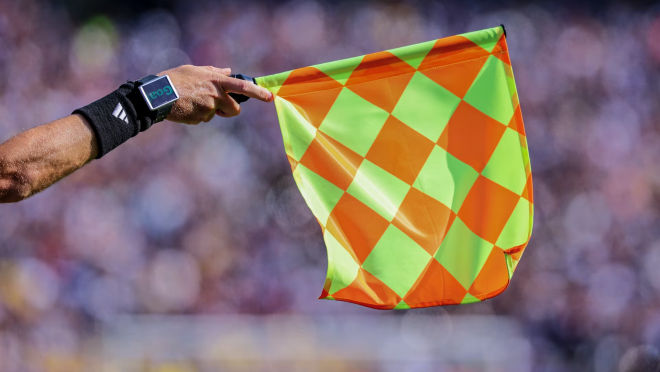
When a World Cup match turns on a split-second decision in the dying moments, the referee is expected to be in the right place at the right time — no small ask when battling everything from Miami humidity to Mexico City’s lung-busting altitude.
While fans focus on players chasing goals, referees are sprinting just as hard, typically covering 12 to 13 kilometres per match according to FIFA — a distance comparable to many outfield players.
Over the course of a tournament, that can add up to dozens of kilometres of high-intensity movement for some referees, often in extreme heat, at altitude and under intense psychological pressure.
The demands extend beyond simply running. Referees must repeatedly accelerate, decelerate, shuffle sideways and sprint backwards, often in response to sudden counterattacks or rapid shifts in play.
Unlike players, referees are required to stay close to the action at all times, constantly adjusting their position to maintain the best viewing angle without interfering with play.
“The referee must always be in the right place at the right moment. We have to go on the pitch every day to prepare this, like top players do,” Director of FIFA Refereeing Massimo Busacca said in a press release following a World Cup referee training camp in January.
Referees undergo extensive training and certification, typically progressing through local and national competitions before reaching the international level. The most experienced officials are appointed to elite tournaments such as the FIFA World Cup.
FIFA said its 2026 World Cup officials were selected following a process spanning more than three years, during which candidates were identified, monitored and regularly assessed at FIFA tournaments and in domestic and international competitions. The final group includes 52 referees, 88 assistant referees and 30 video match officials from 50 member associations across all six confederations.
Before they can take charge of the world’s biggest matches, referees must pass FIFA’s standard fitness test to officiate at the highest levels of the game.
Could you pass the test?
Designed to measure speed and endurance, the test helps ensure officials can keep up with play while maintaining the concentration needed to make split-second decisions.
Referees must pass this test, made up of two parts, at least once a year. For women’s matches, the tests are the same but timings differ.
While players prepare in team camps, FIFA’s referees are doing much the same in Miami. The officials follow an athlete-style programme built around tailored nutrition, daily training, video review and recovery, supported by physiotherapists, sports scientists and psychologists.
They train in the Florida heat before flying to matches across North America and returning to base. FIFA monitors individual workloads using GPS data, personalised performance records and tailored training plans designed to keep officials physically prepared for the demands of the tournament.
Aside from the sheer distance covered, refereeing is a high-intensity job. A review of studies found that high-intensity running accounted for more than a third of total running time, with referees’ heart rates reaching 80% to 100% of their maximum.
There is a reason FIFA treats referees as high-performance athletes. Academic research has consistently linked physical fatigue to poorer positioning, narrower viewing angles and slower reaction times, all factors that can increase the risk of critical errors.
It is not just the referee in the middle of the field whose fitness is key to the efficiency of a match. Assistant referees, the officials stationed along the touchline responsible for offside decisions, throw-ins and monitoring play along the line, may cover less overall distance, typically around 6-8 kilometres, according to a study of referees and assistant referees during the 2022 FIFA World Cup, but their workload is no less demanding.
Tracking studies show assistant referees perform more frequent high-intensity sprints, staying tightly aligned with defensive lines and reacting instantly to potential offside calls, a role that demands explosive speed and precise timing under intense scrutiny.
Collectively, referees and assistant referees will cover thousands of kilometres over the course of the tournament, all while making split-second decisions that can shape matches and end campaigns.
As the tournament’s quarter-finals approach, the spotlight remains on players — but behind every defining moment is a referee racing to keep pace, knowing one whistle can change everything.