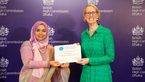
How one Cambridge scholar secured the Commonwealth Scholarship
If there is one message he repeats throughout the interview, it is the importance of early preparation. “One should ideally start preparing at least one year before the application deadline,” he says. “A stitch in time saves nine.”
How one Cambridge scholar secured the Commonwealth Scholarship
If there is one message he repeats throughout the interview, it is the importance of early preparation. “One should ideally start preparing at least one year before the application deadline,” he says. “A stitch in time saves nine.”
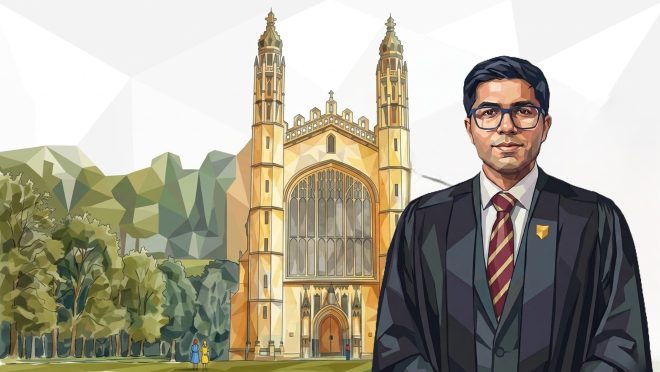
A strong Commonwealth application is not built in a few rushed days before the deadline; it is built gradually through reflection, preparation, feedback, and persistence
For countless students residing in or across the Commonwealth of Nations, the Commonwealth Scholarship represents phenomenal financial support for students who want to pursue higher education in the UK. It is a gateway to some of the world’s leading universities, an international network of scholars, and an opportunity to create meaningful impact back home.
For one Bangladeshi scholar, Mashrur Arefin Ayon, currently studying at the University of Cambridge, the journey to securing the scholarship was neither quick nor easy.
Pursuing an MPhil in multidisciplinary Gender Studies at Cambridge, he is both a Commonwealth Scholar and a Cambridge Trust Scholar, the only Bangladeshi student at Cambridge this year to hold both scholarships together. Before Cambridge, he worked at UN Women Bangladesh and at the South Asian Institute of Policy and Governance at North South University.
His advice to future applicants is simple: “A strong scholarship application is not built in a few rushed days before the deadline; it is built gradually through reflection, preparation, feedback, and persistence.”
So, how does one actually prepare for the Commonwealth Scholarship? Here is a step-by-step breakdown based on his experience.
Step 1: Understand the different routes
Like every other venture in life, the first and most important thing an applicant should do is to understand what different scholarships have to offer. What Commonwealth offers and what the applicant expects might not be on the same page.
“Every scholar has their own strategy, and I had mine,” he explains. “From my experience, the first step is to understand the different Commonwealth Scholarship routes very clearly, such as Commonwealth Master’s, Commonwealth Shared, Commonwealth PhD, Commonwealth Split-site, and Commonwealth Distance Learning scholarships.”
Each route has different objectives, eligibility criteria, and application procedures. Applicants should carefully research which programme aligns best with their academic background and future goals.
He also recommends reaching out to current or former scholars through LinkedIn. “Most scholars are generous with advice and can help clarify practical questions,” he says.
Step 2: Start preparing at least one year beforehand
If there is one message he repeats throughout the interview, it is the importance of early preparation.
“One should ideally start preparing at least one year before the application deadline,” he says.
“A stitch in time saves nine.”
Early preparation gives applicants enough time to select universities, prepare documents, approach referees, and sit for required English language tests such as IELTS.
“Many documents, such as transcripts, certificates, and experience letters, may need to be collected, attested, or formatted properly,” he explains. “Leaving them until the eleventh hour can create unnecessary stress.”
He also strongly recommends taking IELTS early, even if universities allow later submission. Doing so leaves room for improvement if necessary.
Step 3: Build a strong academic and professional profile
While CGPA matters, he argues that scholarships are about much more than grades.
“CGPA is very important because it often works as an initial benchmark,” he says.
To explain this, he gives a simple example: if dozens of universities each produce top-ranking graduates every year, not all of them can receive fully funded scholarships abroad.
“Therefore, a high CGPA alone is not everything.”
Selection committees, he says, want to know how applicants are using their education to create value for society.
“In most scholarship applications, the key question is not only what you have learned, but how you are using that learning to create value for your community, institution, country, or field.”
Applicants should therefore try to strengthen their profiles through research projects, policy work, volunteering, leadership activities, publications, or technical skills. He also suggests publishing research in credible journals with valid DOIs whenever possible.
Step 4: Engage with universities and potential supervisors early
Another major mistake applicants make is waiting too long to contact universities or supervisors.
“The most important step is to engage with universities and, where relevant, potential supervisors early,” he explains.
This includes attending webinars, reading departmental websites carefully, and understanding how one’s research interests align with faculty expertise.
“Do not wait until the eleventh hour,” he reiterates. “A strong application is more like a marathon than a last-minute sprint.”
For research-based programmes in particular, building communication with supervisors can significantly strengthen an application.
Step 5: Write a clear and strategic personal statement
One of the most difficult parts of scholarship applications is writing the personal or development impact statement. According to the Cambridge scholar, this document should be treated as a “strategic narrative”.
“I approached my personal and development impact statement as a carefully developed document, not as something to be written in one afternoon,” he says.
Instead of writing generic essays, applicants should connect their past experiences, future goals, and development impact into a coherent story.
“It should show who you are, what you have done, what you want to study, why it matters, and how that learning will create a meaningful impact.”
He drafted his statements early, revised them several times, and sought feedback from supervisors, referees, and experienced academics.
Importantly, he advises applicants to answer the actual questions being asked instead of recycling generic statements for every scholarship.
Step 6: Prepare properly for the interview
For shortlisted candidates, interviews are often the final stage of the process.
Applicants should be prepared to explain their academic goals, development impact, research interests, and future plans clearly and confidently.
“If someone struggles with public speaking, interviews, or viva-style questions, regular practice over several months can make a significant difference,” he says.
He also stresses that interviewers want to see applicants as complete individuals, not merely strong students on paper.
“Applicants are not judged only by a transcript, a certificate, or a set of numbers,” he explains. “They are assessed as individuals.”
Learn from rejection and keep applying
Perhaps the most important lesson from his journey is persistence.
“I had been trying for fully funded scholarships since 2022, and I faced rejection for three consecutive years,” he says. “But I kept applying, improving my applications, strengthening my profile, and learning from each attempt.”
Before eventually receiving the Commonwealth Scholarship and Cambridge offer in 2025, he had already secured other prestigious opportunities, including the McCall MacBain Entrance Award at McGill University and a scholarship from the Asian Institute of Technology.
“When that opportunity finally came in May 2025, it felt genuinely life-changing,” he recalls.
Today, life as a Commonwealth Scholar involves not only studying at Cambridge but also participating in leadership programmes, networking events, and development-focused initiatives across the UK.
“The scholarship broadens your horizon, challenges your perspective, and exposes you to new ideas, networks, and possibilities,” he says. “It is not just financial support for higher education; it is a platform.”
For future applicants, his final message remains straightforward: start early, stay consistent, and do not lose hope after rejection.
“If you are selected, it is excellent; if not, reflect honestly on the gaps, improve, and apply again,” he says. “Persistence and perseverance are a very important part of the journey.”