50-foot prehistoric snake discovered in India may rival largest ever known
50-foot prehistoric snake discovered in India may rival largest ever known
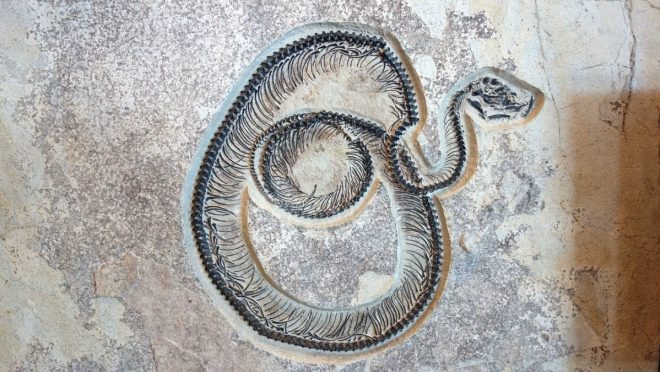
A prehistoric snake that lived in India around 47 million years ago may have reached up to 50 feet in length, potentially rivaling Titanoboa, one of the largest snakes ever known.
Named Vasuki indicus after the mythical serpent associated with the Hindu deity Shiva, the giant reptile was identified from fossilised vertebrae discovered at a lignite mine in Gujarat, western India.
The findings, published in the journal Scientific Reports in 2024, suggest the snake measured between 10.9 and 15.2 metres (36 and 50 feet). However, researchers cautioned that the estimates remain uncertain because the fossil remains do not include a complete skeleton.
Palaeontologists Debajit Datta and Sunil Bajpai of the Indian Institute of Technology Roorkee identified the species from 27 fossilised vertebrae, some of which remained connected in their original arrangement.
The snake lived during the Middle Eocene, when the region had a warm, tropical climate. Researchers believe its massive body may have made it a slow-moving ambush predator, potentially hunting in a manner similar to modern anacondas and pythons.
Vasuki belonged to the extinct Madtsoiidae family of snakes, whose members inhabited parts of Africa, Europe, Asia, South America and Australia.
Its estimated maximum length is comparable to that of Titanoboa, which lived in what is now Colombia around 60 million years ago and is believed to have reached approximately 13 metres (43 feet). Scientists say further evidence is needed to determine which species was larger.
The discovery offers insights into the evolution of giant snakes and the ancient ecosystems they inhabited, although the precise size, diet and hunting behaviour of Vasuki indicus remain uncertain.