Fluent but flawed: Can AI replace human translators?
Zimmerman says machine output has improved so much that prose often needs little rewriting. Removing human review has become a serious option for the industry.
Fluent but flawed: Can AI replace human translators?
Zimmerman says machine output has improved so much that prose often needs little rewriting. Removing human review has become a serious option for the industry.
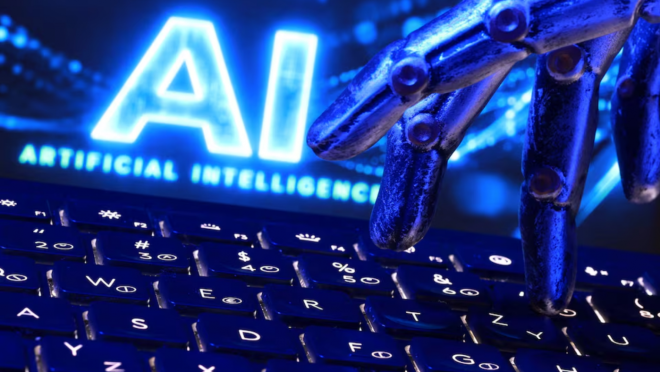
Artificial intelligence is getting better at translating words, but fluent machine-generated text can conceal serious errors. The question is whether AI can be trusted without human oversight.
“You can imagine the dilemma this throws AI into,” says François Yvon, a research director specialising in automatic translation at France’s National Centre for Scientific Research (CNRS).
A system may correctly translate “it’s raining cats and dogs”, recognising that ropes are not literally falling from the sky. But will it find an equivalent in Indonesian, Yvon asks? An idiom may be low-risk, but uncertainty becomes more serious in legal or medical translation.
In April, Google said people were translating one trillion words a month through Google Translate. That excludes DeepL, Microsoft’s tools, Claude, ChatGPT, Gemini and corporate systems. Direct sales of machine translation services, excluding general AI subscriptions, were estimated at $1.4 billion last year.
For routine tasks, relying solely on AI can make economic sense. John Zimmerman, founder of the Swiss non-profit Open Knowledge Association (OKA), which translates Wikipedia articles, says paying 100 times more to eliminate the final few per cent of errors is difficult to justify for internal documents or product listings.
But encyclopaedias depend on trust. “A wrong fact can sit there for years and get cited by journalists and AI systems,” Zimmerman says. OKA has published more than 10,000 translated articles, mainly in Spanish, Portuguese and English. AI drafts each article before a human translator checks every sentence.
That safeguard is harder to justify commercially. Zimmerman says machine output has improved so much that prose often needs little rewriting. Removing human review has become a serious option for the industry.
Specialists say risks remain when small wording errors change meaning. Ariella Baltié, a legal translator working from English into French, was recently asked to review AI-translated court documents. She found two major errors immediately.
The French legal term “Le demandeur”, meaning “the plaintiff”, became “the requester”, which is inappropriate wording for court papers. “Madame X, épouse Y”, meaning Ms X, wife of Y, became “Ms X marries Y”. The system treated a noun as a verb. In the US, errors in machine-translated asylum documents have contributed to delays in releasing detainees.
Medical translation can have even more serious consequences. Carol Bereuter, a specialist, found an automated translation that rendered the Greek letter μ as “milli” rather than “micro”. Giving a milligram instead of a microgram could mean administering 1,000 times the prescribed dose.
Bereuter says improved fluency makes mistakes harder to detect. Earlier systems often produced clumsy grammar that alerted readers. Today, an incorrect translation may sound natural and authoritative, concealing the error.
Yvon warns that translations bearing a person’s signature can threaten their reputation, while mistakes affecting medical procedures, contracts or major purchases carry greater risks. Context remains a weakness. A machine asked to translate “into Polish” might interpret “Polish” as shoe cream. Without a football context, it may also mishandle “taking a corner”.
An OKA study funded by Wikimedia examined 119 articles across 10 language pairs, drawing on more than 1,000 hours of translator work. Zimmerman says 27% of AI-generated text was corrected before publication. Three-quarters of the corrections addressed errors introduced by AI, while 5–6% changed the original meaning.
Yvon doubts these systems can become reliable because they select words based on probability. What is likely to be correct is not necessarily correct, especially in language, where meaning depends on context and nuance.
Future systems may use several AI tools together: one to translate, another to critique the result and a third to revise it. Yet Yvon says the real breakthrough will come when systems can acknowledge uncertainty and tell users when they are still unsure.