Haileybury Bhaluka, Cambridge University Press host safeguarding summit in Dhaka
Haileybury Bhaluka, Cambridge University Press host safeguarding summit in Dhaka
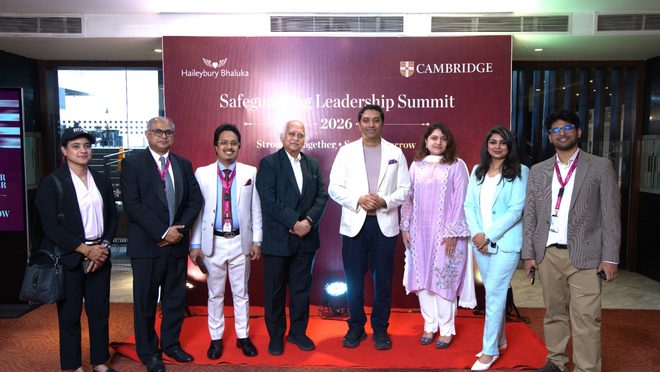
Haileybury Bhaluka and Cambridge University Press & Assessment jointly hosted the Safeguarding Leadership Summit 2026 at Le Méridien Dhaka, bringing together education leaders, teachers and safeguarding professionals from across Bangladesh.
Held under the theme “Stronger Together, Safer Tomorrow – Keeping Children Safe in Bangladesh”, the summit focused on strengthening child safeguarding practices, student wellbeing and safeguarding systems in educational institutions.
State Minister for Primary and Mass Education Bobby Hajjaj attended the event as chief guest.
Speakers emphasised that educational excellence extends beyond academic performance and requires safe, supportive and inclusive learning environments. They also stressed the need to make safeguarding part of school culture rather than treating it solely as a set of policies and procedures.
Sarwat Reza, country lead at Cambridge University Press & Assessment, said school excellence should be viewed more broadly, with student safety and wellbeing placed at the centre of educational leadership.
In his keynote address, Bobby Hajjaj highlighted the responsibility of educational institutions to ensure students’ safety and wellbeing alongside their academic development. He said the government was working with educational institutions to improve infrastructure and create safe and healthy environments for students.
Simon O’Grady, founding headmaster of Haileybury Bhaluka, discussed safeguarding challenges in Bangladesh, including harmful disciplinary practices, declining secondary-level attendance and completion rates, students’ reluctance to report concerns and cultural barriers to questioning authority.
Speakers stressed that safeguarding policies alone are insufficient. Teachers, staff and school leaders need clear guidance on responding to concerns, reporting incidents, documenting cases and ensuring appropriate follow-up.
A key session, “What Would You Do If…?”, led by O’Grady, presented education leaders with practical safeguarding scenarios involving student self-harm, complaints about staff conduct, bullying and inclusion. Participants discussed immediate responses, reporting responsibilities, confidentiality, evidence preservation and longer-term support for students.
The summit called on educational institutions to establish clear safeguarding responsibilities, create safe channels for raising concerns, strengthen professional training and regularly review child protection arrangements.
Organisers said effective safeguarding requires leadership, accountability, evidence-based practice, professional development and shared responsibility across the school community.