32 years later why we still need Friends
Sometimes I think that I watched Friends at the wrong age. I was not a twenty-something trying to figure out rent, relationships and a career. I did not grow up at Central Perk and I certainly never had a group of friends who could casually walk into my apartment whenever they wanted. And yet somehow, their lives feel familiar.
32 years later why we still need Friends
Sometimes I think that I watched Friends at the wrong age. I was not a twenty-something trying to figure out rent, relationships and a career. I did not grow up at Central Perk and I certainly never had a group of friends who could casually walk into my apartment whenever they wanted. And yet somehow, their lives feel familiar.
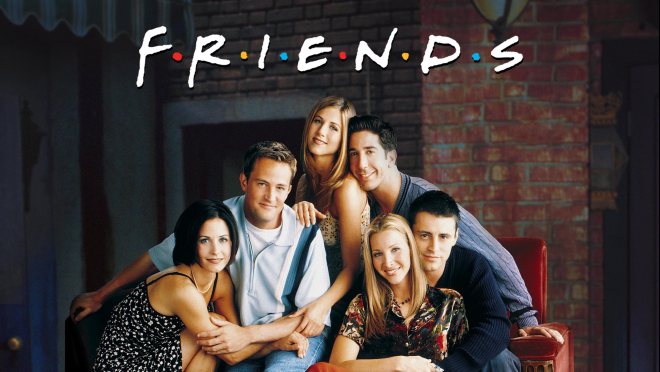
I know Monica’s apartment almost as well as my own. I know the sound of Chandler’s sarcasm before the punchline arrives. I know Joey will probably misunderstand something, Ross will overthink it, Rachel will change her mind, Phoebe will say something completely unexpected and somehow all six of them will end up together again.
That is the strange thing about Friends.
It is a show about six people I have never met, living a life I have never lived, in a city I have never called home and still, every time I return to it, it feels like going somewhere familiar.
Today, 22 September, Friends just stepped into its 32nd year.
Thirty-two years after its debut, the show is still being watched, quoted, memed and presented to people who were not even born when the first episode was broadcast.
Maybe the reason is simpler than nostalgia.
Maybe, after all these years, what we keep coming back to is the idea of having a place where you belong and people who make that place feel like home.
What made Friends so easy to return to was that beneath all the jokes and romantic chaos, it was surprisingly simple.
Six people trying to figure out their adulthood together.
When the show premiered in 1994, that assumption was not as obvious as it sounds today. There were no endless streaming libraries, no group chats to keep friendships alive from a distance and no social media feeds constantly documenting what everyone else was doing. The show gave its characters something that now feels almost luxurious with each other.
They were together constantly.
They showed up unannounced. They sat around doing nothing. They argued over coffee. They celebrated birthdays, breakups, promotions and terrible decisions. Sometimes an entire episode revolved around something as insignificant as a couch, a sandwich or a holiday turkey.
And perhaps that was part of its magic.
Friends did not require every moment of friendship to be meaningful. Sometimes friendship was simply being there.
The formula travelled remarkably well. At its height, the sitcom was being broadcast in around 60 countries, with some episodes attracting more than 20 million viewers. Decades later, it remains a heavily revisited library show, with streaming helping introduce it to audiences who were born long after the finale.
That is an unusual kind of longevity.
Most television shows belong to their time.
Friends somehow became a place people return to when they want to feel that time has slowed down.
Maybe that is why we keep rewatching Friends.
Not because we have forgotten what happens. Quite the opposite.
We know Ross is going to say the wrong thing. We know Joey is going to misunderstand. We know Chandler will turn an uncomfortable moment into a joke. We know Monica will try to control everything and Phoebe will somehow make the strangest thing sound perfectly reasonable.
We know the punchlines before they arrive, and still, we laugh.
There is something comforting about knowing what comes next.
Psychological research has found that people sometimes actively choose familiar experiences over new ones, especially when they are looking for comfort or a sense of predictability.
That may explain why Friends has become more than a sitcom for so many viewers. It can become background noise while studying, something to play during dinner, or the show you return to after a particularly exhausting day.
In 2026, that feeling is hardly limited to people who watched it when it originally aired. Nielsen data reported by The Guardian found that 65% of shows watched by 16-to-34-year-olds were library titles in 2024, with Friends among the most-watched of them.
There is something slightly funny about that.
We live in an age with more entertainment than any generation before us, and yet we keep going back to the same six people sitting on the same couches.
Maybe we are not always looking for something new to watch.
Sometimes, we are looking for something that already knows how the story ends.
There is another side to coming back to Friends: sometimes, nostalgia asks us to forgive things we would question immediately in a newer show.
Watching it in 2026 means noticing things that might have passed without much thought when it first aired. The show has faced long-running criticism over its lack of racial diversity, while storylines involving gender, sexuality and body image can feel uncomfortable through a contemporary lens. Scholars have also examined the way the sitcom handled race and sexual identity.
And I notice those things too.
There are jokes that make me pause instead of laugh. Moments that once seemed harmless now feel dated. Sometimes I find myself thinking, Did we really think this was funny?
But that does not make the memories disappear.
Maybe that is the complicated part of loving an old show: you can outgrow parts of it without completely outgrowing what it meant to you.
Friends was created in a different television era, with different ideas about what could be joked about and whose stories belonged at the centre. Its flaws are part of that history. They do not need to be ignored for the affection people still have for the show to make sense.
Because perhaps nostalgia was never really about believing the past was perfect.
It was about remembering how it made us feel.
What fascinates me most is that Friends no longer belongs only to the generation that watched it live.
People who were not even born when the show premiered now have opinions about Monica and Chandler’s relationship. They use “We were on a break” as a joke without ever having experienced the original cultural moment around it. They recognise the Central Perk couch, the purple apartment door and the six familiar faces even if the 1990s are, to them, as distant as an old photograph.
We inherited Friends.
And perhaps we inherited something else along with it: an idea of friendship that feels increasingly difficult to recreate in real life.
There is something almost unrealistic about how available these six people are to one another. Someone is always at Monica’s apartment. Someone always answers the phone. Someone always has time to sit down for coffee. Their friendships survive breakups, fights, marriages, career changes and years of questionable decisions.
Real life is less convenient.
Friends move to different cities. People get busy. Group chats go silent for days. Plans are made weeks in advance and cancelled an hour before. Sometimes you can love someone deeply and still realise you have not seen them in months.
That is perhaps why the Friends version of adulthood remains so appealing.
It gives us a fantasy that adulthood will not necessarily make our friendships smaller.
Maybe that is what younger viewers are really returning to, not the 1990s, not the fashion, and not even the jokes.
They are returning to the possibility of a life in which, no matter how messy everything becomes, your people are still there.
Maybe that is why I watched Friends at the “wrong” age after all.
I did not need to be a twenty-something in 1994 to understand what it meant to want people who would stay. I did not need to live in New York to understand the comfort of having a place where you could show up without an invitation.
That part of Friends was never really about time or geography.
It was about belonging.
Thirty-two years after six friends first walked into a coffee shop on television, people are still pressing play and finding something familiar in them. Some come for the jokes. Some for the romances. Some for nostalgia. Others, like me, may simply be looking for the feeling that somewhere, somehow, there is always a couch waiting for you.
And maybe that is the real reason Friends lasted.
Because life changes.
Friends move away. People grow up. Apartments become homes with responsibilities. The spontaneous coffee becomes a scheduled plan. The six people you thought would always be around become six people you struggle to get together once a year.
But for twenty-two minutes at a time, Friends lets us pretend that adulthood does not have to mean losing the people who made it bearable.
So maybe I did not watch it at the wrong age.
Maybe I watched it at exactly the right one.
For many of us in Bangladesh, Friends was never really a 1990s show.
We discovered it much later through downloaded episodes, television reruns, streaming platforms, YouTube clips, memes and friends who insisted that we simply had to watch it.
We did not grow up in their New York.
We grew up with our own crowded classrooms, family dinners, coaching centres, university cafeterias and long conversations that somehow lasted hours. Yet the emotional vocabulary of Friends travelled remarkably well. We understood the awkward crushes, the fights that lasted longer than they should have, the friend who was always late, the one who took everything too seriously and the one who could make everyone laugh when things got uncomfortable.
Perhaps that is why Friends never really needed us to understand 1990s New York.
It only needed us to understand friendship.
And its continued presence on streaming platforms is a reminder that this is no longer simply an old American sitcom sitting in television history. In 2026, it is still finding new viewers in markets far removed from the world in which it was created. In Bangladesh, the series even appeared in Netflix’s local Top 10 TV chart in July.
Thirty-two years later, the six friends are still finding their way into ours.
Maybe that is why Friends has survived 32 years.
Not because life still looks like Monica’s purple apartment or because we still dress like Rachel. Not because six friends living across the hallway from one another is particularly realistic.
It survived because the feeling is timeless.
We all want people we can call when something wonderful happens. People who will sit with us when everything falls apart. People who know our worst habits, our embarrassing stories and our strangest moods and stay anyway.
The world around Friends has changed completely. The way we meet people has changed. The way we communicate has changed. The way we watch television has changed.
But that need has not.
So, on its 32nd anniversary, perhaps the most remarkable thing about Friends is not that we are still watching a sitcom from 1994.
It is that, decades later, we are still searching for what those six friends had.
A place to go.
A reason to stay.
And people who feel like home.