How ChatGPT and Gemini are changing academic writing
The past few years have witnessed the rise of artificial intelligence (AI) tools as a growing element of education. Students use some of these to write their academic papers, and they are trending in the learning and writing section, like ChatGPT and Gemini.
How ChatGPT and Gemini are changing academic writing
The past few years have witnessed the rise of artificial intelligence (AI) tools as a growing element of education. Students use some of these to write their academic papers, and they are trending in the learning and writing section, like ChatGPT and Gemini.
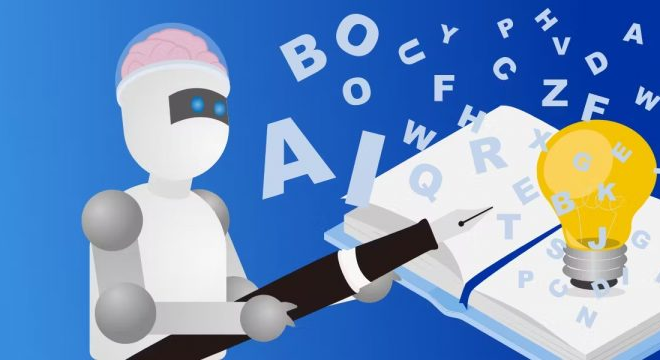
These AI tools have become more common in Bangladesh and are used particularly in private universities. Students no longer use them only to entertain and get general information, but also to produce essays, assignments, reports, and research papers.
Our research is anchored upon an analysis of the mixed-method research on the part of Mohammad Abir Hossain Sawran (principal author) and Purna Debi (co-author). In this paper, we discussed the application of ChatGPT and Gemini by Bangladeshi learners in universities in the private sector, and in their academic writing, and the consequences of these technologies on writing abilities and learning behaviours. The study is significant as it allows us to realise the advantages and difficulties of applying AI in education nowadays.
Growing use of AI in academic writing
A key factor contributing to the popularity of ChatGPT and Gemini is their convenience and simplicity in writing academic papers. Most students are trying to address such issues in writing in English, especially grammar, sentence structure, and development of ideas. These issues can be alleviated with the help of AI tools that provide real-time suggestions and corrections.
Results of this study suggested that the majority of students resort to them as an aid in brainstorming prior to writing. They do not start with a blank sheet, but rather they ask AI to give them a topic, outline, or key points. This is to assist them in organising their thoughts in a better way. AI tools permit students to practise grammar, correct spelling mistakes, and improve sentence structure as well. This makes their writing more precise and comprehensible.
The second significant benefit of such tools is that students become more self-confident when it comes to writing in English. Many students have fear or lack confidence in their writing skills. With the assistance of AI tools, they feel more at ease with the tasks they must complete in school.
Positive impact on learning and productivity
The outcome of the investigation is that ChatGPT and Gemini are useful for studying. They assist students in saving time, particularly when time is limited. Instead of spending hours searching for information, AI tools are able to summarise and explain information to students.
They also act as aids to learning. For example, students ask AI to describe a particular topic in simple language when they are unable to understand it. This facilitates easier and more flexible learning. In fact, some students are using AI-generated sources to learn how to write academic papers. Students are also using examples generated by AI to understand academic writing better.
As we have touched on in our reading, a considerable proportion of students feel AI applications have improved their writing skills. They believe they structure their writing more grammatically than before. Through this, ChatGPT and Gemini are, in a way, with proper use, helping students develop improved academic writing skills.
Negative effects and challenges
Nonetheless, the research also shows that there are certain adverse issues relating to the use of AI tools. Among the key problems, there is overdependence. Some students are too dependent on ChatGPT and Gemini and stop writing on their own. They do not develop writing skills but copy or over-rely on AI-generated material. This has the potential to reduce their creativity and critical thinking skills.
Cheating is another serious problem. Students can use AI-generated content without any alteration or understanding. This raises concerns about plagiarism and academic integrity. When students are unmonitored in the use of AI, it may turn into a cheating tool rather than a learning aid.
Additionally, the study indicates that students are not using AI in the same way. Some use ChatGPT and Gemini as a resource to learn. They use them to improve their writing, correct errors, and acquire new expressions. However, reckless users rely entirely on AI and do not develop their own skills. The disparity between these uses leads to different learning outcomes among students.
Findings from the study
The study surveyed 101 students and interviewed them, and found that most students use AI tools to write academic papers. The majority of them state that it helps them improve their writing, particularly grammar and structure. However, many students also express fear of becoming over-dependent on AI.
This research has produced results which indicate a divided response. Although AI tools can be beneficial for study and writing practice, they also pose risks when uncontrolled. The study found that ChatGPT and Gemini cannot be used without proper guidance and awareness.
Personal interpretation and opinion
Based on the results, one can conclude that ChatGPT and Gemini are not harmful, but moderately useful. These tools should not be regarded as substitutes for students’ personal thinking and writing abilities. Rather, they should be used as learning support mechanisms.
I do not feel that there is a problem with technology, but with the use of technology by students. When students use AI to plagiarise, it can have a negative impact on their learning. However, when they use it to improve grammar, enhance structure, and build ideas, it can greatly improve their performance in school.
Thus, AI tools must be used with well-defined guidelines and adequate knowledge. Students need to be taught by teachers how to use AI ethically. During training sessions and workshops, students can be guided responsibly. Universities should also formulate policies to ensure that AI is applied in learning and not cheating.
Finally, the study shows that ChatGPT and Gemini can have a profound impact on academic writing among students in private universities in Bangladesh. AI applications can help students brainstorm, write better, save time, and become more confident in their writing. Meanwhile, they present challenges: overdependence, lack of creativity, and concerns about academic dishonesty.
The overall effects of AI depend on its use in academic writing. Responsible use of this technology can greatly enrich the learning and writing process. It can impair students’ independent thinking and writing if used inappropriately.
In the coming years, AI will play a critical role in the education system in Bangladesh, and more specifically in privately owned universities. This change should be adapted to by both teachers and students, and not avoided or ignored. It must, however, be an informed and ethical institutional change. Only then can AI become a genuine educational aid rather than a challenge.