Japan now has over 100,000 people aged 100 or older
Japan now has over 100,000 people aged 100 or older
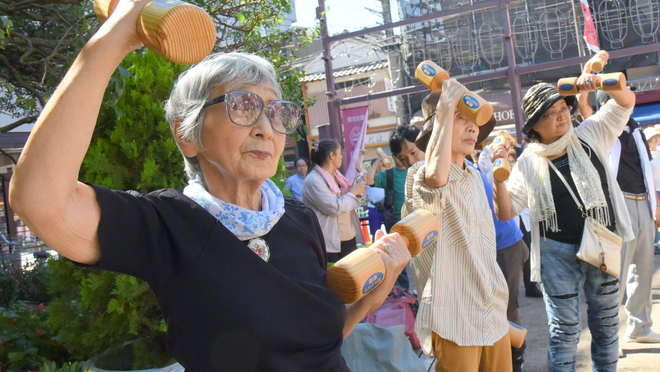
Japan now has more than 100,000 people aged 100 or older, marking the first time the country’s centenarian population has crossed the milestone.
New figures from Japan’s health ministry show that 107,677 people aged at least 100 are living in the country. Women account for 88% of the total.
The country’s oldest woman is 114-year-old Kishimoto Fuyo of Kyoto, while the oldest man is 112-year-old Kato Hikaru of Kumamoto.
Health Minister Kenichiro Ueno welcomed the figures, saying he was pleased that so many people were able to live long, healthy and active lives, while pointing to advances in medicine and technology.
At the same time, Ueno highlighted the pressure Japan’s rapidly ageing population is placing on the country’s social security system and the challenge of keeping it financially sustainable.
Japan’s unusually high life expectancy is often linked to a combination of factors, including diet and physical activity. Traditional Japanese meals tend to feature fish, vegetables and rice, while containing less saturated fat than many Western diets.
Older people also tend to remain active through activities such as walking, cycling, stretching and using public transport.
An ageing nation
Japan has been dealing with population ageing for decades, with the country’s demographic shift increasingly reflected in everyday life. Sales of adult nappies have exceeded those of baby nappies for more than a decade, according to the BBC.
Businesses have also begun developing products aimed specifically at older consumers. These include powered exoskeletons designed to assist movement and glasses that can automatically adjust their focus.
But the growing number of elderly people is accompanied by a shrinking younger population.
A population needs a total fertility rate of around 2.1 births per woman to maintain its size in the long term. Japan’s fertility rate fell to a record low of 1.14 last year.
The country’s population is projected to fall to around 87 million by 2070, roughly 30% below its peak of 128 million recorded in 2008, according to the National Institute of Population and Social Security Research.
People aged 65 and above currently account for around 30% of Japan’s population. That proportion is expected to approach 40% by 2070.
Japanese authorities have described the demographic decline as an existential crisis, while Prime Minister Sanae Takichi has referred to it as a “quiet emergency”.
The population fell in 45 of Japan’s 47 prefectures in 2025, with the pace of decline continuing to accelerate.
Successive governments have introduced subsidies and other measures aimed at encouraging young people to have more children, but the initiatives have so far failed to reverse the downward trend in births.
Experts point to several interconnected reasons, including declining marriage rates, the rising participation of women in the workforce and the increasing financial burden of raising children.
Immigration has increased in recent years, but foreign residents still account for only around 3% of the population. Resistance to significantly expanding immigration has also remained an obstacle.
From 153 centenarians to more than 100,000
The scale of Japan’s demographic transformation becomes clearer when compared with historical figures.
When the government began officially tracking centenarians in 1963, only 153 people aged 100 or older were recorded. The number reached 1,000 in 1981 and passed 10,000 in 1998.
The latest figures were released ahead of Japan’s annual Respect for the Aged Day, when the government honours people reaching the age of 100 with a personal letter and a traditional sake cup.
However, even the global figures for centenarians have faced questions over their accuracy.
Researchers have previously pointed to inaccurate records, missing birth certificates and other problems with historical data that could lead to inflated estimates of the number of people reaching 100.
A Japanese government audit of family records in 2010 found more than 230,000 people listed as being at least 100 years old who could not be accounted for, according to the BBC. Some had reportedly died decades earlier.
The discrepancies were blamed partly on incomplete record-keeping. There were also suspicions that some families had concealed the deaths of elderly relatives in order to continue receiving their pension payments.
Japan’s latest figures nevertheless underline the extraordinary scale of the country’s ageing population, while highlighting the increasingly difficult balance between longer lives, falling birth rates and the sustainability of the social security system.