John Locke: The man who taught us to question everything
John Locke: The man who taught us to question everything
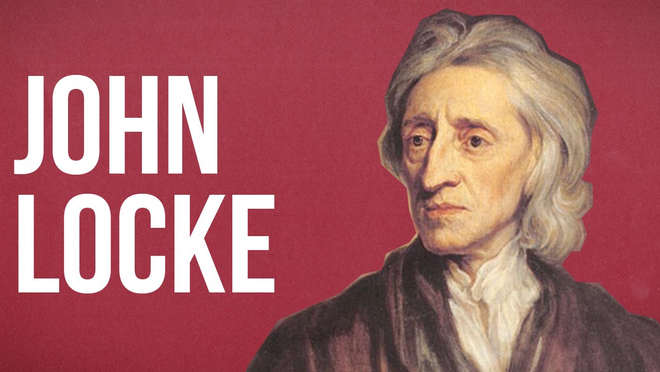
If you had walked past a certain house in Wrington, a small village in Somerset, England, on 29 August 1632, you wouldn’t have known you were witnessing the birth of one of the most influential thinkers in human history. The baby born that day would one day hand the American founders the intellectual scaffolding for the Declaration of Independence, and his ideas about the mind would still be taught in Philosophy 101 courses nearly four centuries later.
That baby was John Locke, and today, his birthday feels like a good excuse to sit with a cup of coffee and ask: who actually was this guy, and why does everyone from political scientists to psychologists still name-drop him?
Locke wasn’t some cloistered academic who spent his life scribbling in isolation. He trained in medicine, dabbled in early experimental science alongside people like Robert Boyle, worked as a personal physician and adviser to a powerful English aristocrat, got mixed up in political intrigue serious enough to send him fleeing to the Netherlands for several years, and returned to England only after a revolution had reshaped the country’s government. He was, in other words, a guy who lived through interesting times and thought very hard about why things were going wrong, and what a better arrangement might look like.
It’s easy to imagine him as a dusty portrait in a library, but honestly, he reads more like someone who was constantly annoyed by bad arguments and decided to write his way out of the confusion. That restless, practical energy is part of why his ideas travelled so far beyond philosophy seminars and into constitutions, courtrooms, and classrooms.
Locke’s most famous contribution to the philosophy of the mind is the idea of tabula rasa – the notion that human beings are born on a slate of nothingness and all knowledge is built through experience, sensation and reflection on life. This notion of thought was not very conventional, as previous thinkers like René Descartes had coined the idea that certain truths were foundational upon birth.
In his major work, An Essay Concerning Human Understanding (1689), Locke argued instead that the mind starts empty and is gradually furnished through perception and experience. Complex ideas, he claimed, are built by combining simpler ones, the way a house is built from bricks. This might sound intuitive to modern readers, but at the time it was a genuinely radical reframing of where knowledge comes from, and it laid the groundwork for what would become empiricism, a philosophical tradition that insists knowledge must be grounded in observable experience rather than pure reason or divine revelation. You can draw a fairly straight line from Locke’s empiricism to later thinkers like Hume, and eventually to the scientific and psychological methods that dominate how we study the mind today.
If Locke had only written about epistemology, he’d still be an important historical figure. But his political philosophy is arguably what made him a household name, even if most households don’t recall.
In his Two Treatises of Government (also published around 1689, in the aftermath of England’s Glorious Revolution), Locke laid out a theory that would go on to shape modern democratic thought. There, he argued the rights of being a human: Life, Liberty, Property, that exist independently of any government. These rights aren’t dictated by any superior owner of authority in a society, he states.
People form political societies specifically to protect their natural rights, and if a government fails to do that, or worse, actively violates those rights, the people have the right to resist and replace it. This was a direct rebuttal to the “divine right of kings” thinking that had justified absolute monarchy for centuries.
If parts of that sound familiar, it’s because they should. When Thomas Jefferson wrote that people are endowed with unalienable rights and that governments derive their just powers from the consent of the governed, he was drawing heavily, almost unmistakably, on Lockean political theory. Locke’s fingerprints are all over the American Revolution, the U.S. Constitution, and later liberal democratic movements across the world. His ideas about property rights, limited government, and the separation of powers also influenced later thinkers like Montesquieu and, through them, the structural design of modern constitutional governments.
Locke also wrote extensively on religious toleration, arguing in his Letter Concerning Toleration that the state has no business enforcing religious belief, since genuine faith can’t be coerced and civil government exists for civil, not spiritual, purposes. This was a meaningful argument in an era when religious conformity was often enforced by law and violence.
His theory of property is another underrated piece of the puzzle. Locke argued that people acquire property rights by mixing their labour with unowned natural resources – you own the apple you picked, the field you ploughed. This “labour theory of property” became foundational not just in political philosophy but in early economic thought, influencing later classical economists and debates about capitalism, ownership, and value that are still argued about today.
What’s striking about Locke, on his birthday, as I am writing this piece, is how much of the furniture of modern life, the assumption that governments answer to citizens rather than the other way around, that people have inherent rights, that knowledge should be built on evidence rather than inherited dogma, traces back to a Somerset-born physician who spent years thinking carefully, writing patiently, and occasionally fleeing political danger.
He wasn’t infallible; historians scrutinise the gaps and contradictions in his thought, including his entanglement with colonial trade and slavery-linked investments, which sit uneasily beside his theories of natural liberty. That tension is worth sitting with too, a reminder that even foundational thinkers are products of, and sometimes complicit in, the flawed systems of their time.
Still, nearly four centuries after his birth, Locke’s core insight endures, I would argue thrives. Not a bad legacy for a birthday.