Thoughts on men, 'Abu Bakar' and South Asian soap operas
Apparently, all it takes is one fictional man behaving with patience, responsibility and a little emotional maturity for half of South Asia to collectively lose its mind.
Thoughts on men, 'Abu Bakar' and South Asian soap operas
Apparently, all it takes is one fictional man behaving with patience, responsibility and a little emotional maturity for half of South Asia to collectively lose its mind.
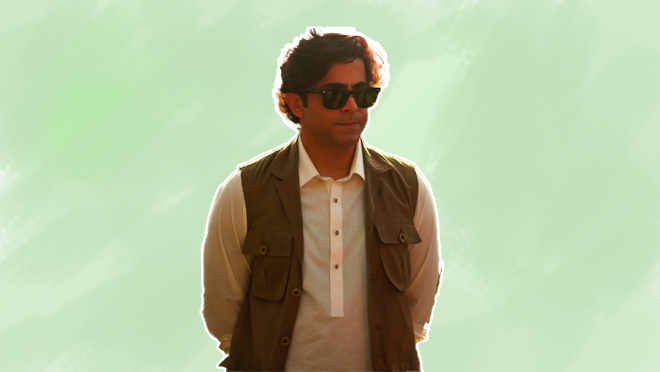
At least that is what the internet around Dar-e-Nijaat currently feels like.
Abu Bakar, played by Sheheryar Munawar, is everywhere. Clips, edits, discussions, comparisons, women asking where men like him exist in real life.
Written by Umera Ahmed, Dar-e-Nijaat presents him as a man shaped by faith, discipline, responsibility and quiet dignity rather than the usual combination of wealth, arrogance and a perfectly timed slow-motion entrance.
And honestly, that tells us something.
Maybe people are not obsessed with Abu Bakar because he is extraordinary. Maybe they are obsessed because the things that make him attractive should not feel extraordinary at all.
He listens, he takes responsibility, and his deen affects his behaviour. He does not need to humiliate a woman to prove masculinity. He is restrained without being emotionally absent.
When did these qualities become so scarce among modern men?
Abu Bakar is only the latest example of a much bigger Pakistani-drama phenomenon.
Before him came Mustafa and Sharjeena in Kabhi Main Kabhi Tum, Talha in Meem Se Mohabbat, Hala and Hamza in Mere Humsafar, and characters from Tere Bin, Ishq Murshid, Parizaad, Zindagi Gulzar Hai and countless others. Some of these dramas are soft. Some are messy. Some contain relationships I would never recommend to anyone I actually like.
Yet audiences in Pakistan, Bangladesh, India and beyond keep coming back.
Why? I do not think the answer is simply realism. Pakistani dramas can be dramatic, repetitive and problematic too. They have toxic heroes, frustrating mothers, unnecessary misunderstandings and stories that sometimes stretch beyond what they needed.
But at their best, they understand emotional recognisability.
A mother interferes in a marriage. A son feels responsible for the family. Someone falls in love across a class divide. A woman wants respect more than romance. A husband and wife sit in the same room but cannot say what is actually wrong. Money changes a relationship. Pride ruins a conversation. Faith changes a decision.
All of these are especially central to a South Asian audience. That may be exactly why it works.
Pakistani dramas often make ordinary life feel worth watching. They do not always need five generations, endless twists or a character returning from the dead. Sometimes the conflict is a dining table, a job, an unwanted marriage, a difficult parent, financial pressure or two people who simply do not know how to communicate. And importantly, the story usually intends to end.
Many Pakistani dramas are built around finite runs rather than an indefinite television universe. That changes everything. A story written to conclude can let characters grow, make mistakes, face consequences and eventually reach somewhere. Perhaps audiences are not losing their attention spans. Perhaps they are losing patience with stories that refuse to end.
This is where Indian daily soaps offer an interesting contrast. Indian television is far too large and diverse to dismiss as unrealistic, but the long-running commercial soap format is often built to continue for hundreds of episodes. Naturally, that changes the storytelling. A plot designed to end and a plot designed to survive indefinitely cannot move in the same way.
Pakistani television also understands something that I find increasingly important: the writer can be a star too.
Umera Ahmed’s name carries expectations. Her stories repeatedly return to faith, morality, class, flawed people and consequences. Zindagi Gulzar Hai explored class and female ambition through romance. Alif moved between art, fame and spirituality. Dar-e-Nijaat again places moral responsibility and faith inside mainstream entertainment.
Farhat Ishtiaq has her own emotional language, from Humsafar and Yaqeen Ka Safar to Kabhi Main Kabhi Tum and Meem Se Mohabbat. Saima Akram Chaudhry built an audience around warm, chaotic family comedies such as Suno Chanda.
Viewers know these names. That matters, because when the writer matters, the story cannot always be treated as the thing that comes after casting.
Pakistani romance also understands the beauty of not saying everything. Sometimes love appears in how someone lowers their voice during an argument. Someone remembers what another person likes to eat. A man quietly takes responsibility instead of announcing that he is a “green flag”. Someone waits. Someone chooses not to embarrass another person in front of a room full of people.
The romance works because the audience is allowed to notice.
Deen, too, often exists inside these stories as part of ordinary life rather than as decoration. With a character like Abu Bakar, religion shapes how he understands responsibility, boundaries, family and himself.
Maybe that is part of the “Abu Bakar effect”. The fantasy is not always a billionaire anymore. Sometimes the fantasy is simply a man who knows how to behave. Then comes the OST.
Pakistani television has mastered the art of making one song carry an entire relationship. The episode ends, but the OST keeps returning through reels, edits, playlists and fan videos until a few notes are enough to bring the characters back.
And the more I enjoy all of this, the more uncomfortable another question becomes.
Why does so much of it feel like something Bangladesh once understood too?
Bangladesh has done ordinary storytelling extraordinarily well. Humayun Ahmed’s Kothao Keu Nei created such attachment to Baker Bhai that people took to the streets protesting the fate of a fictional character. Years later, Boro Chele turned the financial burden carried by an eldest son into one of Bangladesh’s biggest YouTube dramas. Punorjonmo showed that audiences would also respond to darker, more experimental storytelling.
So Bangladesh clearly does not lack actors, directors or stories. Somewhere, however, the ecosystem changed. Veteran performers and producers have criticised the growing obsession with views, repetitive casting and production structures where star fees can consume a large portion of limited budgets. The result is familiar: familiar faces, familiar shooting houses, familiar romances and titles trying to earn the click before the story has earned our attention.
Yet whenever something emotionally grounded appears, audiences still respond. Eta Amaderi Golpo, inspired by Pakistan’s Kabhi Main Kabhi Tum but adapted to Bangladeshi family life, became a major digital success. Its director credited that response to staying close to real life and giving viewers families they could recognise.
Then came Prothom Premer Golpo. After viewers pointed out similarities with Pakistani serial Sheidai, its director acknowledged that the beginning had been inspired by foreign dramas and said original material would follow. That is where admiration turns into frustration for me.
If Bangladeshi viewers clearly want family, romance, responsibility, emotional realism and stories that actually move somewhere, why do we increasingly need a Pakistani hit to remind us that these things work?
Pakistan did not invent difficult mothers, struggling sons, marriage pressure, deen, class, heartbreak or quiet love. Bangladesh has all of them.
We also have brilliant actors, directors, musicians and a television history that proves simplicity was never our weakness.
Perhaps Pakistani dramas are not winning because they discovered some secret formula. Perhaps, at their best, they simply trust the story before the algorithm. And maybe Abu Bakar is not the reason people are obsessed after all.
Maybe he is only the latest proof that audiences still want something television keeps underestimating: characters who feel close enough to recognise, but written well enough to remember.
Bangladesh does not need to make its own Kabhi Main Kabhi Tum. We need to believe in our own stories strongly enough that one day somebody else wants to make theirs.