When art loses its aura
There are some books that I read because I have to, and there are others that make me stop and look at the world from a different perspective.
When art loses its aura
There are some books that I read because I have to, and there are others that make me stop and look at the world from a different perspective.
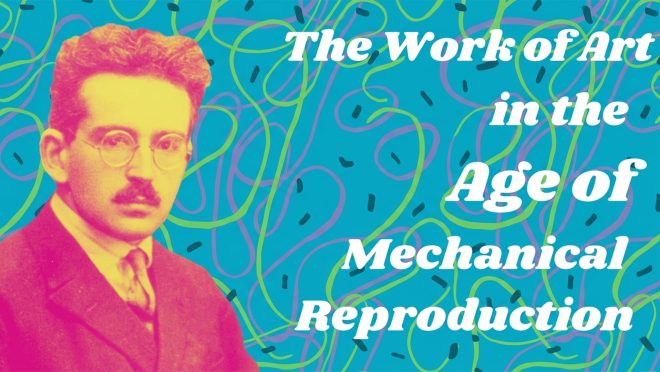
Walter Benjamin’s The Work of Art in the Age of Mechanical Reproduction belongs to the latter. At first, I expected it to be another difficult theoretical essay filled with philosophical terms. And honestly, some parts were difficult.
But as I continued reading, I realised that Benjamin was asking a question that feels surprisingly relevant to the world we live in today: what happens to art when technology makes it possible to reproduce and distribute it endlessly?
Although Benjamin wrote the essay in the 1930s, long before social media or digital photography became part of routine life, many of his ideas feel almost uncomfortably contemporary. His discussion of reproduction made me think about how we consume photographs, films, paintings and even people’s personal lives today. We are surrounded by images, but perhaps we experience them less deeply than previous generations did.
The central idea of the essay is what Benjamin calls the aura of a work of art. For me, this is the most interesting and memorable concept in the entire text. Aura refers to the unique presence and authenticity of an original work, the feeling that comes from encountering something in its particular place and historical context. Think about standing in front of an original painting in a museum. A digital photograph of that painting may reproduce its appearance almost perfectly, but it cannot completely reproduce the experience of standing before the original.
Benjamin argues that mechanical reproduction weakens this aura. Photography and film allow an artwork to be copied, enlarged, reduced and distributed to people who may never encounter the original. A painting that once belonged to a particular place can suddenly appear in thousands of books, newspapers and screens.
I found this idea especially relevant because of how casually we now consume visual culture. On social media, I can see a photograph taken in Paris, a painting from centuries ago, a protest happening on another continent and a movie scene, all within a few minutes of scrolling. The original context almost disappears. Everything becomes part of the same endless stream of images.
But Benjamin does not simply argue that reproduction is bad. That is what makes the essay more thought-provoking. Mechanical reproduction also democratises art. Art no longer has to remain restricted to museums, wealthy collectors or particular geographical locations. A student in Bangladesh can look at The Starry Night without travelling to New York. A filmmaker can reach millions of people through a screen. A photograph can communicate an event across borders within seconds.
This is where I think Benjamin’s argument becomes more complicated than a simple celebration or criticism of technology. Reproduction takes something away from art, but it also gives art a new kind of power.
His discussion of film is particularly fascinating. Benjamin recognises that film is fundamentally different from traditional forms of art because the camera changes the way reality is presented. Editing, close-ups, different angles and movement allow filmmakers to show things that the human eye cannot naturally experience in the same way. Watching a film therefore becomes a different kind of relationship with reality.
As someone who regularly encounters photographs, articles, videos and digital content, I found myself thinking about how much of my own understanding of the world is mediated through cameras. I rarely experience major events directly. Instead, I see them through photographs, videos and news reports. In that sense, Benjamin’s argument feels even more relevant now than it might have when he originally wrote it.
Another important part of the essay is Benjamin’s argument that reproduction changes the social and political function of art. Art is no longer simply something to admire. It can influence public opinion, create political identities and shape mass movements. This becomes particularly significant in an age where images can be deliberately produced and circulated to persuade people.
This is perhaps where the essay feels closest to our present reality. We live in an age where a photograph can become political within minutes, where a short video can change public opinion, and where an edited image can travel further than the original event ever could. Benjamin understood that technology was not merely changing art; it was changing the relationship between art, society and politics.
However, I would not say that I agreed with every part of the essay. At times, Benjamin’s writing is extremely abstract, and some of his arguments require rereading. His philosophical language can make relatively simple observations feel unnecessarily complicated. I also think that his concern about the loss of aura can sometimes make the original work of art seem more valuable than reproduced forms of art. For many people today, a reproduction is not necessarily an inferior experience. Sometimes it is the only way they can experience the work at all.
Still, that criticism does not reduce the value of the essay. In fact, one of its greatest strengths is that it made me question something I normally take for granted: why do I value an original differently from a copy?
If I look at a photograph of a famous painting on my phone, I know that I am not seeing the original. Yet I can still be moved by it. For example, a painting of Mona Lisa or Van Gogh’s Starry Night. At the same time, if I were suddenly given the opportunity to stand in front of the original, I would probably experience something different. Benjamin gives us the vocabulary to understand that difference.
We now live in a world where almost everything can be reproduced, i.e. photographs, music, films, paintings, performances, even our own identities. The strange thing is that the more images we produce, the more difficult it sometimes becomes to recognise which experiences are genuinely meaningful.
That is why, to me, Benjamin’s essay was worth reading. It did not give a simple answer about whether technology is destroying art or making it more accessible. Instead, it made me more conscious of what happens when something unique becomes endlessly reproducible.
And perhaps that is the real strength of the essay. Almost a century later, Benjamin still makes us pause before we scroll to the next image and ask: when everything can be copied, what makes something truly special?