When life gives you lemons, learn accounting
When life gives you lemons, learn accounting
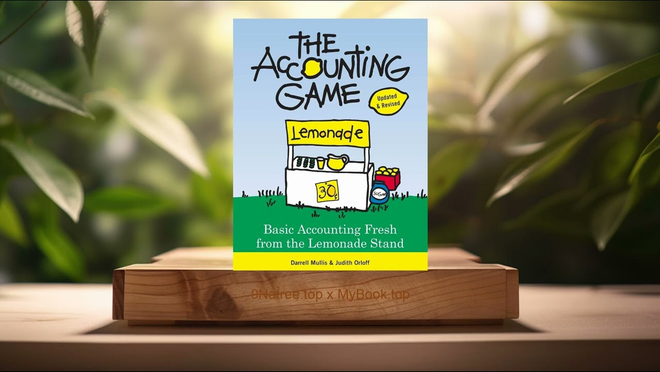
There is a story behind my discovery of ‘The Accounting Game’. My friend Rakib chose accounting as his major, assuming it to be a branch of science just because it translates to ‘hishab-biggan’.
Throughout the first semester, he was in disbelief to discover that accounting seemed to revolve around strict debit and credit policy and the memorisation of mundane rules and standards, leaving not an inch for creativity.
Although his eyes used to remain wide open, his mind could barely concentrate during classes or exams. Yet one evening, Rakib was found in a quiet corner of the library, his eyes glued to this colourful book. For the first time, he was optimistic about finding a glimpse of possibility that accounting need not be a gloomy realm but could indeed be painted with curiosity to understand it.
Conventional accounting books act like gatekeepers. Because these books often contain long, abstract paragraphs and dry corporate jargon that do little to engage beginners, it is easy for a reader to give up. These books seem to demand considerable effort from the readers to understand them before the reader can be an eligible member of their elite club.
However, ‘The Accounting Game’ breaks away from the standards of traditional accounting books. It makes a concerted effort to ensure accounting concepts are enjoyable to learn and etched in memory.
The book begins by acknowledging the reality that many people hate accounting, so it proposes the notion that young children learn more effectively when enjoyment and curiosity are part of the process.
Such learning gets retained in long-term memory, a capacity that adults may fail to nurture as they grow older. Promising a fun and interactive experience, the book encourages readers to go back to their childhood to approach accounting like a kid full of curiosity and attention.
It reminds us of a time when we might have dreamed of making money by opening a small business, like a lemonade stand. The book aims to teach the three main financial statements: the income statement, balance sheet and cash flow statement, and their components in a way that a kid would find engaging.
The first chapter begins with a family scene in which the reader imagines oneself as the kid enjoying lemonade with the parents. The school’s summer vacation paved the way for the plan to start a lemonade stand in the neighbourhood. And by running the business throughout the summer, the kid began to uncover the realities of the business world. Like my friend, many adults still regard accounting as some alien’s mother tongue and struggle to understand its basic concepts. But the book effortlessly taught the accounting equation, the inventory valuation method of lemons, the difference between cash and profit, the accrual method and why depreciation is not a cash expense through episodes from the kid’s commercial summer venture. The concepts of banking, insurance, accounts receivable and accounts payable were not introduced through rigid dictionary definitions; rather, they were interpreted through the kid’s experiences, such as visiting a bank to request a loan, dealing with an insurance office to find there is no mercy for even the little kids, and finding that parents and friends want you to learn the reality of doing business the hard way.
Each chapter includes short questions about accounting scenarios to test the reader’s understanding and let the readers address any gaps before hopping into the next chapter. Moreover, the book is filled with colourful blank boxes that encourage the readers to prepare their own financial statements and discover the magical feeling of balancing the figures. The book has a pre-test and a post-test that allow readers to compare their understanding of accounting before and after reading this book.
However, because the book was written by American authors, some of its examples and business practices reflect an American context. The short questions in the later chapters might start to seem oversimplified to some readers.
Undoubtedly, this book cannot single-handedly turn an accounting student into a certified professional accountant on its own, but that is not the entire point this book wants to make. The book makes it convincing that accounting can be learned without feeling intimidated. Whether the reader is an entrepreneur, a new investor, a beginner student or even a kid, the book offers a playful and interactive way to learn accounting without feeling overwhelmed.
The book brilliantly helps beginners overcome their accounting phobia. Through the kid’s world, the book teaches how to read financial statements, track inventory, how different stakeholders influence a business, how each decision affects profit and monitor the flow of hard-earned cash. So, if you feel bored with lectures and textbooks, go grab a lemonade and start reading this book.