Remembering Alan Turing through The Imitation Game
What if I told you that before AI, before Apple, Microsoft and Google, there was one man who paved the way for today’s tech?
Remembering Alan Turing through The Imitation Game
What if I told you that before AI, before Apple, Microsoft and Google, there was one man who paved the way for today’s tech?
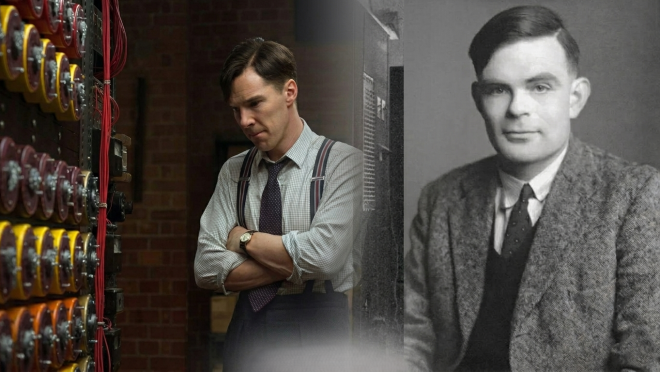
Long before smartphones, machine learning and large language models existed, there was a man already asking a question that continues to shape our world: “Can machines think?”
Today, 7 June, marks the death anniversary of one of the most important scientific minds of the twentieth century, Alan Turing. He was a British mathematician whose Turing Machine concept led him to be considered the father of modern computer science. Not just that, he even helped shorten World War II by about two years when he cracked the Nazi Enigma code, which was considered unbreakable at the time. His ideas helped shape the technological world we now live in.
On this day, I found myself engrossed in the 2014 drama The Imitation Game, based on his story. The film is based on the book Alan Turing: The Enigma, written by Andrew Hodges, and was directed by Morten Tyldum. Turing’s story was little known until 1983, when Hodges published his biography. As with all dramas that are “based on a true story”, the filmmakers took certain liberties with the facts in order to make the story more coherent and dramatic.
In doing so, I think they captured the essence of Turing’s personality and the significance of his achievements remarkably well. The film switches between the race to crack the Enigma code at Bletchley Park, Turing’s younger years, and the tragic events after the war that would ultimately destroy his life. It is heartbreaking in places, and Benedict Cumberbatch’s performance as Alan Turing is outstanding.
He absolutely personifies the character. He captures Turing’s social awkwardness, his eccentricities, and the sense that his mind is operating several steps ahead of everyone else in the room. There is a quiet intensity to the performance that makes it impossible not to sympathise with him.
What I appreciated most about the film is that it never feels like a straightforward war movie.
The codebreaking aspect is fascinating, especially when Turing and his team realise that breaking Enigma creates an entirely different problem. Once they can read German communications, they cannot stop every attack because doing so would reveal their secret. The film presents an uncomfortable moral dilemma where they are forced to decide which lives can be saved and which sacrifices must be made for the greater good.
In a way, they are asked to play God, and the weight of those decisions hangs over the entire story.
One line from the film really stuck with me:
“Sometimes it’s the people no one imagines anything of who do the things that no one can imagine.”
To me, it is a reminder not to underestimate anyone. Often, it is the people you least expect who change the world. And it also makes me think about ourselves. We sometimes stop ourselves from trying, assuming we are not capable. Maybe we, too, can do the things no one imagines.
One of the main themes of the film was Turing’s inner complexities and his struggle with his sexuality. Because of his sexual orientation, offensive slang words are openly used, illustrating the negative attitudes towards homosexuality during that time. If you were arrested for such an act, or “gross indecency” as the film labels it, the punishment was either two years in prison or oestrogen injections, a form of chemical castration with severe side effects.
It was that attitude that essentially overshadowed Turing’s efforts and contributions during the war, which is the real tragedy of it all. Cumberbatch’s emotional weight, Turing’s obvious attachment to his work and machine, and Alexandre Desplat’s moving score really do push all the necessary emotional buttons.
Joan Clarke, played by Keira Knightley, represents a woman excelling in a man’s world. Despite her mathematics degree, she was initially excluded from Turing’s test room, facing both societal and familial pressures to follow a conventional life of marriage and domesticity.
Turing proposed, but they never married, aware that he could not give her the life she wanted. What makes their relationship compelling is how they recognised and valued each other’s differences. Turing saw in Joan an outsider who shared his drive to defy expectations, and Joan appreciated his brilliance and uniqueness.
Their mutual respect and understanding highlight the quiet human connection at the heart of the story.
What stops The Imitation Game from being a five-star experience is its historical accuracy. As I researched after watching the film, I found that it takes considerable liberties for dramatic effect: it exaggerates Turing’s social awkwardness, compresses timelines, and invents plot elements such as a spy subplot.
In reality, breaking the Enigma code was a highly collaborative effort involving many cryptanalysts, including significant contributions from Polish teams.
To conclude, I want to say that while the film is an interpretation rather than a documentary, it succeeds in reminding us why Alan Turing’s legacy matters. More than the film itself, it is the man whose intellect, courage and vision continue to influence the world of science and technology even today.