Saving the soil: Science, struggle, and survival in Bangladesh
Who knew that Chemistry, a crucial branch of science, could help to solve major problems?
Saving the soil: Science, struggle, and survival in Bangladesh
Who knew that Chemistry, a crucial branch of science, could help to solve major problems?
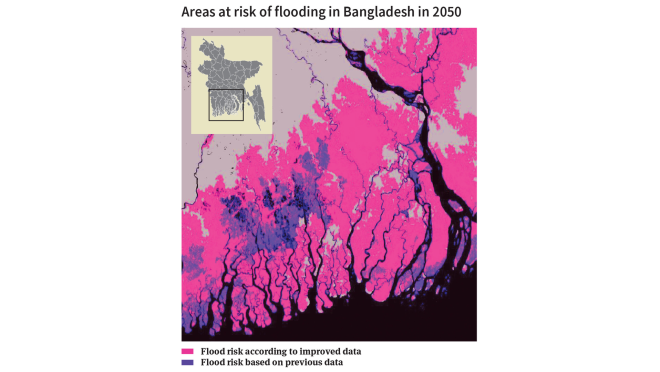
In the lush but fragile coastal belt of Bangladesh, a silent catastrophe is gulping the farmlands. The once fertile fields are now yielding less or nothing at all.
But who do we blame? Who is the culprit? Soil Salinity – a deadly consequence of rising sea levels, saltwater intrusion, and climate change.
This has become a rising challenge for science, particularly environmental science and chemistry. Present ways like salt-tolerant crops, soil treatments, and smart innovations, researchers and farmers are working together to reclaim the soil it was before and restore productivity and protect the habitat out there.
The science behind salty soils
According to the Bangladesh Agricultural Research Council (BARC), over 2.85 million hectares of land across 19 coastal districts are affected by salinity, particularly during the dry season. This salinity issue has resulted in a decrease in the yields of essential crops, such as rice, pulses, and vegetables, leading to poverty among many farmers.
The origin of this problem includes the fact that due to severe climate change (uncertain precipitation), sea levels are rising. Saltwater intrusion into rivers and canals is another major cause. The overuse of groundwater and poor irrigation systems, which do not help, also contribute significantly. Additionally, there has been a huge expansion of shrimp farming in many agricultural zones.
A research paper by Mr. Md. Firoz Ahmed and Mr. Mohammed Ziaul Haider, back in 2014, stated, “If the salinity of high saline areas can be reduced to the threshold level, farmers will gain about 685 US$ ha-1 from increased rice yield,” which shows that this problem is not new. Addressing this problem may help the farmers recover from the hefty financial losses they have faced so far.
Before digging into the problem further, it is better to understand the science first. Saline Soils contain excess Sodium (Na+), Chloride (Cl-) and Sulfate (SO42-) ions. These hamper the plant’s ability to absorb water and nutrients, damaging the soil structure, reducing aeration and leading to stunted plant growth or even worse, a complete crop failure.
As they say, where there is a will, there is a way. We have the “ways” but we do not have the “will”. Despite the provocation, science is providing hope through practical, field-tested strategies which might help us to address the problem:
Salt-tolerant rice varieties
Reporting by The Business Standard shows that in the year 2006, the Bangladesh Rice Research Institute (BRRI), with the help of the International Rice Research Institute (IRRI), invented the first successful salt-tolerant variety, BRRI-47, which can tolerate salt 12 dS/m (Deci Siemens per metre) at the seedling stage and 10 dS/m-1 during the growth stage, whereas normal crops can only withstand 0.7 dS/m.
Soil modifications
A recent study has shown that gypsum application can significantly enhance the growth of salt-tolerant rice crops in saline zones.
Gypsum (CaSO4) scientifically helps in several ways and aids organic compost when mixed to bring a good result, which includes improving the soil texture, increasing the water retention, and promoting microbial activity.
Floating gardening
Floating Gardening, also locally known as “baira” or “dhap”, is an agricultural practice that involves layering water hyacinth, bamboo and organic matter to create floating beds for crop cultivation. This method was originally adapted to emerge as a solution for severe monsoon flooding that submerged land for months each year, leading to low-yield crops.
According to resources, floating gardens are most popular in the districts of Gopalganj, Barisal and Pirojpur. Moreover, the UN’s Food and Agriculture Organisation declared Bangladesh’s floating gardens to be a globally important agricultural heritage system in December 2015.
Barriers still remain
Despite these scientific innovations, major challenges remain, such as the lack of awareness among farmers (especially in the more rural areas of Bangladesh) about these available solutions. There is also a lack of funds, which becomes a barrier for the cost to accessing gypsum or salt-tolerant crop seeds. There is a need for more localised research based on region-specified soil types. Furthermore, there is a lack of specialised training.
Salinity is not just an agricultural issue; overall, it remains a natural threat to our food security since rice or simply in our mother language “bhaat”, is a staple. If it remains unchecked, Bangladesh may face major losses in rice production and rural employment. But with continued research, better facilities, government support and proper funding, it shall be possible to tackle this problem.
Hence, Bangladesh’s farmers may not fear the salt in the soil if science shows a ray of hope.