Agatha Christie at 135: The enduring queen of crime fiction
Agatha Christie was born on 15 September 1890, in a house called Ashfield in Torquay. She taught herself to read early. She wrote a poem at ten. Nobody in that house had any reason to think they were raising one of the best-selling novelists in history, someone whose books would end up translated into more languages than almost anyone else’s.
Agatha Christie at 135: The enduring queen of crime fiction
Agatha Christie was born on 15 September 1890, in a house called Ashfield in Torquay. She taught herself to read early. She wrote a poem at ten. Nobody in that house had any reason to think they were raising one of the best-selling novelists in history, someone whose books would end up translated into more languages than almost anyone else’s.
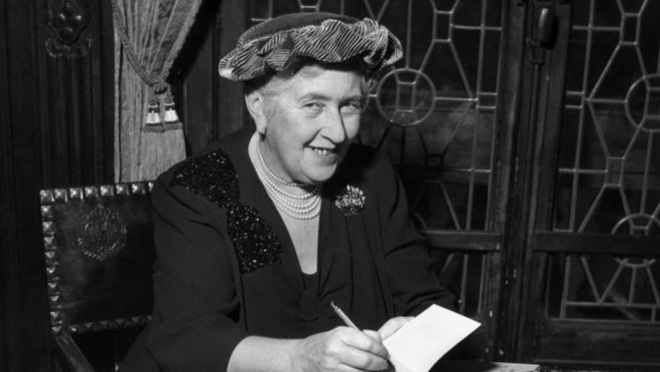
She is 136 today. She’s also been dead for fifty years. I don’t think one fact softens the other.
She didn’t set out to write murder. Her sister Madge dared her to write a detective novel, one where the reader couldn’t guess the ending, and Christie took the dare far enough to finish one. It took years to find a publisher. The Mysterious Affair at Styles came out in 1920 and introduced Hercule Poirot, a Belgian detective fussy about the arrangement of objects on a mantelpiece and unfussy about exposing the worst in people. The book didn’t do much. Nobody involved seems to have guessed what was coming.
What came was sixty-six novels, fourteen short story collections, a play called The Mousetrap that opened in Nottingham in 1952 and has just never stopped running, long enough now to have outlived several of the actors who first performed it. She wrote as herself, and, when she wanted to write something that had no business near Poirot or Marple, as Mary Westmacott.
During the First World War, she worked in a pharmacy dispensary and picked up more than a passing knowledge of poisons, which she then used for the rest of her career the way someone uses a skill they never bothered mentioning at parties.
Her own life has a stretch in it that reads like a plot she would have thrown out as too much. In December 1926, she disappeared. Her car was found abandoned near a chalk quarry. For eleven days, there were headlines and volunteers combing the countryside, some of them digging, actually digging.
She turned up at a hotel in Harrogate, checked in under the surname of the woman her husband was about to leave her for, and never explained any of it publicly, not once, for the rest of her life. She went back to writing instead. Doctors called it a fugue state, grief and exhaustion. Christie herself said nothing. It’s the one case she left unsolved on purpose.
She remarried in 1930, this time to an archaeologist named Max Mallowan, fourteen years her junior, and spent long stretches with him on digs in Iraq and Syria. Some of that shows up directly in the books, Murder on the Orient Express comes out of the route she actually travelled, Death on the Nile out of time she actually spent in Egypt.
Her holidays turned into material. So did a lot of her grief. By the time she died in January 1976, her sales were somewhere past two billion, which isn’t really a number anymore so much as a way of saying more than anyone else.
The thing about Christie that a lot of people trying to copy her never got is that a mystery is a kind of promise. There’s an answer in here, she’s telling you, and I’m going to give it to you, and it’s going to be fair.
She misdirected constantly. She let narrators leave things out. But she didn’t cheat, not really, and that’s a harder discipline than it sounds, Poirot’s little grey cells only ever worked because Christie had already sat at her desk and worked out exactly how much she could show you before the answer gave itself away.
She killed Poirot off in 1975, in a novel called Curtain that she’d written decades earlier and kept locked away for whenever she decided she was finished with him. He got a front-page obituary in the New York Times, which no other fictional character has managed before or since.
She died four months later. Maybe that timing means something. Probably it doesn’t. She just finished the story she wanted to finish, and everything after that happened without her say in it.
I’m not going to pretend there’s a lesson tucked into any of this. She wasn’t writing to be understood. She was writing to be read, which is the harder thing to pull off, and as far as I can tell, nobody has done it better since.