The “Lock in” generation: attention, discipline and sustainable agency
The “Lock in” generation: attention, discipline and sustainable agency
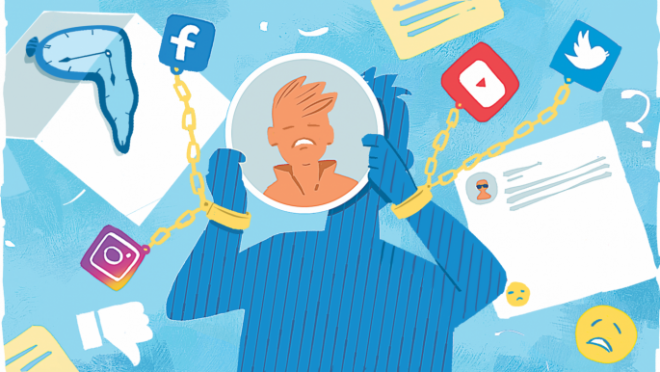
Spend a few minutes on any social media feed and the phrase finds you. “Lock in” has become the Gen Z battle cry, muttered before exams, typed under gym selfies and posted at midnight by students, freelancers and first-time employees from Dhaka to Detroit.
Friends say it to one another the way earlier generations said “buckle down”: part joke, part pep talk, part promise, all in two words. It is attached to board examinations and civil service preparation, to gym routines and coding bootcamps, to career pivots and professional certifications.
The slang is playful, but the impulse behind it is serious. It reflects a growing recognition among the young that their time and cognitive bandwidth are slipping out of their own hands.
The Economics of attention
The impulse is easy to understand. Young people today live inside environments engineered to capture and monetise attention. Algorithmic feeds, push notifications and short-form video convert a few minutes of leisure into an hour of passive consumption, and they do so by design. The cost is larger than the lost time.
Research by Gloria Mark, a professor of informatics at the University of California, Irvine, has found that after an interruption, workers often need more than twenty minutes to return fully to the task they were doing. Sophie Leroy, a management scholar, coined the term “attention residue” for the related finding that part of the mind stays tethered to the previous task even after one has formally moved on. A student who checks a phone every ten minutes is therefore not losing ten seconds each time. The student is working with a permanently divided mind.
Seen in this light, consciously withdrawing from digital distraction is a rational response, and the lock in movement deserves credit for naming the problem.
What the movement gets right
The trend has delivered several real benefits. Social platforms are often criticised for breeding shallow comparison, yet they can also build communities around discipline. Think of the study-with-me livestreams, where thousands of strangers sit silently together for hours, or the friend group chat that goes quiet for a week because everyone has agreed to lock in before finals. Watching peers document study routines or fitness milestones offers genuine encouragement. Publicly declaring an intention, such as a post announcing a thirty-day coding challenge or a daily gym check-in with a friend, adds a layer of social accountability that strengthens follow-through. Above all, the movement nudges people to put long-term objectives ahead of immediate gratification, a habit that has always separated those who achieve from those who merely intend.
The aesthetic of discipline
The shortcomings, however, are significant. Online, self-improvement is seldom shown as the dull, repetitive work it usually is. It is presented instead as an aesthetic: the 4 am alarm, the colour-coded timetable, the unbroken display of productivity. Fatigue, failure and doubt are edited out before posting.
This framing carries quiet costs. Rest comes to be seen as waste, and output becomes the measure of personal worth. Those who cannot match a curated routine may conclude that they are falling behind, with little regard for differences in family obligations, commuting hours, access to a quiet room or the simple fact of a stable internet connection. A tool meant to reduce anxiety can end up producing more of it.
The central error is to confuse intensity with durability. The research on expert performance points the other way. In his well-known studies of elite violinists, the psychologist Anders Ericsson found that the strongest students did not practise endlessly. They practised for roughly four hours a day, in focused blocks, and they rested and slept more than their peers. Progress of this kind is built from modest efforts repeated without interruption. Two hours of concentrated daily work will almost always outperform a twelve-hour marathon that collapses within the week.
Training the mind to lock in
If attention is the scarce resource, the pertinent question is how to strengthen it. Here the evidence for mindfulness is promising, though it should be described with care. In a widely cited experiment published in Psychological Science in 2013, Michael Mrazek and colleagues found that two weeks of mindfulness training reduced mind wandering and improved reading comprehension scores and working memory among university students. The sample was small, and larger reviews have found the benefits of meditation to be moderate rather than miraculous. Still, the underlying logic is sound. Focus is less a trait than a skill, and a skill responds to practice.
The core exercise is simple. Sit upright, follow the breath, and each time the mind drifts, notice it and return. The drifting is not a failure. Noticing and returning is the repetition, much as lifting a weight is the repetition in strength training. Done daily, it builds the very capacity a student needs when the mind wanders from a chapter of accounting towards a phone.
A Practical Protocol
For readers who wish to turn the idea into routine, five practices are worth considering.
Begin with ten minutes of breath anchoring. Before the first study or work block, sit without a phone and count breaths from one to ten, restarting whenever attention slips. Beginners may start with five minutes. The aim is not calm for its own sake but a trained habit of catching distraction early.
Set a single, written intention. Before each block, write one sentence naming exactly what will be completed, for example, “finish two chapters of corporate law and attempt ten past questions.” Vague goals invite drift. Psychologist Peter Gollwitzer’s research on “if-then” planning, supported by a meta-analysis of nearly one hundred studies, shows that specific plans such as “if I feel the urge to open Facebook, then I will take three breaths and return to the page” significantly raise the odds of follow-through.
Observe the urge before obeying it. When the hand reaches for the phone, pause and name the impulse silently. Cravings rise, peak and fade, usually within minutes, if they are not fed. Clinicians call this “urge surfing”. Pair it with environmental design: keep the phone in another room, or at least out of sight, since friction defeats habit more reliably than willpower does.
Work in blocks and rest on purpose. Use sessions of fifty to ninety minutes, followed by a real break of ten to fifteen minutes. A walk, a glass of water or a few minutes of looking out of a window restores attention. Scrolling does not, because it merely substitutes one demand on attention for another.
Close the day deliberately. Spend five minutes at night reviewing what was done, noting what remains and setting tomorrow’s first task. This releases the mind from unfinished business, which is a common cause of attention residue and of poor sleep.
The body is part of the brain
No mindfulness practice can compensate for a neglected body. Sleep deprivation reliably impairs sustained attention, and the habit of trading sleep for study hours tends to defeat its own purpose. Many students reach for coffee or energy drinks to compensate, and in modest amounts caffeine can sharpen alertness. It is not the only way to lock in, however, and it is a poor substitute for rest. Heavy doses can bring jitters, anxiety and a racing heartbeat, and because caffeine lingers in the body for hours, an evening cup can quietly erode the sleep that tomorrow’s focus depends on.
Regular physical activity offers a steadier lift. Studies have linked a single session of moderate aerobic exercise, of about twenty to thirty minutes, to short-term improvements in attention and executive function, which is why a brisk walk before a study block is a sound investment and not a luxury. Meals, water and daylight matter for the same reason, as do a few minutes of stretching or slow breathing between sessions. Discipline that ignores the body is borrowing against tomorrow.
The lasting lesson of the lock in trend is not that people must abolish leisure or maintain perpetual output. It is that attention is a finite and valuable asset that demands deliberate allocation. In an economy where platforms compete relentlessly for human focus, deciding where to spend one’s cognitive resources is an act of personal agency.
The slang may eventually fade, as slang does. The imperative behind it will not. What remains is the task of protecting one’s attention, training it patiently, and doing so without turning self-improvement into yet another source of anxiety.
The author is a finance professional working at a leading NBFI in Bangladesh.