Two months to HSC: How to prepare without burning out
In Bangladesh, when we talk about board examinations, the most important yet physically and mentally draining one is the HSC examination.
Two months to HSC: How to prepare without burning out
In Bangladesh, when we talk about board examinations, the most important yet physically and mentally draining one is the HSC examination.
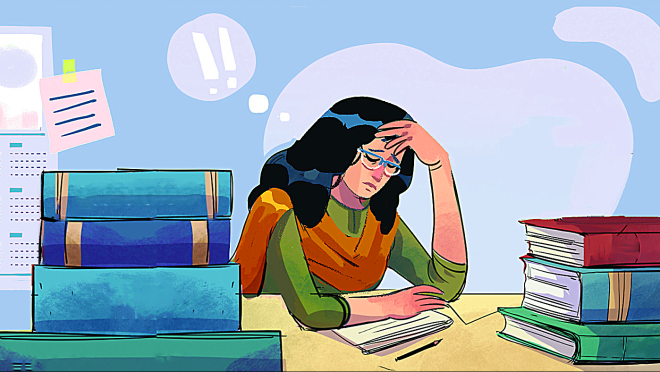
With almost only two months left, there is still time to save yourself from the post-exam anxiety and regret that often show up during the admission period. That is the time when universities start asking for your HSC results, the reflection of how you’ve spent your college years, the same phase when you believed adulthood was still far away.
Then, suddenly, you find yourself standing in front of an admission form, realising that your GPA or marks do not meet the requirements. There is nothing more painful than not being able to sit for an exam. Not even failure in that exam compares to not being able to sit for it. But lucky you, you still have time.
With the last two months left, this is not about cramming everything you have not learned into your head. It is about holding on to what you already know and making sure it does not slip away while covering the remaining syllabus effectively. This is where you sum up the past two years of your college life and prepare for a result that will, unfortunately and unfairly, have a say in your future.
Before starting, do this
Right now, many of you might feel lost. You may feel that you don’t know what you have finished, what is left, or where you stand. Before thinking about study techniques, clearing this mental clutter is important.
One method that actually works is simple. Take a page or a notebook and write down all the chapters from every subject. Then take three colours. Use green to mark chapters you know well and only need revision. Use black or blue for chapters you understand but still need practice, maybe by solving past questions or revising key concepts. Then use red for chapters you have not properly learned yet.
Start with the red ones. Not your favourite chapters, not the easy ones, but the ones you have been avoiding. It may feel uncomfortable at first, but delaying them is useless. You would find yourself the day before your HSC ICT exam, watching YouTube videos and cramming C programming for the first time in your life. Keep one or two green chapters for daily revision and work steadily on the black ones alongside. This simple system helps you see your position clearly instead of carrying the constant thought that you are behind.
Don’t forget the green ones
In this method, we all make that one mistake: we don’t pay enough attention to the green ones when they are literally our saviours. Once your plan is clear, the next challenge is retention. Many students believe that studying something once or twice is enough. It is not. Memory fades quickly if you do not revise what you learned. You have probably experienced this already. Something you felt confident about last week suddenly feels unfamiliar.
Reading notes and books again and again creates a false sense of familiarity. Instead, test yourself. Solve chapter-wise MCQs. Try to recall concepts and formulas without looking. Every time you struggle to remember and then correct yourself, your memory becomes stronger.
Return to your green-marked chapters every few days, then again after a week. It may feel slow, but it builds confidence. Over a two-month period, this kind of repetition with all your black, red, and green-marked chapters turns your strong points even stronger and weak familiarity into something you can use under pressure.
Focus on your focus
At this point, I remember finding myself and my peers not exhausted from studying itself, but from constantly thinking about studying. The pressure doesn’t go away. Even during breaks, there is a sense that you should be studying more. This mental load drains your energy before you even begin.
Then comes the common reaction. You sit for long, uninterrupted hours trying to compensate. For a while, it works. Then your focus drops. You reread the same lines, check your phone, and lose track of time. In the end, you feel exhausted but not satisfied.
The issue is not effort. It is the structure. Focus works in cycles. Your brain cannot stay sharp endlessly. Studying in focused blocks with short breaks in between helps you maintain clarity and use your time better.
Sacrificing sleep is neither cool nor smart
Sleep is usually the first thing students sacrifice when time feels limited. It creates the illusion of productivity. But the effect appears quickly.
You may stay up late trying to cover more, only to realise the next day that very little stayed in your mind. Topics you thought you completed feel unclear again. It feels like starting over.
Studying does not end when you close your book. Your brain continues working by organising and storing information. Without proper sleep, that process weakens.
Do not try to change the habit suddenly. Start by adjusting your sleep gradually so that your mind is alert during exam hours. That alone can make a noticeable difference.
Staying mentally steady
Now, the real challenge in these two months is not finishing the syllabus. It is managing your own mind. There will be days when you feel behind even if you are not. Days when one bad session makes you question everything. Days when motivation disappears without reason.
If you depend only on motivation, those days will disrupt your rhythm. What helps instead is structure. Set a clear plan for each day. Decide what is enough. If you complete that, that is a successful study session, not studying more than your friend. This also protects your mental energy. Without structure, the day never feels complete, and pressure keeps building. It is really important to reduce comparison. Thinking about how much others have studied does not improve your performance. It only distracts you from your own work and increases frustration.
Try spending time with your family. Keep a small period of time in the afternoon where you rest your brain. I remember walking with my mother in the afternoon and getting some fresh air into the system. It really helps you focus later.
Lastly, even though the pressure is high, do not forget about your friends. You will hear people telling you to cut off friends for the time being and to become antisocial. But remember, even though HSC results stay for a long time, friends stay longer. Maybe a friend of yours is really struggling mentally, and a simple call from you can make him feel better. You don’t need to spend hours. Five minutes once in a while is enough.
Physical health is not unproductive at all
During exam preparation, it is common to ignore your body. You sit longer, move less, eat irregularly, and sleep poorly. It feels manageable at first, but the effects stay long enough to make you regret it. You begin to feel slower. Your focus weakens. Even simple tasks feel heavy. This directly affects your study quality.
You do not need a perfect 10-step workout routine. What you need is consistency. Regular sleep, some movement during the day, and proper meals can make a real difference. Even a short walk while revising formulas helps.
These habits may not feel that productive, but they directly improve your ability to think, remember, and stay focused. Over two months, that difference becomes significant.
Some final words
A year ago, I was exactly where you are now, and I can tell you this: the stress you’re feeling doesn’t mean you’re unprepared; it’s just what it feels like to care this much about something important.
Almost everyone at this stage feels like they’re losing control, and that doesn’t mean you actually are. Your brain is still working, even if anxiety is making everything feel louder than it is. Stick to your routine as best you can, don’t try to fix your sleep in one night, just ease it back gradually.
You’ve already put in the work for months. Now it’s less about cramming and more about staying steady so you can actually show what you know in that exam hall.