
What if your mind had a filing cabinet?
What if your mind had a filing cabinet?
Sounds like something straight out of Sherlock, doesn’t it?
If you’ve ever watched Sherlock, you might remember his famous Mind Palace, a mental space where he keeps information and can access it when needed. The idea has always been a fascination to me. There is something almost magical about the thought of organising your memories in a place you can mentally walk through. The series makes it look supernatural, but the technique behind it is real.
This is called the method of loci, an ancient memory technique that helps us remember by using familiar places and vivid mental imagery.
The idea is surprisingly simple. Imagine your home, your university corridor, or a room you know by heart. Place pieces of information at different locations in that space, then mentally walk through it whenever you need to recall them. The stranger and more vivid the images, the more memorable they may become. You can even create an imaginary place of your own and turn it into a personal memory map.
Let’s say I must remember the juice-making process for an exam. Instead of repeating the steps until they stick in my brain, I could picture myself walking through my kitchen. Fresh fruit is available for selection at the entrance. I rinse them in the sink. I cut them into pieces on the cutting board and extract the juice next to the blender. Further along the line, a filter removes unwanted particles and a pasteuriser heats the juice.
At the end of the counter, there is a bottle ready to be filled and packaged. Suddenly, a technical process becomes a little journey through a familiar place. During an exam, I could mentally walk through that kitchen and use each image as a reminder of the next step. Of course, I would still need to understand the actual process, but remembering it might no longer feel like forcing a long list of words into my head.
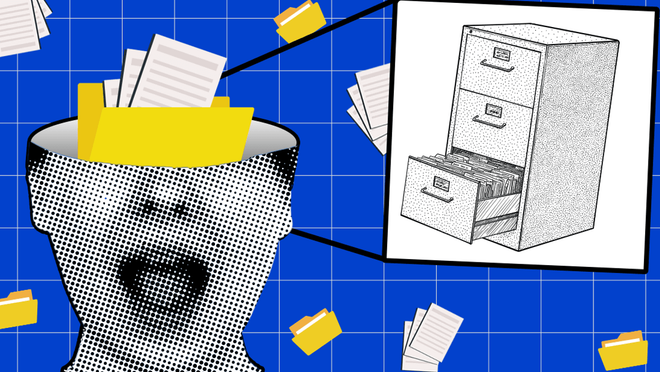
Believe it or not, I do have a mind palace of my own. Mine is more like a filing cabinet, with different boxes holding different pieces of information. Some boxes seem easy to find; others have been pushed into a drawer I have not opened in ages because the memories are not that pleasant. Sometimes, I know I have learnt something, but retrieving it feels like searching through a stack of papers, certain that the answer is somewhere in there. And when I finally find it, there is a small satisfaction in recognising something that was never truly lost, only difficult to reach.
And this is why the Mind Palace becomes even more interesting to me. Whether we imagine a palace, a filing cabinet, or something entirely different, we are giving our minds a way to work with information. We have to make connections, translate ideas into images, and connect things that might not seem to go together initially. You are not simply storing information; you are finding a way to represent it in your own mind. In a way, you are giving your imagination a problem to solve.
This is also why I find the connection between memory and creativity so fascinating. Einstein is often associated with the idea that imagination is more important than knowledge. Knowledge gives us information, but imagination allows us to explore possibilities, make unexpected connections, and look at familiar things differently. Of course, creativity also requires knowledge, reasoning, and practice. But the ability to picture something beyond what is immediately in front of us is an important part of the process.
The whole idea may begin by trying to remember something, but along the way, we practise visualising, associating and thinking differently. A process from a lecture becomes a journey through a kitchen. An abstract concept becomes an image we can revisit. And a filing cabinet that exists only in our imagination becomes a way of making sense of how we learn.
You can also try to make your own mind palace. Maybe the goal is not to remember like Sherlock Holmes. Maybe it is to understand our own minds well enough to make better use of what they can do. After all, your imagination is not just a place to escape into. It can be a place to organise knowledge, discover connections and create something new.
And now I am curious: if you had a mind palace, what would it look like? A palace, a filing cabinet, a collection of labelled boxes or something entirely different?


