
Who is victoria, and what is her secret?
Who is victoria, and what is her secret?
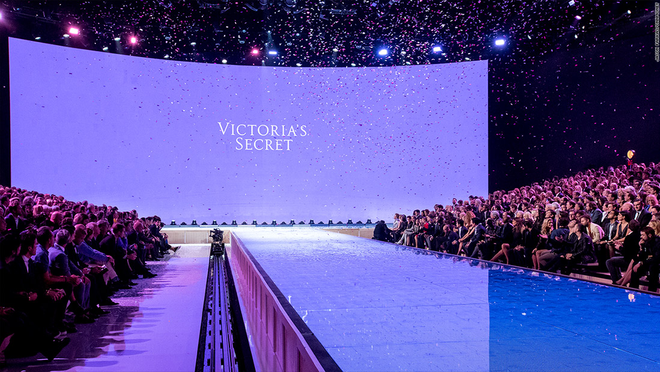
Victoria isn’t a person, yet somehow, most of us know what she looks like.
She has walked down runways in enormous wings, diamonds and lingerie while some of the world’s most famous musicians performed beside her. She has looked like Adriana Lima, Gisele Bündchen, Tyra Banks, Heidi Klum, Candice Swanepoel, Gigi Hadid and many other women who became almost inseparable from the word “Angel”.
For millions of viewers, the bras or lingerie were never really the point. It was the wings, the spectacle, the fantasy that an ordinary product could become something extraordinary. So what was Victoria’s Secret really selling? And how did that fantasy become so powerful?
In 1977, Roy Raymond opened the first Victoria’s Secret store in California after feeling uncomfortable shopping for lingerie for his wife. “Victoria” was not the woman behind the business. The name drew on Victorian-style elegance and privacy, while “Secret” added intimacy and mystery. Raymond sold the company to Leslie Wexner in 1982 for about $1 million. Wexner’s later relationship with Jeffrey Epstein would bring further scrutiny to the company’s history.
What followed was one of fashion’s most successful exercises in turning an ordinary product into mythology. Victoria’s Secret turned lingerie from something hidden beneath clothing into an entire world of its own. By 2016, at its commercial peak, the company was generating more than $7.7 billion in annual sales.
Victoria’s Secret was never famous simply for making underwear. It sold aspiration. The Fantasy Bra was perhaps the clearest example. Nobody needed a bra covered in millions of dollars’ worth of diamonds. And the wings were not practical either; flying requires jet engines and crude oil. The same fantasy that made Victoria’s Secret extraordinary eventually became its biggest problem.
For years, the brand presented a remarkably specific ideal: extremely slim, conventionally beautiful and deliberately sexualised. As conversations around beauty and body image changed, that ideal began to feel increasingly disconnected from many of the women buying its products.
Victoria’s Secret could clearly create fantasy. The question was whether fantasy still needed only one body. Then the questions became more serious than casting.
Investigative reporting in 2020 examined allegations of misogyny, bullying and harassment within the company’s former leadership culture. Ed Razek denied allegations of inappropriate conduct. Wexner, who had transformed Victoria’s Secret into a global force, also faced scrutiny over his long relationship with Epstein. Wexner has said he severed ties with Epstein in 2007 and denied knowing about his abuse.
Now comes Kylie Jenner, wearing the returning Fantasy Bra. Jenner made her Victoria’s Secret runway debut in a Jacob & Co. creation covered with 4,410 natural diamonds and centred on a 75.54-carat yellow diamond. Reported to be worth $50 million, it marked the Fantasy Bra’s return after several years and became its most extravagant version yet.
Once, the runway could make a model famous. Now it also depends on people who arrive famous already. The question of inclusion remains unsettled. An Allure review estimated that fewer than 10 per cent of the roughly 80 models in the 2026 show could be described as curvy or plus-size. The runway is more diverse than it once was, but that does not mean the old beauty hierarchy has disappeared.
And yet, I find myself asking a different question. Is it time we stopped caring so much about rich people’s fashion shows?
These extravagant spectacles belong to a world most of us can only watch from a distance. But the answer is not as simple as turning away. Many of us still love the wings, the music, the glamour and the confidence with which these women command a runway. There is something joyful about watching a woman take up space without apologising for it.
Enjoying that fantasy does not make us blind to its problems, and questioning a company should not make women feel guilty for enjoying fashion. We can admire the spectacle and still ask what it represents, whose standards it promotes and who gets to participate in the world it creates.
And then there are the women who will never wear the wings.
In Sri Lanka, labour organisations raised serious allegations concerning the 2025 death of garment worker Paramasivam Pushpalatha at a Brandix factory in Victoria’s Secret’s supply chain. Worker representatives alleged that she became unwell during her shift and was not allowed to leave early. Brandix disputed allegations of wrongdoing, while Victoria’s Secret said it does not tolerate intimidation or retaliation and had reinforced expectations around workers’ rights with the supplier.
The allegations remain disputed, but they raise a question no runway casting decision can answer: when a company talks about empowering women, which women are included in that promise? Empowerment cannot stop with the women wearing or buying the products; it must extend to the workers who make them, too.
Perhaps Victoria’s Secret is more interesting now than when its fantasy was simpler. The brand is trying to preserve what women enjoy: the glamour, nostalgia, confidence, music and almost ridiculous beauty of those wings, while distancing itself from the narrow beauty standards and power structures that surround them.
And I do not think the answer is to look back at the Angels and decide that everything about them was wrong.
Ming Xi’s story captures the other side of the wings. In 2017, the Chinese model fell on the Victoria’s Secret runway in Shanghai, but got back up and completed her walk. In 2026, she returned after eight years, walking in two looks, including dramatic wings. Her comeback showed that one difficult moment need not define a career.
Barbara Palvin’s return offered another perspective. She walked in the 2026 show around six weeks after giving birth to her daughter. Palvin spoke about the support she received and acknowledged that every postpartum journey is different. Her appearance should not become another standard mothers are expected to meet. Rather, it reminds us that motherhood need not erase a woman’s professional identity, and that support and personal choice matter.
Many girls still love Victoria’s Secret. Fashion is allowed to be excessive. Women are allowed to enjoy beauty, lingerie, sexiness, glitter, diamonds and fantasy without every pleasure becoming an ideological argument. Those wings can mean more than marketing. For the women wearing them, they can represent confidence, achievement and the joy of reaching a stage they have worked hard to reach.
But that feeling should not end when the music stops. Empowerment should mean something in the casting room, in the workplace and in the factories producing the clothes. It should mean models can speak safely, different bodies can genuinely belong, workers can demand protection, and the women producing the fantasy receive dignity alongside those representing it.
Maybe she was never one woman at all. She was whatever version of femininity the brand believed the world wanted to see: first mysterious, then seductive, then impossibly perfect, and now increasingly diverse, visible and empowered.
Perhaps it was never hidden beneath the lingerie. Victoria’s Secret became extraordinary because it understood something powerful about fashion: people do not fall in love with products alone. They fall in love with what those products allow them to imagine about themselves.
For decades, Victoria gave women wings. Now the harder challenge is making sure the idea of empowerment does not end where the runway does.


