
Why are women still judged by standards men are allowed to break?
I have a particular problem with stories that make women pay for decisions men are allowed to make without losing their dignity. It becomes especially difficult to ignore when a female character is neither entirely innocent nor entirely wrong. Ordinary human flaws, in many South Asian dramas, are treated as if she has revealed a fundamental defect in her character.
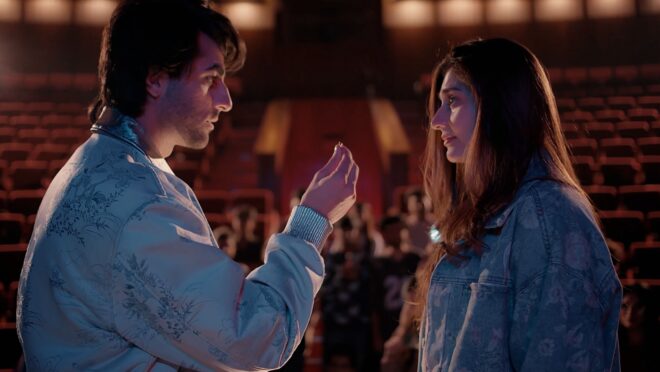
I kept thinking about this while watching ARY Digital’s Dar-e-Nijaat. I was less interested in deciding whether Zaryab was right or wrong, or whether Abu Bakar was the ideal husband, than understanding why these characters are judged by such different standards. Why does one person get to change his mind, reinterpret his past and begin again, while another remains answerable for choices made years earlier? And why does a man have to demonstrate respect for a woman’s autonomy before we can imagine that she deserves it?
Written by Umera Ahmed and directed by Saqib Khan, Dar-e-Nijaat has generated considerable discussion, particularly around Abu Bakar and his approach to relationships. But I think the conversation should move beyond identifying the green flag and the red flag. There is a larger question underneath it: what have we come to expect from men and women on screen, and why are those expectations so unequal?
The past that belongs to a woman forever
Zaryab is not a character without flaws. Her emotional impulsiveness and decisions surrounding Zamil have consequences, and there is room to question her judgement. But questioning a character’s decisions is not the same as treating those decisions as a permanent measure of her worth.
What stands out to me is the difference between how Zaryab and Zamil are allowed to understand their shared past. They lived together while abroad and shared a relationship. Later, Zamil turns towards religion and begins describing that period as an era of ignorance.
He gets to reinterpret his history as something he has outgrown. Zaryab, however, remains answerable for the same history. His transformation becomes evidence of personal growth, while her past becomes evidence against her character.
Zamil is entitled to change his beliefs, his priorities and the way he understands his past. He is also entitled to choose a partner whose values align with his present beliefs. But that transformation should not give him the authority to judge Zaryab as though he has progressed beyond a past that she must continue to answer for.
His demand for a pure and obedient wife, alongside his dismissal of their shared history, exposes how selectively morality can be applied.
I keep returning to a simple question: if the genders were reversed, would the story and its audience respond in the same way?
Imagine a male character who had shared a home and a relationship with a woman while studying abroad. Years later, he regrets those choices, becomes more religious and decides he wants a partner whose values align with his present beliefs. Would his previous relationship automatically make him unworthy of a respectable future? Would viewers insist that he had permanently compromised his character?
It is no longer debatable that men are often given more room to make mistakes, learn from them and start over. Their growth is measured by who they become, not exclusively by who they used to be. Women, on the other hand, are frequently made to carry their past as a moral liability, even when they have changed.
A woman’s romantic history is often used to question her upbringing, her “suitability” as a wife or whether she deserves the same trust as someone with a more socially acceptable past. The man involved in that history will not face an equivalent interrogation.
If a man’s personal transformation is considered legitimate, why does a woman’s ability to move forward remain conditional on whether others approve of her history?
Abu Bakar’s approach to Zaryab is one of the most discussed aspects of the drama, and I understand why viewers appreciate him. He does not use her romantic history as a weapon, nor does he treat her relationship with her Creator as something he has the right to police. He recognises that her past is not his to control.
I admire that about him. But I also find it revealing that these qualities are being celebrated as exceptional. Whenever a male character displays patience, emotional maturity, restraint and a willingness to accommodate another person’s needs, audiences often treat him as an extraordinary romantic ideal.
In a culture claiming to respect women, these qualities shouldn’t be exceptional
Women are expected to understand, forgive, adjust, absorb emotional distress and keep relationships functioning, often at the expense of their own needs. Their patience is praised when it makes life easier for others. But when a woman exercises the same confidence, authority and independence that make Abu Bakar appealing, she can easily be labelled arrogant, selfish or difficult.
This is the contradiction I find difficult to overlook. Why do audiences want an Abu Bakar as a male lead but hesitate to embrace a female character with the same self-respect, moral authority and confidence? Why is emotional intelligence considered attractive in a man, while assertiveness is so often treated as a character flaw in a woman?
We seem comfortable with women performing the emotional labour that keeps families and relationships functioning, but surprised when they expect the same consideration in return.
If Abu Bakar’s ability to respect another person’s choices makes him admirable, why should a woman who insists on making her own choices be considered difficult?
Two versions of masculinity
One of the most interesting casting choices in Dar-e-Nijaat is Sheheryar Munawar playing both Abu Bakar and Aman Gujjar. The contrast between the two characters makes the drama’s treatment of masculinity particularly worth examining.
Aman is trusted by Khushbakht’s family as Bela’s tutor. He occupies a position of authority and uses that trust and the vulnerability of a young girl to exploit the situation. Abu Bakar, by contrast, has the opportunity to use Zaryab’s vulnerability against her but refuses to do so. One character abuses the power he is given; the other understands that being in a position to control someone does not give him the right to do it.
The casting raises an uncomfortable question for viewers who find Abu Bakar’s restraint insufficiently masculine or his willingness to accommodate Zaryab questionable: what exactly are they expecting from a man? If refusing to control a woman is somehow a weakness, then what are we supposed to call Aman’s abuse of trust and authority?
The two characters expose the difference between masculinity based on entitlement and masculinity based on respect. Aman demonstrates what happens when a man believes his position gives him the right to exploit it. The fact that Abu Bakar’s basic decency generates so much discussion says something about the standards we have normalised.
Bela’s story also matters because the responsibility for maintaining boundaries cannot reasonably be placed on a young girl dealing with an older man trusted by her family. The burden belongs to the adult who exploits that trust. Yet, conversations about women’s vulnerability often turn into examinations of their judgement and behaviour rather than the conduct of the men who exploit them.
Khushbakht’s decision not to pass her trauma on to the next generation adds another dimension. Sania Saeed has spoken about Khushbakht’s refusal to let another woman in her family experience what she endured. That decision shows a woman choosing to break a cycle rather than reproduce it. But it also makes me wonder why women so often end up carrying the responsibility of repairing damage caused by men’s actions.
The drama presents another familiar double standard through its treatment of parenting. Zaryab and her sisters’ upbringing is blamed on their mother, with the grandmother suggesting that children’s upbringing rests entirely on the mother. The father is not subjected to the same scrutiny. When children make choices society disapproves of, mothers are often questioned first, while fathers’ responsibilities become secondary. Women are expected to take responsibility not only for their own conduct but also for the behaviour and decisions of the people they raise.
A woman’s ambition should not need a man’s permission
Zaryab’s educational ambitions are another part of the story that deserves more attention. Her opportunity to study at Harvard Business School is significant, but her future repeatedly becomes entangled with her relationships. Even when Abu Bakar eventually encourages her to return and complete her education, I cannot help asking why her ambition needs to be restored through a man’s encouragement.
His support is valuable. But the opportunity was hers before he entered the picture. Her education should not become meaningful because a husband recognises its value. It should matter because it belongs to her.
This is where I find myself thinking of Yaqeen Ka Safar, particularly Dr Zubia Khalil, one of my favourite female character portrayals in Pakistani television. Zubia has a painful past marked by trauma, betrayal and victim-blaming. But her history does not become a permanent verdict on her worth.
What I appreciate about her portrayal is that the narrative gives her room to build an identity beyond what happened to her. She pursues her education, develops professionally and establishes herself as a doctor. Her growth is not simply about finding someone who accepts her. She has ambitions, capabilities and a professional life that exist independently of her romantic relationships. Her past remains part of her story, but it does not become the only story she is allowed to have.
I am not suggesting that Zubia and Zaryab are identical characters. The comparison is about what a narrative allows a woman to become. Yaqeen Ka Safar demonstrates that Pakistani television can portray a woman with a complicated past and still give her agency, professional ambition and room to define herself. That makes it harder to accept the idea that a woman’s history must always determine how her future is judged.
Sania Saeed has raised a similar concern about the tendency to portray ambitious women as making a U-turn or needing external support to find their way. Discussing Dar-e-Nijaat, she questioned the familiar pattern of writing women as though they must repeatedly make wrong decisions or submit before they can receive love. She described the drama as only slightly different from that pattern.
I find that observation particularly relevant. A drama can attempt to challenge conventional gender expectations and still reproduce some of the narrative habits it should be questioning. A woman can be loved without being corrected, supported without being rescued and allowed to change without having to prove that her former self was undeserving of respect.
This is bigger than one drama
I do not think these concerns begin or end with Dar-e-Nijaat. Research on Pakistani television has examined similar patterns long before this drama became a subject of discussion.
In a 2018 study, Are Independent and Liberal Women Villains? Researcher Saleem Abbas examined 40 female roles across five popular Pakistani Urdu dramas broadcast between 2012 and 2016. His analysis identified a recurring distinction: independent, bold and liberal women were frequently assigned negative roles, including villains and anti-heroines, while positive leading roles were more likely to be traditional and conform to established expectations.
The study also pointed to an implicit message that a woman cannot be a successful professional and a good wife or mother at the same time.
I find that particularly relevant to the way we discuss Zaryab. The problem is not simply whether she makes the right decisions. It is the expectation that a woman must remain within an acceptable version of femininity to be considered worthy of sympathy and respect. When independence, ambition or unconventional choices are constantly associated with negative consequences, viewers are presented with a narrow idea of what a respectable woman should look like.
A separate 2023 study by Fatima Zulfiqar, Erum Hafeez and Atif Aziz, titled Glorification of Misogyny and Violence in Pakistani TV Dramas and its Impact on Young Women in Karachi, approached the issue from another angle. The researchers surveyed 250 women and interviewed seven industry professionals.
Their research examined how Pakistani dramas can package misogynistic behaviour as romance, including manhandling, stalking, eve-teasing and assault, while presenting such behaviour as a means of controlling women. It also considered how narratives built around romance, honour and tradition can normalise harmful attitudes towards women.
The studies examine different aspects of representation, but together they raise a question that goes beyond individual characters. Television does not have to explicitly endorse misogyny to reproduce it. It can associate female independence with negative consequences, frame controlling behaviour as romantic devotion or make a woman’s freedom appear irresponsible. A story may intend to criticise a character’s behaviour, but the way it distributes sympathy, blame and consequences can communicate something very different.
This is why I think we need to examine not only what a drama intends to say, but what it ends up normalising. If a woman loses her dignity, opportunities or relationships because she refuses to conform, while a man who makes comparable choices is allowed to reinvent himself, the story can reinforce the very double standard it might have intended to challenge. The consequences become part of the message, whether the writers intended them or not.
As a Bangladeshi viewer, I recognise the social expectations behind these narratives. A woman’s decision to study abroad, pursue a career, postpone marriage or enter a relationship is rarely judged on its own. It is weighed against family reputation, marriage prospects and the fear of what people might say. We celebrate women’s education and professional success, yet often expect them to remain accommodating in their personal lives. We hold mothers responsible for their children’s upbringing while rarely applying the same expectations to fathers, and invoke morality to police women’s choices while allowing men greater room to make mistakes.
Television does not create these attitudes, but it can reinforce them by packaging misogyny as concern, morality or romance. And while I appreciate characters like Abu Bakar, who offer a welcome contrast to controlling masculinity, I cannot help asking why basic respect for women still feels exceptional on screen. Zaryab does not have to be innocent, make the right decisions or live up to society’s expectations to deserve dignity and another chance. A woman’s freedom is not a reward for good behaviour or a privilege granted by a man. It is hers, regardless of her past or whether everyone approves of her choices.