Why old Bangladeshi commercials still live in our heads
Almost like a quiet ritual, “Shopno Jabe Bari” re-enters our lives every year just before Eid.
Why old Bangladeshi commercials still live in our heads
Almost like a quiet ritual, “Shopno Jabe Bari” re-enters our lives every year just before Eid.
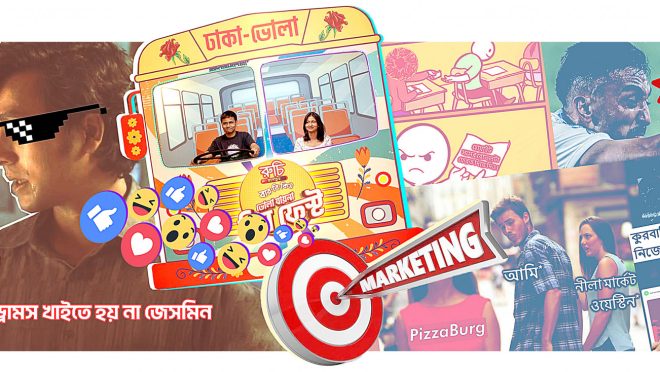
More than fifteen years after its release, the song “Shopno Jabe Bari” still has not lost its hold on people.
Created as the theme song for a campaign, it somehow transcended marketing and found a permanent place in the emotional landscape of Bangladesh. The lyrics and melody carry a quiet longing, the gentle ache of returning home.
The song resurfaces every year just before Eid, with social media feeds suddenly filling with photos of crowded buses, train windows, highway sunsets, and captions that read, “Shopno Jabe Bari?”
And just like that, an advertising jingle found its way into real life.
The metrics of marketing
Most ads today are short, performance-driven, and engineered for quick engagement. They are built around viral sounds, trending memes, and familiar influencer faces selling carefully curated lifestyles. We see the product, the smile, the slogan, and then we scroll. Often, we barely learn what the brand believes in, what it represents, or why it exists beyond the sale. But it was not always like this.
In the race for virality and metrics, we quietly lose the craft behind advertising.
There was a time when advertising in Bangladesh did not just sell products, it told stories. Campaigns had characters, emotions, awkward silences, playful humour, and moments that felt almost cinematic. The brand did not interrupt culture; it quietly entered it. You cared about the story first. Only later did you realise it was an advertisement.
Think back to the ads many Bangladeshis still remember effortlessly. A colourful Volkswagen Beetle drives across the country while the guitar riffs of “Ontore Ontore” begin to play. Suddenly, you know exactly what is coming: the unmistakable energy of a Mojo commercial.
Or the simple yet unforgettable melody, “Tumi Ami Ar Danish…” The jingle did not just sell a product. It sold moments of friendship, sweetness, belonging, and youthful energy. The product was almost secondary; the emotion carried the memory into every conversation.
Grameenphone’s 2010 campaign is another example, where they did not push prices or phones. Instead, they tapped into emotion using “Ekti Bangladesh”, a patriotic song, and real people to show connection and belonging. The product barely appeared; what sold was the feeling of being part of something bigger. That subtle, human-focused approach made Grameenphone stand out and anchored its place in people’s hearts.
Do you remember Mokhles? At a time when glamorous celebrity endorsements were common, PRAN took a different approach. They created Mokhles, a bald, goofy character who embodied a wholesome charm, reminiscent of a memeable figure even before memes made their debut in Bangladesh.
These narratives provided enough depth for audiences to form authentic connections. This phenomenon is not limited to Bangladesh. Advertising has long utilised cinematic storytelling as an effective marketing tool. Notable examples include Nike’s “Take It to the Next Level”, Coca-Cola’s “Happiness Factory”, and Microsoft’s “Introduction to Excel”. Also, Apple’s Super Bowl ad, “1984”, was more than a commercial; it was a rallying cry. Each of these was designed to create a significant cultural impact through concise storytelling.
In the past, when a celebrity appeared in an advertisement, there was often a strong context behind it. For example, RC Cola used an underdog marketing strategy to carve out its own niche in the market. During the 2000s, musical romance became a significant aspect of local pop culture. By mirroring the cinematic style of a hero singing to impress a heroine while showcasing various drinks from RC’s line-up, the brand positioned itself as one that offered consumers freedom of choice.
The catchy jingle “Tomar Jonno Morte Pari”, combined with the chemistry between Nobel and Puthi, set a new benchmark for cinematic glamour in local beverage marketing. At that time, it was one of the first highly budgeted TV commercials in Bangladesh.
Scroll, swipe, repeat… but do not forget stories
Today, most commercials feature a well-known celebrity or influencer promoting a product. They talk about its features in a way that grabs our attention for a moment but is often quickly forgotten. Many brands struggle to make a strong impact or deliver a clear message.
One reason for this change is the growth of the attention economy. In the past, people mainly relied on TV channels, radio stations, and newspapers for media, which helped focus attention. Now, there is limitless content available, and choices are everywhere. Each platform competes for a few seconds of attention. As a result, when people quickly decide whether to keep scrolling, advertisers must focus on grabbing attention immediately rather than creating deep engagement.
There has been a significant change in how brands work with advertisers. In the past, long-term partnerships allowed brands to develop a unique and consistent voice over time. These collaborations fostered a deep understanding of the brand’s values, leading to impactful campaigns. Now, agencies change frequently, and brand tenures are often shorter. Add quarterly targets to that, and the focus naturally shifts from legacy-building to quick, visible results.
The integration of AI and digital tools has significantly accelerated the campaign development process, allowing campaigns to be created and tested in just a few days rather than months. This advancement leads to reduced production costs and quicker iterations, enabling real-time performance tracking. Given these benefits, data-driven approaches may appear more advantageous than traditional storytelling methods, especially when considering their impact on speed and efficiency in relation to profitability.
However, human behaviour may not have changed as dramatically as the media has, yet we continue to navigate the world through stories that resonate with our emotions and connections. The essential question is this: if brands desire to be remembered, they must rise to the challenge of telling better stories.
The importance of storytelling in advertising
In 1951, David Ogilvy was asked to help a small American shirt maker, C. F. Hathaway Company. At the time, dress shirts were a commodity product: boring, undifferentiated, and easy to ignore. Ogilvy knew that in a magazine full of competing ads, people would not give a plain shirt a second glance. So, he did something radical: he hired a sharply dressed model and put a black eye patch on him in the photo, without any explanation.
That image, “The Man in the Hathaway Shirt”, ran in The New Yorker, instantly sparking curiosity. Within a week, Hathaway shirts were sold out in New York, and the campaign ran for nearly two decades. The eye patch did not literally sell the shirt; it started a story that people wanted to explore.
Years later, on Late Show with David Letterman, Ogilvy explained it plainly: if you can inject story appeal into an ad, people pay attention. “People look at that picture and say, ‘Who is this man in an eye patch?’” he said. That moment of intrigue lasts only a tenth of a second, but it is enough. Enough to make someone read the ad copy, engage with the product, and ultimately buy it.