Why Tagore still feels more real than most modern writers
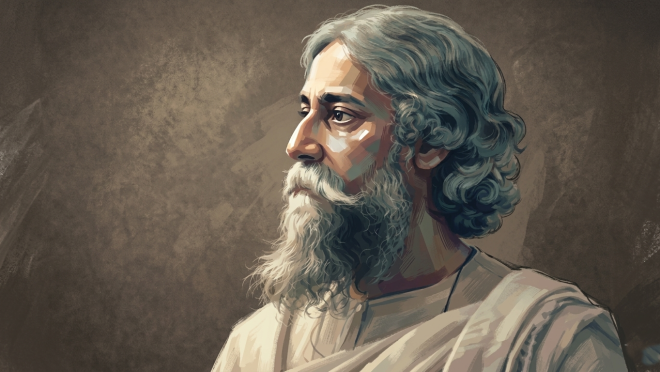
Rabindranath Tagore does not feel like a writer from the past. He feels present. His words still move us in the same way. Almost too personally. There is something about his use of language that feels different from what we hear today.
Why Tagore still feels more real than most modern writers
Rabindranath Tagore does not feel like a writer from the past. He feels present. His words still move us in the same way. Almost too personally. There is something about his use of language that feels different from what we hear today.
Softer but heavier. Simple but carrying more meaning than it shows.
When you read his novels, you do not just follow a story. You sit inside people’s lives. You feel their hesitation, their longing, and their mistakes. His characters are not dramatic in a loud way. They are emotional in a very real way. That is why they stay.
On his 165th birth anniversary, let’s relive some of his heart-touching stories:
In Chokher Bali, the story moves between Binodini, Mahendra, Asha, and Bihari. It begins with small relationships, almost ordinary, but slowly it becomes something complex. Desire enters quietly and so does jealousy. Binodini’s life feels especially painful. Even though she is sharp and aware, she has no space to live freely. Her emotions have nowhere to go, so they turn inward and then outward in ways that hurt everyone.
Tagore writes, “সংসারের কঠিন কর্তব্য হইতে প্রেমকে ফুলের মতো ছিঁড়িয়া স্বতন্ত্র করিয়া লইলে তাহা কেবল আপনার রসে আপনাকে সজীব রাখিতে পারে না, তাহা ক্রমেই বিমর্ষ ও বিকৃত হইয়া আসে।” The word “বিকৃত” pierces through our heart here. Love is not separated gently. It is torn away and once it is torn from duty, it does not stay pure. It becomes “বিমর্ষ”, tired and sad, and then it turns into something almost spoiled.
Later he writes, “একটা প্রবল আবেগের উচ্ছ্বাসের পর ঋদয়ে অবসাদ উপস্থিত হয়…” That shift from “উচ্ছ্বাস” to “অবসাদ” feels very realistic. After strong emotion, there is always a drop. Then he says, “তলের সমস্ত প্রচ্ছন্ন পঙ্ক বাহির হইয়া পড়ে।” The word “পঙ্ক” is harsh. It shows what lies underneath. Love is not only beauty. There is something messy at the bottom.
In another book, Noukadubi, the story is shaped by accident. A coincidental mistake changes everything. Ramesh, Hemnalini, and Kamala are all trying to do what is right, but they are also confused, unsure, and human. The tragedy here is quietly spreading like a slow poison. It comes from misunderstanding more than intention.
The line “পরের দোষত্রুটি লইয়া কেবলই আলোচনা করিতে থাকিলে মন ছোটো হইয়া যায়…” feels simple but heavy. “মন ছোটো হইয়া যায়” says so much in so few words. The mind shrinks. Then he adds that “হৃদয়ের সরসতা থাকে না.” That word “সরসতা” is beautiful. It means a kind of emotional freshness, a softness of the heart. And once that is gone, something inside us dries up.
Which happens more often than we would like to admit.
In Ghare Baire, the emotions are tied with ideas. Bimala, Nikhil, and Sandip are not just in a love triangle. They are also caught between truth and illusion. Bimala’s journey feels like awakening but also like loss.
She says, “রুপ যখন চোখের পাহারা এড়িয়ে লুকিয়ে অন্তরে দেখা দেয় সেই বুঝি ভালো।” The phrase “চোখের পাহারা এড়িয়ে” is very soft. It suggests that real beauty is not something you look at directly. It hides and then appears inside. When Tagore says “ভক্তির অমরাবতী”, it feels like beauty becomes something sacred. Truly, Tagore was brilliant with his wordplay.
Another line says, “প্রেম যে স্বভাব বৈরাগী…” Calling love “বৈরাগী” is unexpected. It means detached. Not possessive. Then he describes it blooming “পথের ধারে ধূলার পরে”. That image feels free or, to some, it may feel dirty. Love is not meant to be decorated in a “চীনের টব”. That would make it small and controlled. Tagore’s love is open, almost careless in its freedom.
In Shesher Kabita, the love between Amit and Labanya feels different from his other works. It is deep but it does not try to hold on. They understand each other, but they also choose distance.
The line “সংসার যার বড় তার সংসারটা ঘরে অল্প, বাইরেই বেশি…” shows a person whose life cannot be contained. Their world is larger than the home. Then comes the sharp thought, “নামজাদা মানুষের বিবাহ স্বল্প বিবাহ, বহুবিবাহের মতোই গর্হিত।” It almost sounds ironic. As if marriage cannot carry everything that some people are.
And then the most painful idea: “ভালোবাসায় ট্রাজেডি সেখানেই ঘটে পরস্পরকে স্বতন্ত্র জেনে মানুষ সন্তুষ্ট থাকতে পারেনি নিজের ইচ্ছা অন্যের ইচ্ছে করবার জন্যে যেখানে জুলুম – যেখানে মনের করি, আপন মনের মত করে বদলিয়ে অন্যকে সৃষ্টি করে।” The word “জুলুম” stands out. Love becomes force when it tries to change someone. When one person tries to shape the other. When “আপন মনের মত করে বদলিয়ে অন্যকে সৃষ্টি করে.” That is where tragedy begins.
Reading Tagore today still feels like entering another space.
Not far away but deeper than what we are used to. His language is not just beautiful. It understands people. It sees their weaknesses and still stays gentle with them.
On his birthday, it becomes clear again. His stories are not old. His words are not distant.
They are still here, still speaking, still quietly breaking the heart.