From 2006 to nowhere: Italy’s long road to decline
Once a footballing giant crowned with four World Cup triumphs, Italy, renowned for its defensive brilliance and unmatched tournament grit, now watches football’s grandest stages from the gallery.
From 2006 to nowhere: Italy’s long road to decline
Once a footballing giant crowned with four World Cup triumphs, Italy, renowned for its defensive brilliance and unmatched tournament grit, now watches football’s grandest stages from the gallery.
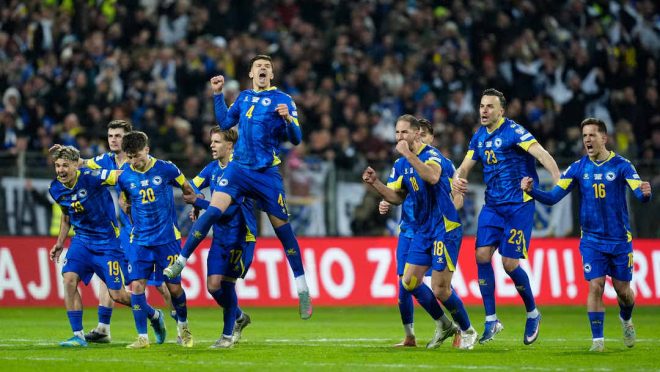
Failing to qualify for three consecutive FIFA World Cups (2018, 2022, 2026), the Azzurri’s downfall stands as one of the most stunning collapses in modern football history.
From lifting the trophy in 2006 to becoming the first four-time champions to miss three straight World Cups, Italy’s decline is not a sudden slip but a deep, long-brewing structural breakdown that has unfolded over two decades.
Previously, there were tactical masters, disciplined defence, elite mentality, and world-class players. But what followed is staggering.
2010 – Group stage exit, 2014 – Group stage exit, 2018 – Failed to qualify, 2022 – Failed to qualify, and even 2026 – Failed to qualify again, being defeated by 66th-ranked Bosnia and Herzegovina in the play-offs!
It’s been 20 years; Italy has won just one World Cup match. This is not a temporary dip but a systemic footballing apocalypse.
Italy’s decline is not a sudden collapse. It is the result of deep, structural flaws that have been building for years. At the heart of the crisis lies a critical issue, i.e. the failure to develop young talent.
Experts and former players consistently point out that Italy is producing fewer elite youngsters than its European rivals. Instead, the system leans heavily on experienced or ageing footballers, with limited pathways for youth to break into top-level competition. In Serie A, clubs increasingly prioritise foreign signings, unintentionally shutting the door on homegrown prospects. The result is clear. Italy lacks a strong, consistent talent pipeline like France, Germany, or Spain.
Compounding this problem is an outdated youth development system. While modern football nations have invested heavily in infrastructure and innovation, Italy’s academies have struggled to keep pace. Coaching methods often remain rooted in tradition, focusing on short-term results rather than long-term player growth. Nations like France reformed their systems in the 1990s, and today, they reap the rewards. Italy, by contrast, has lagged behind.
Tactically, the gap has only widened. Italy’s identity was once built on defensive solidity and discipline, but the modern game demands more emphasis; high pressing, rapid transitions, and technical dominance in midfield. While their win at UEFA Euro 2020 suggested a revival, it ultimately masked deeper unresolved issues.
Instability at the managerial level has further hindered progress. Since their 2006 World Cup victory, Italy has cycled through a series of coaches: Roberto Donadoni, Marcello Lippi, Cesare Prandelli, Antonio Conte, Gian Piero Ventura, Roberto Mancini, Luciano Spalletti, and Gennaro Gattuso, with each transition resetting progress and preventing the establishment of a long-term vision.
Sudden coaching changes, particularly ahead of crucial qualifiers, have left little time to build cohesion.
Equally concerning is Italy’s psychological decline. Once known for thriving under pressure, the team now falters in decisive moments. The shocking defeat to North Macedonia in 2022 and repeated failures to qualify for the 2018, 2022, and 2026 World Cups highlight a growing mental fragility, one that goes beyond tactics.
Even the historic Euro 2020 victory now appears to be a false dawn. Rather than signalling a new era, it concealed systemic weaknesses, delayed reform, and fostered complacency. When the glow faded, the same issues resurfaced; unchanged and unresolved.
Defensively, Italy’s traditional backbone has weakened. The legacy of legends like Paolo Maldini, Fabio Cannavaro, and Alessandro Nesta has not been sustained. A shortage of world-class defenders and an increase in costly errors point to a broader loss of identity.
Meanwhile, global football has evolved rapidly. Smaller nations are more organised, analytics drive decision-making, and talent development is more competitive than ever. Italy’s failure to adapt to these changes has left them trailing behind.
In essence, Italy’s story is no longer just about poor results. It is about a system that has failed to evolve in a game that never stops changing.
Revealed the jersey, but couldn’t play
This symbolic phrase reflects a harsh truth. Italy still carries the prestige, still launches kits, brands, campaigns, legacy, but performance does not match identity.
It’s a disconnect between image and reality. They remain a big name commercially but not competitively.
Italy’s footballing struggles stem from deep structural and cultural issues rather than any single failure, and addressing them requires a comprehensive, long-term vision.
A renewed focus on youth development is essential, with greater investment in academies and a deliberate effort to prioritise Italian players within Serie A, ensuring a steady pipeline of homegrown talent for the national team. At the same time, Italy must modernise its tactical identity by evolving beyond its traditional defensive mindset and embracing a more dynamic style, which is built on counter-attacks, speed, and creative control play.
Stability in coaching is equally critical. Appointing a long-term coach and committing to a consistent footballing philosophy would provide the continuity that has been lacking in recent years.
Beyond tactics and management, mental conditioning must also improve, fostering resilience under pressure and cultivating strong leadership within the squad. Structural reform within the FIGC is another key pillar, requiring better governance and closer alignment between club priorities and national team objectives.
Placing trust in young players by giving them meaningful opportunities early on will help build not just a competitive squad, but an entire generation capable of restoring Italy’s footballing identity.
Finally, institutional reform. Aligning the objectives of domestic football with the needs of the national team can create a more cohesive system. Collaboration between clubs, governing bodies, and coaching staff is essential for sustainable progress.
Ultimately, Italy’s crisis is not the result of one inconsistent coach, one unlucky match, or one weak generation. It is a systemic issue that demands bold, unified, and forward-thinking solutions. It is about a system that failed to evolve while the world moved forward.
Italy’s absence from three consecutive World Cups is not just shocking; it is historic. A nation that once defined football excellence is now struggling to even reach the global stage.
But the story is not over.
If Italy can reinvent itself, a resurgence is not beyond reach, just as Germany rose from the ashes after 2000. Until then, the contrast is stark. A team that still dons the jersey adorned with four glittering stars, yet no longer performs like the champions those stars represent.
Italy’s story stands as a powerful warning in modern football, a lesson in how stagnation, in a game that evolves relentlessly, can erode even the greatest legacies. Success, when not matched with constant adaptation, breeds complacency, and complacency invites decline.
Yet within this decline lies hope. Football history has shown time and again that fallen giants can rebuild, recalibrate, and return stronger than before.
The true challenge now is to transform that legacy into a modern, dynamic system capable of competing at the highest level once again.
Until that transformation takes shape, Italy’s absence from the World Cup will stand not only as a symbol of failure but as a pressing call for renewal, reinvention, and revival.