The invisible economy inside every school
The invisible economy inside every school
Every time I have a holiday, I go to Digholiya. Our farmhouse sits on an island surrounded by the River Vairab — quiet, unhurried, and deeply alive in ways the city is not. My wife loves it there. We wake up to birdsong. My father-in-law and mother-in-law built our mango orchard, Mango Heaven, over fifty years — the result of quiet, consistent work.
But what stays with me is something else.
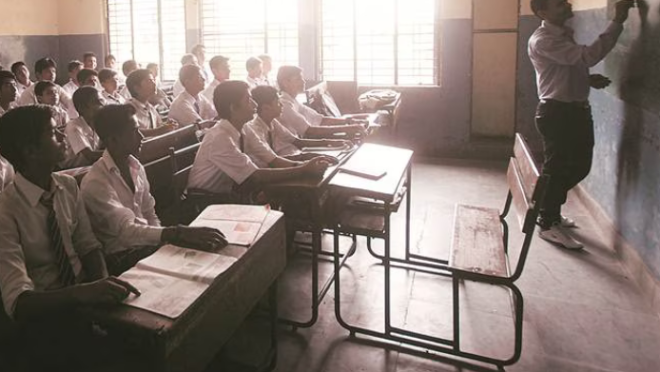
Every morning, before the day fully begins, I hear the chorus of children reading aloud. It comes from a small primary school beside our orchard. Thirty, maybe forty students. A bell rings. A teacher is already there.
The system is working. Just not the one we talk about.
On my last visit, I travelled across the island by van, speaking to shopkeepers, teachers, and parents. In a place as small as Digholiya, I counted more than thirty educational institutions — government schools, madrashas, kindergartens, and small private setups. All of them running. All of them real.
Not one of them had a digital system.
Fees are collected in cash. Records are written by hand. Salaries are paid informally. Every month, money moves — consistently, predictably, and invisibly. This is not a rural anomaly. This is Bangladesh.
Across the country, 114,630 primary-level institutions serve nearly twenty million students. Add secondary schools, colleges, madrashas, and orphanages — this is not just an education system. It is an economy, large, active, and almost entirely outside the banking system.
The problem is not willingness. Every headmaster I have spoken to wants a better way. The problem is capability. A small school with five teachers and forty students has no IT team, no budget, and no pathway to get there.
What these institutions need is not just digital payments. They need a system — a bank-led Education Management System that turns every school into a financial node. Not a technology project. A banking strategy.
Some banks have taken early steps — TAP supports payment collection for Trust Welfare Schools, and others have basic fee modules. But payment collection alone is not a system. Payments move money. Platforms build relationships. What Bangladesh needs is an integrated platform connecting student records, attendance, fee management, and banking services into a single node.
Imagine it. A headmaster logs in and generates a monthly fee request. A parent scans a QR code and pays instantly. The money settles directly into the institution’s account. The ledger disappears. The system replaces it.
The infrastructure already exists. Bangladesh Bank has mandated Bangla QR at all merchant points nationwide — instant, interoperable settlement across all banks and MFS providers. 239 million MFS accounts already reach rural, elderly, and first-time users. The rails are ready. What is missing is integration.
A bank that builds this platform embeds itself into the daily financial life of an entire sector. Every school becomes a customer acquisition channel. A school with two hundred students is two hundred families making monthly payments — without a branch visit, without a campaign, without acquisition cost.
The teacher dimension matters too. Government teachers receive salaries through IBAS into bank accounts — but a salary credit is not a financial relationship. The account exists. The engagement does not. Add non-government schools, madrashas, and kindergartens and the opportunity becomes clear.
Other countries recognised this earlier. In India, platforms now serve over 1.47 million schools and 246.9 million students, with education-focused fintechs offering structured EMI models that banks helped design. HDFC Bank launched a dedicated EdFinTech platform at the Global Fintech Fest 2024, embedding itself into the education payment flow. In Australia, CDFpay has turned schools fully cashless — fees, canteen, events all flowing through one bank-connected system. Bangladesh can move faster than both.
And the opportunity does not stop at payments. Regular fee payments become credit history — the foundation for education loans, savings products, and BNPL. Scholarships can be targeted using real payment data, identifying the right child through evidence rather than assumption. Health and education insurance can be offered at the point of payment, through a relationship that already exists.
This is how invisible people become visible — not through announcements, but through systems they use every day.
The strategic case for Islamic banks is especially compelling. Reaching the underserved is not corporate social responsibility. It is the core mandate. A bank that becomes the financial backbone of Bangladesh’s education sector is not making a charitable bet. It is making the most defensible long-term acquisition in retail banking. Institutions that plug in do not leave.
No bank in Bangladesh has done this at scale. The window is open.
In Digholiya, the bell rings every morning. More than thirty institutions on one island — and not one connected to the banking system that could serve them, score them, insure them, and grow with them.
The bell rings every morning. The system is still not listening.

Md Mahmudul Hasan is a Digital Banking and Fintech Strategist and author of From Cash to Code: How Digital Finance Can Transform Bangladesh’s Invisible Economy. He works at the intersection of financial inclusion, Islamic finance, and digital transformation in Bangladesh.
Disclaimer: The views and opinions expressed in this article are those of the authors and do not necessarily reflect the opinions and views of The Business Standard.