Inflation, energy, and policy: What I learned from BRACU’s Economics dialogue
On 14 May 2026, I got the opportunity to attend a session of Professor Salehuddin Ahmed, former Governor of Bangladesh Bank and former advisor to the interim government of Bangladesh, on the topic “Bangladesh Economy and Development Strategy: Challenges and Prospects”, organised by BBS (BRAC Business School) in the lecture theatre of BRAC University.
Inflation, energy, and policy: What I learned from BRACU’s Economics dialogue
On 14 May 2026, I got the opportunity to attend a session of Professor Salehuddin Ahmed, former Governor of Bangladesh Bank and former advisor to the interim government of Bangladesh, on the topic “Bangladesh Economy and Development Strategy: Challenges and Prospects”, organised by BBS (BRAC Business School) in the lecture theatre of BRAC University.
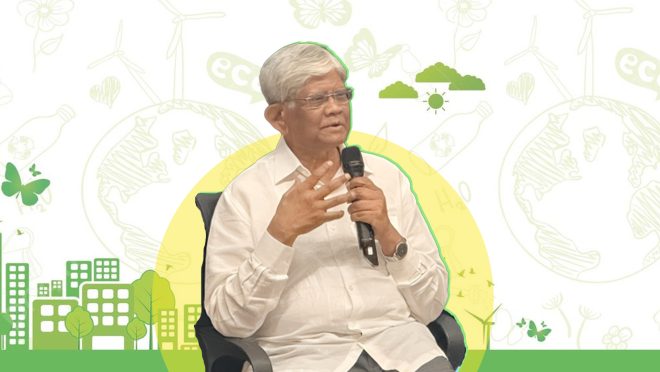
The session started at around 3:06 pm with a warm welcome from Professor Mohammad Mujibul Haque, PhD, Dean of BRAC Business School, BRAC University.
The very first part of the session focused on macroeconomic stability and the inflation rate, where I came to realise that economic stability is the foundation of national development. Major challenges such as high inflation, foreign exchange shortages, currency depreciation, trade deficits, and energy crises must be managed carefully through coordinated policies.
The speaker, from the outset, emphasised that inflation cannot be controlled by monetary policy alone; governments must also ensure the steady supply of essential goods such as rice, wheat, sugar, and daily necessities to protect ordinary people from rising prices, as was done during the caretaker government. The discussion also focused on artificial economic management, which can create long-term shocks, while strong leadership, teamwork, business confidence, and practical governance are essential for overcoming economic crises and restoring stability.
Secondly, regarding foreign policy, the speech reiterated that a stable foreign policy requires patience, strategic negotiation, and strong diplomatic engagement with global powers. It highlighted the importance of international communication, preparation, and persistence in resolving economic and political challenges, while also showing that global institutions and policymakers are highly informed and serious in their decision-making processes.
Afterwards, there were some key points I noted, as it seemed to me that monetary policy alone is not enough to control inflation; rather, supply-side measures, energy security, and strategic governance are also necessary to stabilise the economy and protect market confidence.
From a policy planning perspective, it must be realistic, evidence-based, and grounded in proper preparation, especially when dealing with major transitions such as economic graduation or structural reforms, highlighting the importance of understanding global conditions and not relying on assumptions or poorly prepared strategies, as insufficient readiness can create economic and industrial weaknesses.
The role of the private sector in national development and the need to improve industrial competitiveness and working conditions was also discussed.
There was also concern raised about Bangladesh as a disaster-prone nation. It was stressed that Bangladesh faces serious environmental risks due to its geography and population living in vulnerable marginal areas, so disaster management and environmental planning are essential for long-term national resilience.
Another issue that compelled me to rethink was proactive energy policy. Investment in resource exploration and reducing over-dependence on imports such as gas and diesel can play a vital role in economic balance, showing how global geopolitics, sanctions, and international financial restrictions can affect energy security and trade.
Overall, what I learned is that strong planning, self-reliance in energy, and adaptive diplomacy are essential to ensure long-term economic resilience and sustainability.
Effective economic development depends on strong tax collection, transparent governance, and efficient use of public resources, because a low tax-to-GDP ratio weakens the state’s ability to provide services and increases dependence on money printing or external borrowing.
It highlighted how poor financial management, corruption, and waste of public funds can create long-term economic damage and inequality, while also stressing the importance of recovering stolen or misused money. The speech further suggests that development is not only about having a large budget but about how effectively it is used, and countries that manage resources well, such as Vietnam and South Korea, progress faster.
Finally, the session emphasised the need for decentralisation, reduced inequality, and stronger collaboration between research, policy, and implementation so that ideas and innovation can be translated into development.
Moreover, there were key concepts such as “bottomless basket”, “quick procure”, and an understanding of the US treaty TICFA 2026, which shapes global economics including Bangladesh.
The lecture ended at around 4:00 pm, followed by a Q&A session. In total, four questions were asked, including next steps of decisions, buying Airbus amidst inflation during the interim period, and so on. After answering all the questions, the session concluded.
During the session, the professor also shared several stories from his visits to Vietnam, Thailand, Rome, Singapore, and his visit to the Rooppur Nuclear Power Plant.
It was indeed a fruitful session that helped in understanding and clarifying broader perspectives on rumours and the economic condition of Bangladesh.