August total solar eclipse to sweep across Spain, Iceland and Greenland
August total solar eclipse to sweep across Spain, Iceland and Greenland
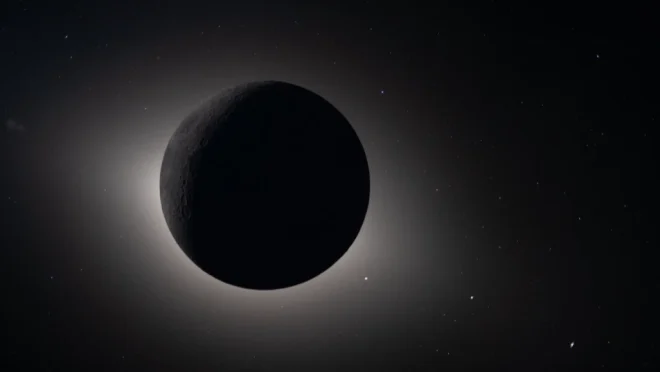
A rare total solar eclipse will darken skies over mainland Spain, Iceland and parts of Greenland on 12 August, marking Spain’s first total solar eclipse in more than a century and the beginning of an extraordinary three-year run of celestial events.
The eclipse will occur close to sunset as the Sun, Moon and Earth align, casting the Moon’s shadow across a 8,260-kilometre path stretching from the Arctic to the Mediterranean. Totality will last up to two minutes and 18 seconds, with the longest duration occurring off Iceland’s west coast before gradually shortening as the shadow reaches Portugal and Spain.
While the path of totality will be limited, a partial eclipse will be visible across much of Europe, West Africa, Canada and the northern United States. Observers in Dublin will see around 94% of the Sun covered, while Oslo will experience 83% coverage. Even viewers outside the path of totality will need certified eclipse glasses to watch the event safely.
The eclipse coincides with two other major astronomical events. Before dawn, six planets will line up in the morning sky, while after sunset the annual Perseid meteor shower is expected to peak under a new moon, creating ideal viewing conditions. Astronomers say some meteors could even appear during totality, alongside bright stars and planets.
Space agencies and research teams are preparing extensive observations. The European Space Agency (ESA) will broadcast the eclipse live from Spain’s Astrophysical Observatory of Javalambre and host public viewing events in León. NASA and the Italy-based Virtual Telescope Project will also provide live coverage.
“For me, it’s not just a scientific moment. It’s not just an incredible alignment of heavenly bodies. It’s also a very human moment,” said ESA Director of Science Carole Mundell. “It’s a real human connection between us with our feet planted on the Earth and the cosmos.”
Scientists will use the eclipse to study the Sun’s outer atmosphere, or corona, as well as Earth’s atmosphere. NASA-backed researchers plan to launch more than 60 high-altitude balloons from Spain and Iceland, while a NASA aircraft will chase the eclipse to extend totality to nearly three minutes, allowing researchers to capture thousands of images of the corona.
The 2026 eclipse is also a precursor to an even longer spectacle. On 2 August 2027, another total solar eclipse will sweep across southern Spain, North Africa and the Middle East, delivering up to six minutes and 23 seconds of totality. Spain will then witness an annular, or “ring of fire”, eclipse in January 2028, completing a rare trio of major solar eclipses.