Ted Lasso: The last optimist on television
Television spent the better part of two decades teaching us that the smartest person in the room was the one who trusted nobody. Heroes became antiheroes. Fathers became monsters who happened to love their children in the gaps between crimes.
Ted Lasso: The last optimist on television
Television spent the better part of two decades teaching us that the smartest person in the room was the one who trusted nobody. Heroes became antiheroes. Fathers became monsters who happened to love their children in the gaps between crimes.
Detectives medicated themselves into brilliance. Media moguls taught their children that affection was a weapon you kept sharpened. Somewhere in the run between a chemistry teacher cooking methamphetamine and a family patriarch auctioning off his own children’s loyalty for one more year in charge, we stopped noticing that we had confused emotional intelligence with emotional damage.
The people we were told to admire were the ones who felt the least and saw the most.
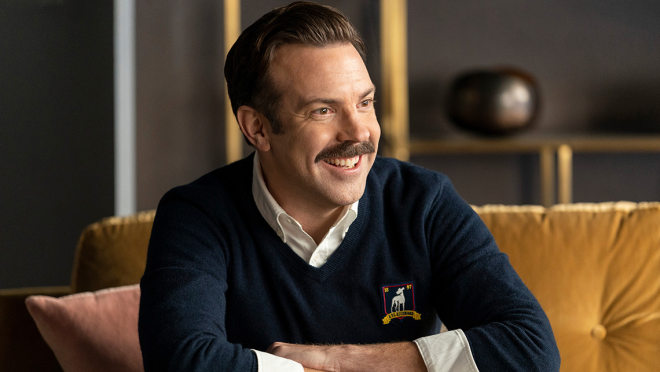
Then a moustached American football coach walked into English football carrying a box of homemade biscuits and somehow became one of the most quietly influential characters television produced in years. Not because he won matches. He mostly did not. But because his presence made an entire audience, tired of being told cynicism was the price of being clever, wonder whether they had been sold a bad trade all along.
That is the show’s actual argument, and it is easy to miss if you watch it looking for a football story. Optimism, on this show, is not the absence of pain. It is what a person does with the pain instead of handing it to someone else. Ted is not happy. He is anxious in ways the show does not rush to resolve. He is grieving a father who left the largest kind of absence, the kind that never gets explained. He has panic attacks in locker-room bathrooms with the tap running so nobody hears. He is, for most of three seasons, deeply and specifically lonely in a country that does not yet know how to hold him. And he chooses kindness anyway, every single day, the way you choose to keep showing up to something that has stopped being easy. That distinction, between kindness as instinct and kindness as discipline, is the whole show sitting quietly underneath the biscuits and the dad jokes.
Roy Kent is where that discipline gets tested hardest, and where the show does its most serious work. He is introduced as everything a certain kind of masculinity has trained us to expect. Angry by default. Loud in the way that fills a room before he has said anything worth hearing. A man built to look like he does not need anyone, ever. And then, over three seasons, without a single scene announcing what is happening, he becomes something else. He gains the ability to sit with Phoebe and patiently respond to her enquiries. It turns out that apologising with sincerity is even more difficult than winning. He sobs several times in front of those who are permitted to witness it. Brief and almost quiet, his retirement news appearance fails to provide a room full of reporters with the neat feeling they were hoping for. Later on in his coaching career, he discovers that leadership was never about volume. After Isaac’s outburst, he stands in front of the team and refuses to turn what occurred into a headline. This sequence says more about what men are permitted to feel than most prestige dramas achieve across whole seasons created for that precise goal.
Jamie Tartt gets the harder arc, because redemption stories usually cheat, and this one mostly does not. He does not become nice. He becomes someone who understands that confidence built on humiliating other people was never confidence at all, just fear wearing a jersey. The Amsterdam episode does the quiet part of that work. Training alongside Roy does more. But it is the scene with his father, the one that ends in a hug nobody explains and nobody needs to, that actually lands it. Almost nothing is said. That is exactly why it stays with you.
Because Rebecca’s arc appears to be the smallest on the surface, it receives less attention than it merits. A woman who inherited a football team with the intention of destroying it as payback for a spouse who made her feel disposable during their marriage gradually comes to the conclusion that she would rather build something than watch it fail on her own. It is a storyline of retaliation that subtly shifts into a tale of forgiveness, primarily of herself, and it never makes the transition clear. It just occurs, as genuine change typically does, in tiny steps that are too subtle to see until you look back and see how the person has changed.
And then there’s Nate, whom the majority of viewers detested on sight and weren’t wholly incorrect. Rather than making him sympathetic, the programme takes a risk. It requires you to comprehend him without justifying him, which is a much more difficult task than what television often tries to accomplish. More than anything, Nate wanted to be seen by those who had ignored him his whole life. He discovered a quick way to gain attention that went straight through cruelty, and for a while it worked because cruelty frequently does. The show never lets you forget what he did to deserve his salvation, nor does it act as though it makes it go away. The most Ted Lasso aspect of the entire story is that reluctance to simplify.
Because they are dramatic, none of the show’s memorable moments are memorable. Taped over a dartboard, “Be curious, not judgemental” works because it costs the person saying it something to truly live by it. Because half of the audience expresses their disbelief aloud, the Believe sign is effective. Ted telling a reporter about his panic attacks on camera succeeds because it rejects the simple kind of vulnerability that allows the hero to appear powerful while acknowledging weakness. Because it is unscripted by any character’s typical armour, it works. These moments remain because they reward emotional bravery rather than merely exhibiting it.
We tend to call Ted Lasso unrealistic, and I think that is the wrong word for what people actually mean. Cruelty is common. Cynicism is easy, cheap even, the kind of intelligence you can fake with enough sarcasm and a well-timed silence. Kindness is simply rarer, consistently rarer, which is probably why it started to feel like fiction somewhere along the way. That might be the real reason so many people, myself included, sat with this show longer than it had any right to keep us. It never asked us to believe football could change. It asked us to believe people still could, on a Tuesday, without an audience, for no reason except that it was the harder and better thing to do. That is not a small thing to ask of a person. It turned out to be exactly the thing a lot of us had been waiting for someone to ask.