How Ador turned curiosity into magic
How Ador turned curiosity into magic
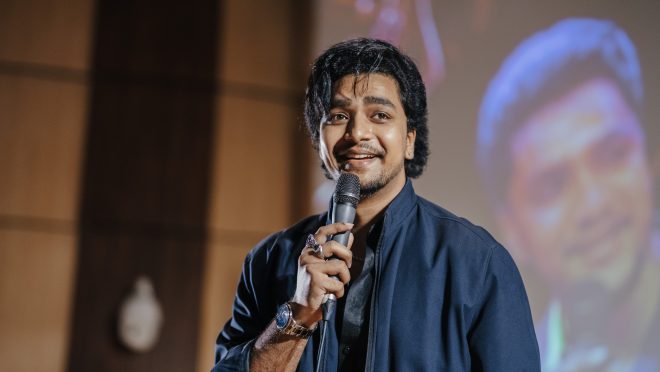
Growing up, Azwad Mostafiz Ador always lost the fight for the television remote against his two sisters, so he found a way around it.
His mother owned an old Sony phone with no lock on it. Ador used it to record magic performances by David Blaine, Criss Angel, and Dynamo whenever they aired, then watched the recordings back on her phone, on repeat, until he began to understand how each trick worked. “That’s how I started to learn magic,” he said.
There were no tutorials available in Bangladesh at the time, and no teachers to guide him. What he had was curiosity, a lot of repetition, and a habit of figuring things out on his own. That habit is still at the centre of everything he does today, from performing on stage to building Bangladesh’s first modern magic school.
A hobby his family didn’t trust
Magic does not have an easy reputation in Bangladesh. Card tricks are often linked to gambling, and magic itself carries some religious suspicion in many households. So when Ador got serious about it as a child, his family did not see a talent. They saw a risk.
“My family was very concerned at that time,” he said. “What if the child grows up to be a gambler?”
Even his mother, who he describes as the most open-minded person in the family, was hesitant at first. Ador kept his interest hidden from most relatives for years. A few friends knew and enjoyed watching him perform, but to him, it still felt like something he could never fully build a life around.
“Everything combined, I just saw it as a hobby which could impress people on certain occasions,” he said. There were moments he seriously considered giving it up. Watching his family deal with ordinary financial struggles made magic feel like an unnecessary risk. “I was convinced at one point that I should just quit doing something as foolish as magic in a country like Bangladesh and start doing something that actually provides for my family,” he said.
He didn’t quit. He kept performing, kept failing in small rooms, and slowly kept getting better. Part of what kept him going was watching how his own mother handled hardship. He describes her as relentless, someone who never spent time weighing whether she was winning or losing, and instead just did what needed to be done.
“I didn’t bother keeping myself motivated,” he said. “A major part of my strength comes from my mother.” He calls this quality “authority,” not in the sense of control over others, but simply the discipline to keep doing the necessary thing, without waiting to feel ready for it. It is a mindset he says he borrowed directly from watching her.
Failure as a part of the act
Ador describes himself as an overthinker who is harder on himself than any critic could be. “I rejected myself more times than anyone,” he said. At one point, a stranger told him he should simply “practise more” and that he was just “trying to seek attention.” Instead of letting comments like that push him away from performing, something in his approach changed.
“I learned that failure and rejection aren’t a part of life,” he said. “They were a part of me which simply had to be upgraded for the better.” This shows up clearly in how he deals with hecklers, audience members who try to disrupt a magician’s act. Instead of shutting them down, Ador started pulling them into the trick itself.
“The moment I surprise the heckler, the audience enjoys the show even more,” he said. Eventually, this became a bigger part of his style. He began deliberately letting tricks look like they were going wrong, in front of large audiences, without worrying about how it appeared.
“It really doesn’t matter what you do,” he said. “What does matter is how you choose to finish the trick. And I choose to finish it with magic.” It is a simple idea, but it explains a lot about how he approaches both performing and life in general: mistakes are not the problem. What happens after them is what people remember.
Building a network from nothing
Ador had no existing platform or industry contacts to rely on when he started out. Whatever access he built, he built on his own. He explains his approach to networking using two words: volume and leverage.
“Volume here means the amount of industries, categories or people you can cover or have access to,” he said. “Leverage simply means the growth you accumulate over time through networking, and use to network further.”
He started building connections seriously during university, beginning with a digital portfolio made on Canva and his first business card, which didn’t even have a job title printed on it.
“I could still walk into a room or a business meeting and sell or vouch for the people around me who have those skills and qualifications, and win eventually together,” he said.
He is also careful to separate networking from simply meeting people. To him, the two are not the same thing.
“Just meeting more people won’t help you out.”
His advice for anyone trying to build connections without an existing family network or industry access is straightforward: talk to more people, regularly, without overthinking who they are. “The five random people you can meet on the streets every day with low effort can become those exclusive connections, if done right,” he said.
Passing on the blueprint
One of the clearest results of Ador’s years of effort is Magic School of Bangladesh (MSOB). He is one of the founding members of what began as Magicians of Bangladesh (MOB), an early, informal community of performers with little structure around them. It later grew into MSOB, the country’s first modern institution built to train magicians, now home to more than 50 members performing professionally across Bangladesh.
“Anyone who is interested in this passion of magic can have a complete blueprint handed out and taught by MSOB,” he said.
That line matters because Ador never had that option himself. He spent over a decade learning everything on his own, hiding it from most of his family, with no one to guide him. The school he helped build now gives beginners, from day one, the kind of structure he had to create for himself the hard way.
What he plans next
Despite the recognition he has received, Ador avoids framing his future around titles or awards. “Having a Forbes 30 under 30, a Diana Award, a Guinness World Record, or a Global Got Talent appearance would be nice,” he said, “but now I just want to use what I have been blessed with to make more people happy as much as possible and see where life takes me.”
What he focuses on instead is staying curious and continuing to explore, rather than settling into one fixed path.
“I’m exploring and I don’t want to settle down,” he said. “I want to sustain the feeling of curiosity around me more than I want an individual accomplishment.”
At the same time, his goals are practical. He wants to build a stable business around his personal brand, one that can genuinely support his family. “Enough to retire my parents,” he said.
Beyond that, he wants to expand the magic community further, giving more opportunities to emerging performers in Bangladesh who are starting out the same way he did, with little support and no clear path. He also holds on to a longer-term goal: representing Bangladesh on major international stages. “I have a strong gut feeling towards it,” he said. “And a lot of people believe in me well enough to see me actually pull it off.”
A simple idea behind everything
At its core, Ador’s story is not really about magic tricks. It is about a kid who had no starting point and decided to build one anyway, one repeated attempt at a time.
That same approach carries into everything he does now, whether he is performing in front of a large audience, building connections from scratch, or helping other young performers get the support he never had.
“We don’t live once, we die once. And we live every single day of our lives.”
It’s a simple line, but it sums up how he sees his own journey: not as one big moment of success, but as something built gradually, through consistent effort, long before anyone was watching.