What do IQ scores really measure?
What do IQ scores really measure?
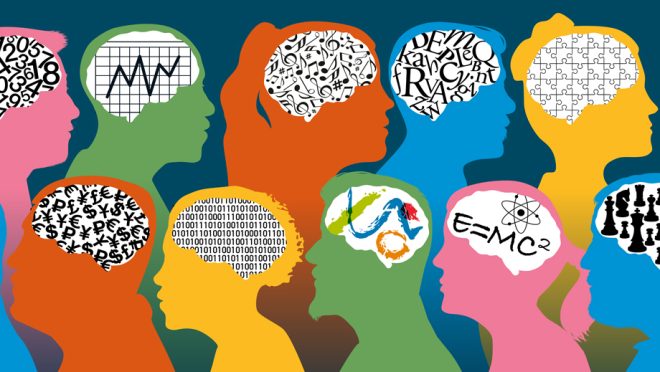
IQ tests measure certain cognitive abilities, but researchers say they offer only a limited picture of intelligence and can be influenced by culture and education IQ tests have become a familiar way of measuring intelligence, with scores often treated as shorthand for how “smart” someone is. But intelligence is far more complicated than a number.
IQ, or intelligence quotient, is measured through tests involving puzzles and questions designed to assess abilities such as logic, memory and reasoning. Scores are standardised around an average of 100, with roughly two-thirds of people scoring between 85 and 115.
The problem is that these tests measure only a narrow set of cognitive abilities, researchers say.
“Intelligence is a very complex thing. It’s difficult to define and difficult to measure,” said Dr Rebecca Sear, a psychology professor and anthropologist at Brunel University of London.
Intelligence is more than problem-solving
Unlike characteristics such as height or weight, intelligence cannot easily be reduced to a single measurement.
Researchers have long debated what intelligence actually encompasses. It can include the ability to adapt to changing circumstances, solve problems and navigate social and practical situations.
Skills such as creativity, empathy, interpersonal understanding and practical judgement can also influence how successfully a person deals with the world.
“These adaptive skills are very important, but they’re not what’s measured by an IQ test,” said Prof Robert Sternberg, a psychologist at Cornell University.
IQ tests are relatively effective at measuring certain conscious problem-solving abilities. But they cannot necessarily determine whether someone will use those abilities appropriately in real-world situations.
That helps explain why a high IQ does not automatically translate into good decisions or practical success.
Research also suggests that IQ is only one factor associated with academic achievement. A 2016 study found that IQ accounted for about 30% of the variation in school grades.
There is also a concern that IQ scores can become self-fulfilling.
A low score early in life could influence how a child is taught, what educational opportunities they receive and how they perceive their own abilities.
Culture can shape IQ scores
IQ tests also face a major challenge when they are used across different cultures.
People grow up in different environments and encounter different problems in their daily lives. As a result, the abilities that help people adapt can vary depending on their surroundings.
“The attributes [of intelligence] are universal. You need practical intelligence everywhere. You need creativity everywhere. But what is practical differs from one place to another,” Sternberg said.
Standard IQ tests can also depend on skills developed through formal education.
Someone who has had little or no exposure to formal schooling may struggle with a conventional IQ test, regardless of their underlying cognitive abilities.
“If a child or an adult has never had any kind of formal education, they’re really going to struggle with an IQ test, however intelligent they are, because they may simply never have seen paper and pencil,” Sear said.
This makes it difficult to develop a single test that can reliably measure intelligence across all cultures and environments.
The problem with national IQ comparisons
The limitations become more serious when IQ tests are used to compare entire countries or populations.
One of the most prominent examples is the national IQ database compiled in 2002 by British psychologist Richard Lynn, who described himself as a “scientific racist”.
The database has since been used by race-science activists to support claims about differences in intelligence between racial and national groups.
Researchers, however, have raised serious concerns about the data and methodology behind the database.
One problem is that some national estimates were based on extremely limited samples. Lynn’s estimate for Somalia, for example, was based on a single study involving children in a refugee camp.
A meaningful national average would require data representative of the country’s wider population, Sear said. Such data is unavailable for many countries.
Researchers have also found evidence that studies may have been selectively included in the database.
A 2010 study examining data from African countries concluded that Lynn had selectively included studies reporting lower IQ scores while excluding studies that reported higher scores.
Despite these criticisms, Lynn’s database continues to be used in academic research.
Sear has called on scientific publishers to reject or retract research that relies on what she considers to be flawed national IQ data.
What IQ cannot tell us
Genetics does play a role in individual differences in cognitive ability. But there is no evidence that intelligence systematically differs between races, ethnic groups or nationalities.
Differences in average IQ test scores between countries can instead reflect factors such as economic conditions, access to education and the quality of schooling.
Other attempts to measure the “intelligence” of countries through indicators such as school results, Nobel prizes or academic research output face similar problems.
Cross-national comparisons also struggle with cultural differences in how intelligence is expressed and measured.
“Cross-national comparisons are really flawed because of the cultural specificity of the test. It’s sort of rigged,” Sternberg said.
Should IQ tests be abandoned?
IQ tests remain useful for some purposes, particularly when assessing specific cognitive abilities in controlled settings.
But treating an IQ score as a complete measure of intelligence can be misleading.
“People are suckers for things that are easy to measure,” Sternberg said. “But do we want to measure the wrong thing just because it’s easy to measure?”
Intelligence is shaped by a combination of cognitive abilities, experience and environment. A single score can capture only part of that picture.
The bigger question, therefore, may not be whether someone has a high or low IQ, but what that number actually tells us — and what it leaves out.