The 18-year-old running two ventures before A Levels
The room does not feel like an executive suite, but the cadence of the conversation certainly does. Tawsif Shreyas speaks with the calm clarity of someone who managed payroll and multi-vendor field operations long before sitting for his final A Level papers. His vocabulary is articulate yet straightforward, presenting the grounded reality of building two companies while navigating high school.
The 18-year-old running two ventures before A Levels
The room does not feel like an executive suite, but the cadence of the conversation certainly does. Tawsif Shreyas speaks with the calm clarity of someone who managed payroll and multi-vendor field operations long before sitting for his final A Level papers. His vocabulary is articulate yet straightforward, presenting the grounded reality of building two companies while navigating high school.
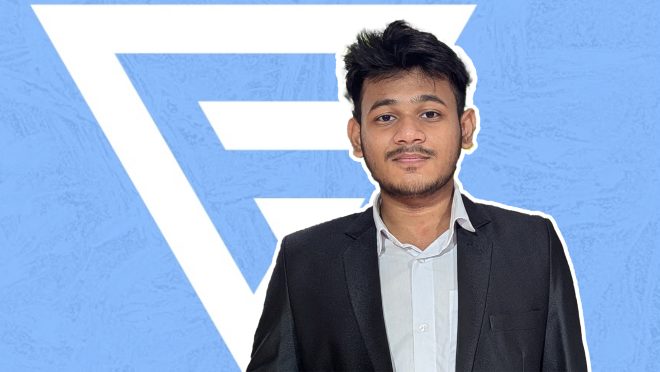
Most teenagers spend 7th grade navigating middle school drama; Tawsif Shreyas spent it taking over corporate brand pages. Starting a business at that age was an organic shift driven by curiosity, rather than a grand strategic play. In Grade 7, Tawsif took over social media marketing for his father’s clothing company. “I don’t think I ever formally convinced him,” Tawsif reflects.
“I think I earned his trust by showing him what I could do.” Rather than pitching elaborate plans, he tested campaigns on live brand pages and took accountability whenever performance dipped. Seeing a familiar drive, his father, who launched his own venture at the exact same age, handed him real operational authority. “He gave me room because I kept proving that I was serious about it. Honestly speaking, he had me start my career professionally, and I’m forever grateful to him for that.”
By July 2023, while preparing for his O Level examinations, Shreyas formally launched EasyCheezy Digital (ECD). Though he had built its groundwork over two years, formalising the agency forced a routine that was challenging to keep up with. Behind the scenes, the setup was far from glamorous. “It was basically me, my laptop, a bedroom, deadlines and schoolwork happening simultaneously,” he shares. “There were nights where the distinction between student and ‘the social media guy’ basically disappeared.”
Balancing active client accounts with mock exams required Tawsif to master sales, content, and finance on the fly. “From the outside, someone might have seen a teenager running a digital agency. From inside, it felt like a kid trying to figure everything out as he went,” Tawsif notes. Rather than viewing the workload as a sacrifice, he found genuine momentum in it.
“I never really felt that entrepreneurship was something I was sacrificing my teenage years for. It was what I genuinely wanted to do. If anything, school sometimes felt like an interruption.”
At the same time, school provided necessary discipline, and Tawsif observed a broader shift around him: “Nowadays, there are a bunch of distinguished teens trying to do something out of the box, making headlines that I really love seeing around me.”
When grief hit at 17
Then came the morning that changed everything: on 22 January 2025, his 17th birthday, his father passed away just before his AS Level examinations. “I don’t think I had some perfect system for dealing with it,” Tawsif admits. “I was grieving, but life doesn’t stop because you’re grieving. So I focused on the next thing in front of me.” Without a complex playbook for handling loss, he anchored himself entirely in his faith: “My dad had taught me to trust Allah and my God helped me get through. None on top of that, ever.”
Following the loss, his family turned to him for key marketing and business decisions. “When I was making decisions after he was gone, I sometimes felt like I was continuing a conversation we had started years earlier,” he says. Recognising that honouring his father meant applying shared principles rather than hunting for old answers, Tawsif began making independent strategic moves. “The best way to honour what he taught me wasn’t to constantly look for his answers. It was to use the principles he gave me and make my own decisions.”
Despite such a huge personal crisis, Tawsif earned three A grades in his AS Levels while simultaneously laying the groundwork for his next company. “Three As are objectively good grades, but what I saw when I looked at that result was the period behind it,” he explains. For Tawsif, those grades represented far more than academic success: “The result felt like proof that the circumstances didn’t get to decide the outcome. And honestly, I think my dad would have been proud.”
Building Bangladesh’s youth sports infrastructure
How do you tackle nationwide sports infrastructure while studying for the hardest exams of your life? You build a system that outlasts the classroom. In August 2025, amidst heavy A2 Level preparation, Tawsif Shreyas launched KUFA Bangladesh. Designed as the country’s 1st data-backed and career-led youth sports infrastructure, the decade-long initiative constructs systems that allow young athletes to monetise their performance through tracking and brand collaborations. “We are working to build KUFA Bangladesh as a long-term system that creates real opportunities,” he explains, focusing the model around sustainable youth sports ecosystems.
Managing live operations for KUFA alongside his studies introduced intense logistical pressure. “It’s controlled chaos,” Tawsif describes. “You can have a perfectly planned event on paper, and then the actual event starts and suddenly there are athletes arriving early, teams asking questions, vendors needing decisions, and you’re standing there thinking, I have an Economics exam to prepare for.” Leading an operational team of up to 25 people quickly taught him that authority stems from execution: “Managing older people also taught me that authority doesn’t come from your age. It comes from preparation, competence and accountability.”
KUFA operates on strict capability rather than age metrics, reflected in key team members like Alveera Enayet, an 8th-grader running core operations. “It really speaks of how age is just a number when it comes to being consistent, capable, and ambitious,” he emphasises. Tawsif paired this youth-driven execution with corporate backing: “I’m grateful to our strategic partner, Traliventa Limited, led by the National Director of Bangladesh at the World Sports Alliance (WSA), Ali Mohammad Hafiz Bhaia, collaborating to build KUFA Bangladesh as a whole.”
Studying Accounting, Business, Economics, and Mathematics created a constant collision between classroom theory and active business operations. “Sometimes I’d be sitting in an Economics paper thinking about concepts that I’d already encountered in real life,” he reflects. The primary hurdle was mental mode-switching: “The difficult part was switching modes. One minute you’re thinking like an entrepreneur and the next you’re expected to forget your own businesses and calculate something because it’s worth six marks.”
Commanding respect in corporate rooms
Walking into a boardroom of veteran executives as a teenager is intimidating, until you know the balance sheet better than anyone else present. When negotiating with corporate partners, Tawsif tackles initial age scepticism through relentless preparation. “You can see that initial hesitation,” he says. “I don’t try to overcome that by acting older than I am. I just try to be prepared, if I’m entering a meeting, I should know the numbers.” By establishing mutual respect and delivering clear competence, age quickly drops out of the equation: “Respect has to go both ways. Eventually, competence speaks louder than age.”
Today, EasyCheezy Digital runs with 2 full-time staff and up to 15 contractual specialists, co-directed by Chief Marketing Officer and classmate Sharaf Ferdaus Hossain, who “shared the agency’s growth mindset from Day 1.” KUFA Bangladesh operates with Tawsif Shreyas as its CEO and the only full-time employee, backed by 10 part-time personnel and Traliventa Limited’s logistics team to maintain lean, efficient operations.
As both ventures scale, Tawsif remains bound by strict ethical boundaries. “Growth can’t come at the cost of the principles behind the business,” he asserts. Taught by his father that the method of building a business matters as much as the outcome, he insists on keeping both ECD and KUFA commercially ambitious yet straightforward. “My responsibility is to work hard, make the right decisions, treat people properly and keep my intentions clean. The rest is with Allah.”
When asked if he has had a ‘I’ve made it’ moment yet, Tawsif notes that he does not view success as a fixed finish line. “Honestly, I don’t think I’ve had that moment yet. Every time I reach something I previously considered a milestone, my definition of success moves forward,” he shares. For him, true success is not marked by a title or a revenue target: “‘Making it’ isn’t really about reaching a certain number or getting a certain title. It’s about building something that can operate, grow, and create value even beyond me.”
For younger students looking to build their own projects, Tawsif advises immediate execution over drawn-out planning. “Start before you think you’re ready, but don’t start before you understand what you’re selling,” he notes. His core rule is simple: “Get one client, solve one real problem, and learn how to deliver that result consistently. Whatever you do, start doing. Don’t waste time planning. Execute it small before it’s too late.”