WhatsApp rolls out parental controls for teen users
WhatsApp rolls out parental controls for teen users
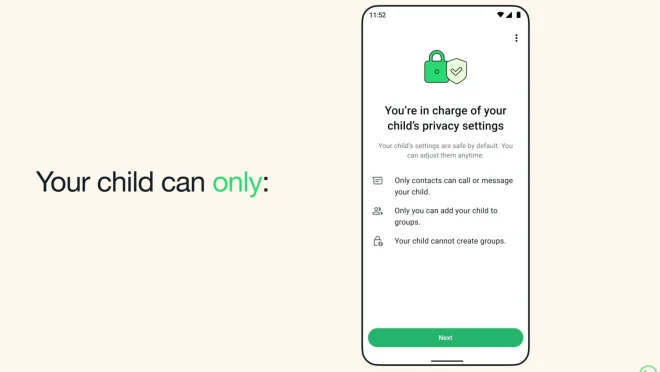
WhatsApp is introducing new parental controls for teenagers, allowing parents to manage some privacy settings and receive notifications about their children’s activity on the platform.
The new tools will allow parents to receive notifications when their teenager joins or leaves a group and control who can view their profile photo or add them to groups, according to the BBC.
However, parents will not be able to access their teenager’s sent or received messages. WhatsApp said messages and calls will remain private and protected by end-to-end encryption.
The optional controls can be adjusted or switched off by parents at any time. The settings can be secured with a parent-set PIN, which teenagers will need if they attempt to disable the controls.
Parents will also be able to manage their teenager’s use of Channels, which allows organisations and public figures to broadcast content.
They can also choose between WhatsApp’s default 13+ setting for Meta AI, the platform’s built-in artificial intelligence assistant, and a stricter “Limited Content” option.
“All of these controls are being designed to support open conversations about how to use WhatsApp between parents and teens, while keeping everyone’s personal messages private,” WhatsApp said in a blog post.
However, social media analyst Matt Navarra described the optional nature of the controls as a potential weakness.
He said the move could allow Meta, which owns WhatsApp, to demonstrate to regulators that it has child-safety measures in place while placing much of the responsibility on parents and teenagers.
The changes come as technology companies face increasing pressure from governments and regulators to provide age-appropriate experiences for children.
WhatsApp’s minimum age is 13 in the UK, although the requirement is higher in some countries.
The UK government announced plans in June to restrict social media access for under-16s, with the measures expected to take effect in March 2027 using age-assurance technology.
WhatsApp is currently excluded from the proposed restrictions because the government classifies it as a messaging service.