A rant on nature’s illogical romanticism
Apparently, I am supposed to give someone two sunflowers. Not one.
A rant on nature’s illogical romanticism
Apparently, I am supposed to give someone two sunflowers. Not one.
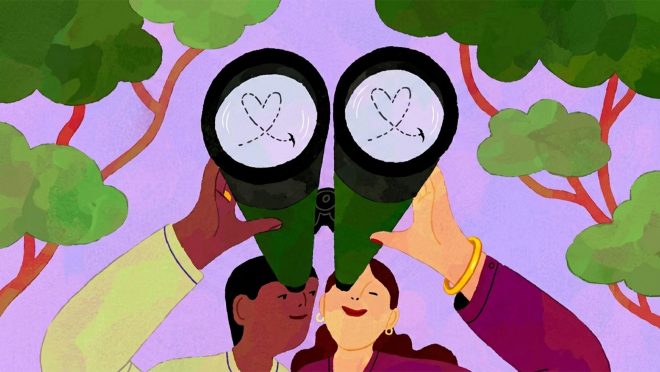
According to the internet, one sunflower follows the sun throughout the day, while two sunflowers turn toward each other when the sun disappears. The idea is almost painfully romantic, the kind of thing you would save on Instagram, send to someone at 2 a.m. and quietly think, I want this.
There is only one problem: sunflowers do not actually work that way.
Young sunflowers track the sun as they grow, turning east to west during the day and returning east overnight. As they mature, however, their movement gradually stops, and their flower heads generally settle facing east. Research suggests this orientation helps warm the flowers in the morning and attract pollinators.
The internet took a piece of botany, added a little romance and heartbreak, and turned it into the Sunflower Theory. But the interesting question is not simply why the theory is scientifically inaccurate. It is why so many of us wanted to believe it in the first place.
Perhaps we like the theory because love is difficult to explain without turning it into a story. We call someone our “other half”, describe relationships as journeys, and say that a person feels like home. These expressions are not literally true, but they communicate feelings that are otherwise difficult to define.
Research on conceptual metaphors suggests that the way we describe love can influence how we understand relationships. For example, framing a relationship as something that is “meant to be” can encourage different expectations from viewing it as a journey that requires effort and involves uncertainty. The metaphors we choose are not always harmless decorations; they can shape what we expect love to look like.
The Sunflower Theory offers a particularly appealing metaphor. It takes a complicated wish to have someone who stays when life gets difficult and turns it into an image of two flowers turning toward each other in the dark. It makes love look simple, mutual and almost instinctive.
The trouble might begin when we stop treating that image as a metaphor and start treating it as a rule for relationships. If love means always turning toward each other in difficult times, what happens when someone we love doesn’t want to turn at that particular moment in time? What if they are struggling with their own problems and cannot give us the reassurances we want? Does their inability to be our source of light mean they love us less?
Real relationships rarely follow such tidy scripts. Sometimes, the person who cares about us deeply does not know what to say. Sometimes, two people need support at the same time and neither knows how to provide it. Loving someone can mean standing beside them, but it can also mean respecting their independence and recognising that we cannot solve every problem for each other.
This is not an argument against romantic gestures or the comfort of believing in something beautiful. It is a reminder that a metaphor, in my opinion, should help us understand the concept itself, not dictate how the concept should be interpreted.
Expecting another person to become our permanent source of light can place an unreasonable responsibility on them, particularly when we are both still learning how to navigate our own lives, especially when the two people in question are in their 20s.
The Sunflower Theory is hardly the first internet trend to turn ordinary behaviour into a relationship philosophy. The orange-peel theory suggests that small acts of care, such as peeling an orange for someone, can reveal affection. The bird test asks whether a partner responds with interest when we point out something seemingly insignificant. Online conversations about love languages, attachment styles and invisible strings similarly offer labels for experiences that can otherwise feel confusing.
A single gesture cannot tell us everything about a relationship. Someone might forget a small detail and still care deeply, while another person might perform all the expected gestures without offering genuine emotional support.
When we turn these theories into fixed standards, we risk judging complicated relationships against rules created for a short video or a memorable caption.
That does not make the ideas meaningless. It simply means we should distinguish between a beautiful story and a rule for living.
The real sunflower does not turn toward another flower when the sun disappears. As it grows, it learns to follow the light; when it matures, it settles into a different relationship with it.
Maybe love can work that way too. We can turn toward one another without losing ourselves, and we can learn from the people we love without expecting them to show us every direction we should take.
The internet gave us a story about two flowers finding each other in the dark. The real sunflower reminds us that growing toward the light matters, too.