The Hundred Acre Wood we left behind
There are some childhood stories we outgrow and then there are the ones we keep returning to without quite knowing why.
The Hundred Acre Wood we left behind
There are some childhood stories we outgrow and then there are the ones we keep returning to without quite knowing why.
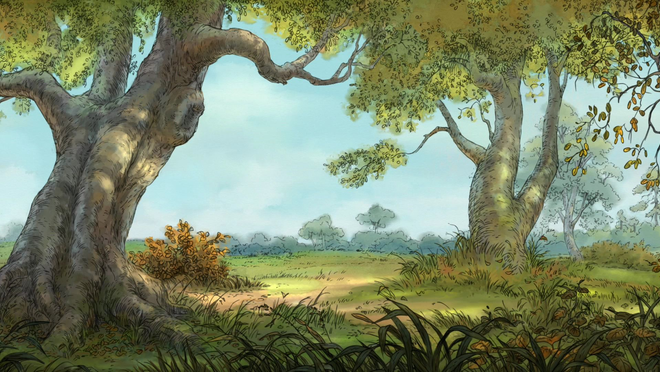
Winnie-the-Pooh belongs to the second category. A.A. Milne’s honey-loving bear has been around for a century, yet something about the Hundred Acre Wood still feels strangely comforting, especially when real life becomes too fast and complicated.
On 14 October 1926, Milne’s Winnie-the-Pooh, illustrated by E.H. Shepard was first published in Britain. The book introduced readers to Pooh, Piglet, Eeyore, Rabbit, Owl, Christopher Robin and the rest of the Hundred Acre Wood. One hundred years later, the characters remain familiar across generations, appearing in books, films, television, toys and countless childhood memories.
The obvious explanation is nostalgia. But I think there is something more personal about why adults still care about Pooh. Perhaps we are not only remembering the character. We are remembering the version of ourselves who once lived in a world that felt much slower.
When we were children, an afternoon did not have to accomplish anything. Sitting with a friend was enough. Getting lost in a story was enough. A favourite toy could become a companion, and a patch of grass could become an entire world. We did not think about whether we were being productive or whether we were falling behind. Then we grew up.
Our days became organised around classes, work, deadlines, messages, responsibilities and plans for the future. Even our free time can feel like something that needs to be used properly. We are constantly encouraged to achieve more, respond faster and make something out of every moment.
The Hundred Acre Wood offers almost the opposite philosophy.
Pooh does not seem particularly interested in becoming successful. Piglet is not expected to stop being frightened. Eeyore is allowed to be gloomy without having to turn his sadness into a lesson about positivity. Their lives are full of small problems, but their friendships make those problems easier to carry.
That simplicity becomes more meaningful when we are older.
As children, we may laugh when Pooh gets distracted by honey. As adults, we may find ourselves admiring his ability to stop and enjoy something so ordinary. We may not have understood Piglet’s nervousness when we first read the stories, but years later, we may recognise a little of ourselves in him. Even Eeyore can feel different once we have experienced the kind of sadness that does not disappear simply because someone tells us to cheer up. The characters do not need to be perfect to belong. That may be one of the most comforting things about them.
Real life often makes us feel that we need to become more confident, more successful, more attractive, more productive or more emotionally stable before we can feel worthy of belonging. The Hundred Acre Wood never seems to make that demand. Pooh can make mistakes and still be loved. Piglets can be afraid and still be brave. Eeyore can complain and still have friends who come looking for him.
The stories quietly suggest that friendship does not always mean fixing someone. Sometimes it means staying close enough that they do not have to face everything alone. That idea becomes particularly powerful when we consider what happened to the real Christopher Robin.
Milne’s son, Christopher Robin Milne, inspired the character who appears alongside Pooh in the books. His stuffed bear became the basis for Pooh, while several of his other toys inspired characters in the Hundred Acre Wood. The fictional Christopher Robin became famous around the world, but the real Christopher Robin eventually had to grow up with a childhood identity that millions of people knew better than they knew him.
There is something bittersweet about that history. A series of stories built around childhood innocence became a global phenomenon, while the actual child at the centre of their inspiration had to leave that childhood behind.
Perhaps that is another reason the books feel different when we return to them as adults. We understand something that children cannot: childhood is temporary.
You can revisit the stories, but you cannot return to the exact person you were when you first discovered them.