BRACU and its love for cats
BRACU and its love for cats
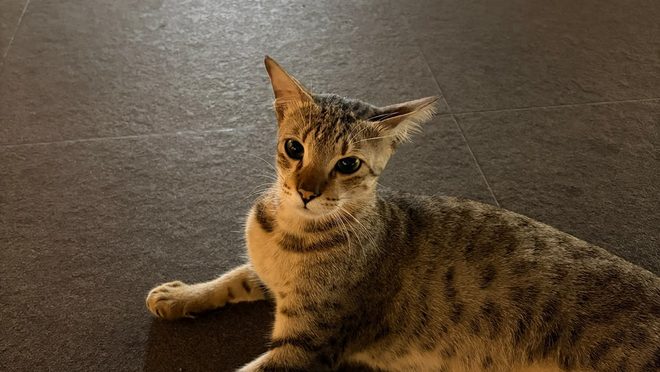
Every university has its own way of loving something. After the day-long classes, labs, assignments, quizzes and tiring journey from home to university, there are always some creatures that fade all the tiredness.
Being a BRACU student, the only thing I loved about BRACU after the system is the love for cats here by everyone, literally. From the staff boys to cleaners, from our favourite mamas to any stranger stepping into BRACU. And of course, the faculties and students here.
There’s a realm of love and affection for cats here. And it’s not shadow-like, like a full moon once in a year, but visible and reflective like northern lights throughout the year. Stepping in on January 10, since then I have seen the purest form of love here.
10-minute gaps in between classes, rush to the cats. Quiz got bad? Rush to the cats. A boring day? Rush to the cats. Brought new food? Rush to the cats. The circle, to some extent, ends with the loop of cats.
If someone steps into BRAC University, one thing he or she will witness for sure is that the number of cats is more than an individual’s marks here in quizzes. From the pocket gate to the corridor of the front gate, from the 3rd gate to the indoor arena, the cats are roaming like they are the registered members here. And here’s the twist.
All the cats that are currently residing on the campus are registered under BRACU. And all the cats are vaccinated and properly cared for with food, medication, and even dressed well. Oftentimes, I fear the feeling of missing out on seeing the outfits our Bagha and other cats wear, how they are cared for and dressed, and the amount of confidence they possess while walking.
Who’s Bagha? Bagha is the Ikhtiyar Uddin Mohammad Bakhtiar Khilji of BRAC University, the leader of all cats. Does Bagha appear like a lion? No, he doesn’t appear like a lion, but he is the lion in the form of a cat.
Pretty sure, a couple in BRACU won’t have that much love, the amount of love each counterpart has for Bagha. And it’s not like Bagha is the reason for love discrimination against other cats or couples, but he is the catalyst of love, the red passport holder of BRACU.
Students and even faculties invest money in these cats and they get profits with interest also. The profit of mental satisfaction, love, purity, trust and care. BRACU doesn’t have any boys’ common room of their own. And then our extra-privileged cats got a palace of their own, in front of the entrance of the campus.
Cat love is such a contagious blessing. It didn’t remain confined within the nine-acre Badda campus only but travelled approximately 23 km and entered without any checking at the BRACU RS in Savar. Here in the RS, the number of stray cats is equivalent to my total number of marks in quizzes in the 1st semester.
Stray cats? Yes. RS is an open campus with nature at its core. As such, it didn’t impose any sort of geographical border rule but followed a peace treaty. There are approximately 10–15 cats and even more in the entire RS.
Doing RS 73, upon reaching, the authority had instructed us to refrain from caring for the cats because the authorities, with proper care, look after the cats alongside the cats that have not been vaccinated and are strays, which might cause the scratched victim to need an injection. Despite this rule, all the residents spend as much time with the cats as they don’t even spend in their dorms.
Individual essentials come second when they need to be brought from home, but food, medications and other necessary stuff for these cats are the first priority to be brought from home or the city. Getting scratched and injected is not even an issue or matter of concern here. Cats, with their ethereal simplicity and love, won over that concern and issue.
Missing home comes second here in RS, but missing loving the cats comes first for many. If a cat is sick, students rush to the concerned authorities to inform them of the necessity, and unless the medication is witnessed, restlessness is what is witnessed in the RS.
Cats may not participate in classroom discussions or examinations, but their quiet companionship created moments of happiness, reduced feelings of isolation, and became part of students’ lasting memories. Their presence also reminds the university community that shared spaces involve responsibilities towards all living beings.
Although there are also some exceptions in terms of caring for the cats, both the concerned authorities and students.
Ecofriends of BRAC University always play a crucial role in nursing and medicating the cats alongside taking the cats to the vet. Currently, the campus has as many as 13 cats.
Nevertheless, cats are the core of BRACU. For alumni, current students, authorities, faculties, and staff, if one thing of BRACU remains forever scripted, there’s the cat. No improvising, no alternative, just a pure peer with no pressure.