'God is dead', what comes next?
How much of what we believe is truly our own, and how much have we inherited without ever questioning it? And what happens when the beliefs we have built our lives around no longer convince us?
'God is dead', what comes next?
How much of what we believe is truly our own, and how much have we inherited without ever questioning it? And what happens when the beliefs we have built our lives around no longer convince us?
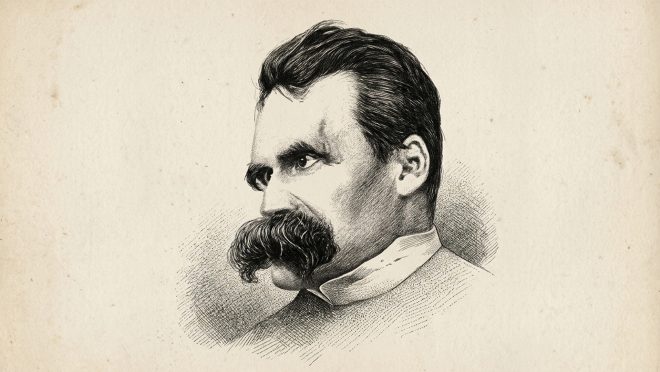
These questions lie at the heart of Friedrich Nietzsche’s Thus Spoke Zarathustra. The book follows a prophet named Zarathustra who descends from ten years of solitude in the mountains to share his teachings with humanity. Through his encounters and speeches, Nietzsche questions the beliefs people take for granted and the possibility of creating a life guided by values of their own.
Nietzsche’s announcement of the “death of God” signals a crisis that goes beyond religious belief. Even when we stop believing in the foundations of a moral system, the habits and expectations built around those beliefs do not disappear overnight. In the absence of a clear source of meaning, it becomes tempting to settle for comfort, security and a life free from difficulty.
Nietzsche calls the person who wants nothing more than this “the last man”. He is content with a life in which nothing is demanded of him. Perhaps the last man lives within each of us, in the part that seeks comfort and gradually turns the desire for an easier life into an excuse for expecting very little from ourselves.
The proposed alternative is the Übermensch, a figure who creates values rather than accepting them as permanent truths. Nietzsche develops this idea through the three metamorphoses of the spirit. The camel carries the burdens imposed upon it, the lion confronts the authority of the great dragon whose command is “Thou Shalt”, and the child represents the freedom to create anew.
The distinction is worth considering because rejecting old beliefs does not necessarily mean knowing what to believe instead. The lion can refuse existing commandments, but that refusal alone cannot establish a new way of living.
The idea of creating values independently is harder to accept. No individual begins forming values from nothing. Our language, upbringing, relationships and social experiences have already influenced how we understand the world. Even the desire to reject inherited morality develops through an encounter with the traditions we wish to escape. Nietzsche’s own new tablets are written in inherited language.
The problem, then, is by what standard we should judge the values we choose to create. Nietzsche repeatedly appeals to strength, health and affirmation of life, but these are themselves values. His hierarchy of human types is asserted with considerably more confidence than it is justified.
The limitations of his moral framework become clearer in his treatment of pity. His criticism of resentment is among his sharper psychological observations. He recognises how moral principles can conceal hostility and the desire for revenge. But his suspicion of pity is harder to accept. The fact that resentment can disguise itself as morality does not mean compassion is necessarily another form of resentment.
Sharing another person’s suffering does not have to involve feeling superior to them or making their pain about ourselves. It can come from recognising that someone else is struggling and choosing not to look away. Nietzsche identifies a genuine problem in human morality, but his criticism of pity goes further than his argument allows.
“Eternal recurrence” presents one of the book’s most difficult philosophical problems. Imagine having to live our entire life again, exactly as it happened. Every failure, humiliation and moment of grief would return, endlessly. We often look back on our lives and imagine how things might have been different, wishing we had made other decisions or avoided certain experiences. Eternal recurrence challenges this tendency by asking whether we could accept every part of our lives, including the ones we would rather forget, and still be willing to live them again without changing anything.
I find the psychological force of this question far more convincing than its cosmological implications. As a cosmological proposition, eternal recurrence is difficult to establish. But as a psychological test, it makes us confront how much of our lives we spend wishing things had happened differently. This becomes even more interesting when Zarathustra himself is overwhelmed by the thought. In The Convalescent, the prophet struggles to bear the implications of his own doctrine. The man who teaches others to affirm life is himself troubled by what that affirmation demands.
The tension between teaching and independence also appears in Zarathustra’s relationship with his disciples. He repeatedly warns them against becoming followers and eventually tells them to lose him. I like this aspect of his teaching because he seems aware of the danger of becoming the very authority he wants people to question. A philosophy that asks people to think independently must also leave room for its own rejection, even by those who first introduced it.
Nietzsche’s literary form adds another dimension to the book. Through parables, songs, speeches and declarations, Thus Spoke Zarathustra borrows the language and cadence of biblical scripture while challenging the moral traditions associated with it. Zarathustra’s voice moves between the prophetic, the mocking and the deeply personal, making it difficult to treat any of his declarations as final authority. Yet I sometimes found the constant prophetic intensity exhausting. Nietzsche gives certain observations more weight than they need, and his descriptions of the last man and the flies in the marketplace are sharp enough to stand on their own. The grand declarations surrounding them can sometimes take away from their precision.
From the parody of the Last Supper to the drunken song and Zarathustra’s encounters with the higher men, the book moves between satire, celebration and philosophical provocation. I finished Thus Spoke Zarathustra more convinced by Nietzsche’s questions than by his answers.
I remain unconvinced that we can create values independently of the worlds that formed us, or that he offers a clear standard for judging the values we choose. I kept thinking about the gap between rejecting inherited beliefs and knowing what to put in their place. His instruction to lose Zarathustra seems especially appropriate here. A book so insistent on independence should leave its readers free to disagree with it, for it is a philosophy to wrestle with, not a gospel to follow.